Is Orion's belt called the three kings?
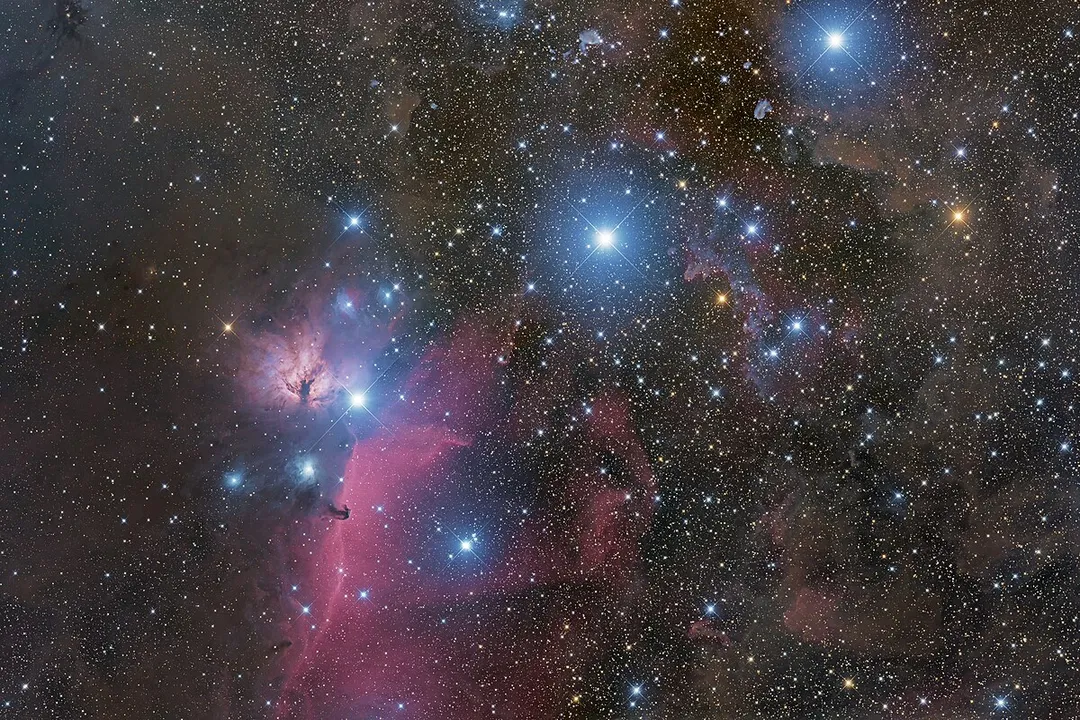
The asterism known as Orion’s Belt is one of the most recognizable patterns in the entire night sky, a trio of bright stars arranged in a nearly perfect straight line, making it instantly identifiable for observers across the globe. [1][8] This simple, elegant grouping is so distinct that it has accumulated a host of names throughout human history, including several referring directly to royalty or religious figures. [5] The assertion that Orion’s Belt is specifically called "The Three Kings" is certainly common in some traditions, but it is just one piece of a much larger, more diverse nomenclature puzzle that stretches across cultures and continents. [1][2]
# Line Appearance
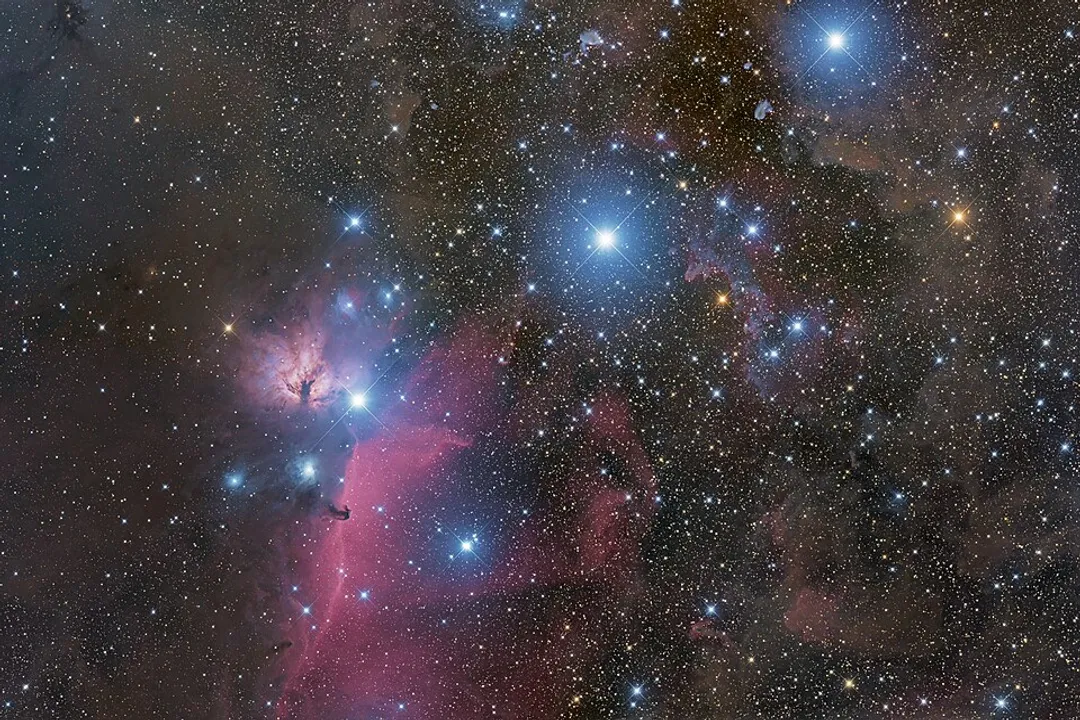
The visual impact of the Belt comes from its striking linearity. It is formed by three luminous stars: Alnitak, Alnilam, and Mintaka. [1][8] When viewing Orion in the Northern Hemisphere sky, especially during the prime winter viewing months, this band stands out clearly against the deep black background. [8] The perception of a perfect alignment is very strong, leading to simple, descriptive names across many languages, though the specific identity of those three things varies wildly. [1] For instance, in Ireland, it is specifically recognized as "The Three Kings," reflecting a strong local tradition tying the celestial to the terrestrial narrative of the Epiphany. [2]
# Names Proliferation
While "The Three Kings" is a valid and popular name in certain regions, it shares space with dozens of other monikers. The sheer number of names given to this feature reflects its prominence in navigation, seasonal marking, and mythology worldwide. [1] For example, some traditions refer to the same stars as "The Three Marys" or "The Three Sisters," suggesting familial or communal groups rather than royal figures. [5] Other cultures see tools or simple markers, such as the 'Farmer's Yardstick' in various parts of the United States, a name likely rooted in agricultural seasonal tracking. [1] The presence of so many alternative titles underscores how different human societies interpret similar visual cues based on their own local stories and needs. [1]
# Kings Connection

The specific association with "The Three Kings" stems directly from the time of year the constellation becomes most prominent in the evening sky in the Northern Hemisphere, which coincides with the Christian observance of Christmas and, more specifically, the feast of the Epiphany. [4] The Epiphany, celebrated on January 6th, commemorates the visit of the Biblical Magi—traditionally identified as three kings—to the Christ child. [4] Because Orion rises high in the sky around this period, sky-watchers naturally correlated the three brightest stars in the most visible winter constellation with the three kings mentioned in the Nativity story. [4] This powerful link between seasonal celestial appearance and religious observance solidified the name "Three Kings" in Western Christian cultures. [2][4]
# Cultural Alignment
It is interesting to compare this religious interpretation with purely observational names. If one lives in a culture with different foundational myths or a different seasonal calendar, the interpretation shifts entirely. For a society focused on agriculture, the alignment might represent a seed-planting guide; for a pastoral culture, it might be three shepherds tending their flock. [5] The fact that the Irish astronomical society recognizes it as "The Three Kings" suggests a deep entrenchment of this specific religious naming convention within that culture’s sky-lore. [2] The name isn't an astronomical universal; it is a cultural translation of a pattern that happens to align with a specific historical date on the calendar. [4]
# Star Reality
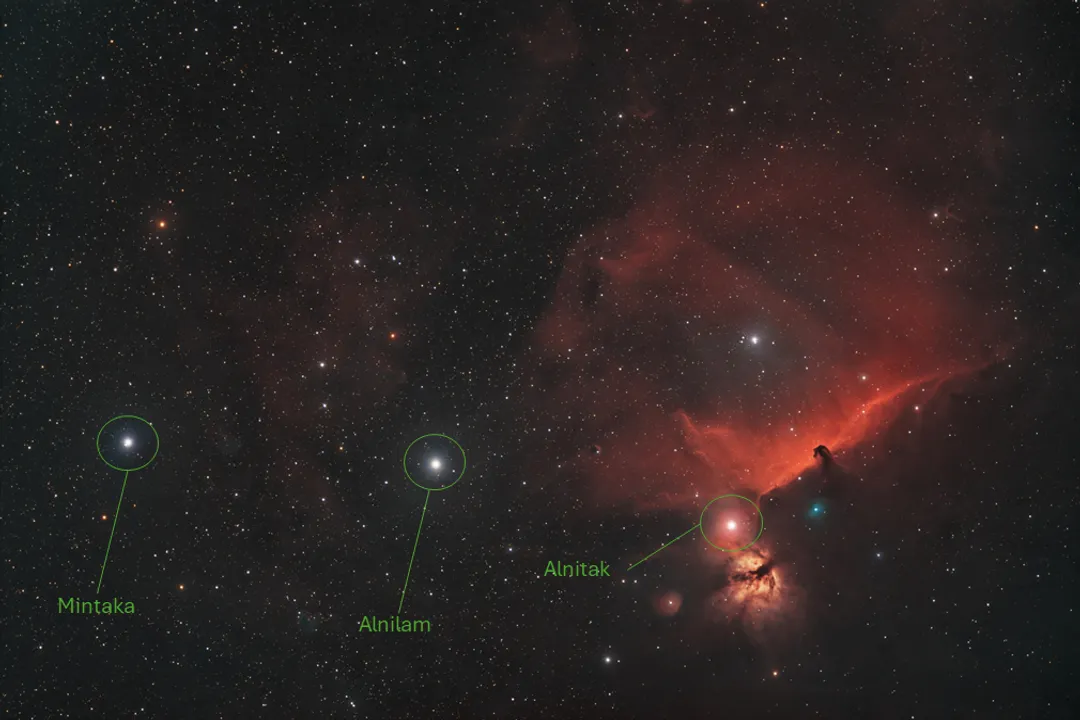
Looking closer at the three points of light reveals a fascinating discrepancy between appearance and reality. While Alnitak, Alnilam, and Mintaka appear to be neighboring stars forming a tight line, they are, in fact, vast distances away from each other in three-dimensional space. [1][8] The straight line we perceive is purely an effect of our line of sight from Earth—a perspective trick. [8]
The stars themselves are enormous. They are all classified as massive blue supergiants. [8]
| Star Name | Designation | Approximate Distance (Light-Years) | Notes |
|---|---|---|---|
| Alnitak | Zeta Orionis | ~1,260 | The easternmost star [1] |
| Alnilam | Epsilon Orionis | ~2,000 | The brightest of the three [1] |
| Mintaka | Delta Orionis | ~1,200 | The westernmost star [1] |
This comparison of distances demonstrates the illusion inherent in the asterism. Alnilam, the middle star often appearing to be squarely between the other two, is significantly farther away from us—nearly 800 light-years further than Mintaka, the closest of the three. [1]
This distance variance provides a good opportunity for a novice observer to appreciate the depth of space. Consider this: if you were to travel from Earth to Alnitak, you would still be a considerable distance from Alnilam, even though the stars look adjacent in your sky chart. [8] If you think of the distance from Earth to Alnitak (about 1,260 light-years) as the baseline for the foreground of this grouping, then Alnilam sits about 740 light-years behind Alnitak, while Mintaka is comparatively much closer to us. [1] This depth layering is what makes the Belt such an excellent visual demonstration of perspective in astronomy, challenging the immediate, two-dimensional reading of the night sky. [8]
# Seasonal Transit

The visibility of Orion’s Belt dictates much of its cultural significance. This constellation is considered a winter constellation for observers in the Northern Hemisphere, meaning it is best seen high in the southern sky between the late evening hours of December and February. [6][8] Its appearance heralds colder weather, making it a reliable indicator for seasonal changes in many temperate regions. [8]
In the Southern Hemisphere, Orion is inverted, appearing upside down, and is generally a summer constellation. [6] This inversion also influences how names are applied; while the "Three Kings" association might persist due to the global reach of religious traditions, local astronomical lore may assign names related to summer tasks or deities relevant to that hemisphere's season. [6]
The rising and setting times are critical for the "Three Kings" timeline. For observers in mid-northern latitudes, the constellation generally becomes prominent overhead in the early hours of the morning in late fall, moving to a more convenient evening position as December and January arrive. [6] The rising of Orion in the east during the evening hours of winter months marks the height of the season connected to the Magi narrative. [4]
# Observing Practice
For those interested in viewing the Belt, knowing when to look is key, but how to look also matters. While binoculars can reveal the fainter surrounding stars of Orion, the three Belt stars are so bright they are best viewed with the naked eye to appreciate their relative brightness and alignment without distortion. [8]
A practical exercise for an observer who understands the scale is to deliberately look away from the Belt stars slightly, perhaps toward the dimmer stars just above or below the alignment. By comparing the fainter, closer stars in the foreground of Orion—those that are not part of the Belt—to the sharp, distant gleam of Alnitak, Alnilam, and Mintaka, the observer gains a felt sense of the scale. The sheer brightness of the Belt stars signifies their immense power and distance compared to dimmer neighbors that might actually be physically closer to us in space. [8] This subtle shift in observation technique moves the viewer from simply seeing a pattern to understanding the three-dimensional reality the pattern represents.

# Authority in Naming
The widespread use of names like "Three Kings" points toward a common phenomenon in astronomy: indigenous naming traditions often predate scientific classification. [1] While modern astronomy officially designates them by their Greek letter designations (Delta, Epsilon, Zeta Orionis), the common names hold significant cultural authority. [1] The name's power isn't in its astronomical precision, but in its ability to transmit a story or a season across generations. [4]
The fact that multiple sources confirm the "Three Kings" designation in certain areas, alongside names like "Three Shepherds" in others, suggests that any single name is localized shorthand for a universal celestial feature. [5] It is a testament to human ingenuity that the same three pinpricks of light could simultaneously represent divine visitors, agricultural schedules, and simple visual markers, all while maintaining the same physical location in the winter sky. [1] Orion’s Belt remains a powerful reminder that astronomy is as much about cultural history as it is about physics. [1][8]
Related Questions
#Citations
Orion's Belt
Orion's Belt - The Three Kings - Expand your horizons ...
Why is Orion's belt called the Three Kings?
A Christmas story: the three kings and the star of Bethlehem
A Celestial Trio ✨ Orion's Belt, also called the Three Kings ...
Rising of Orion : r/Astronomy
The Three Kings or The Three Sisters - Orion's Belt Mosaic
Orion's Belt: The Constellation with Three Stars in a Row