What did Vera Rubin's measurements reveal about the rotation curves of spiral galaxies?
The velocity measurements either plateaued, creating a flat rotation curve, or continued to rise slightly.
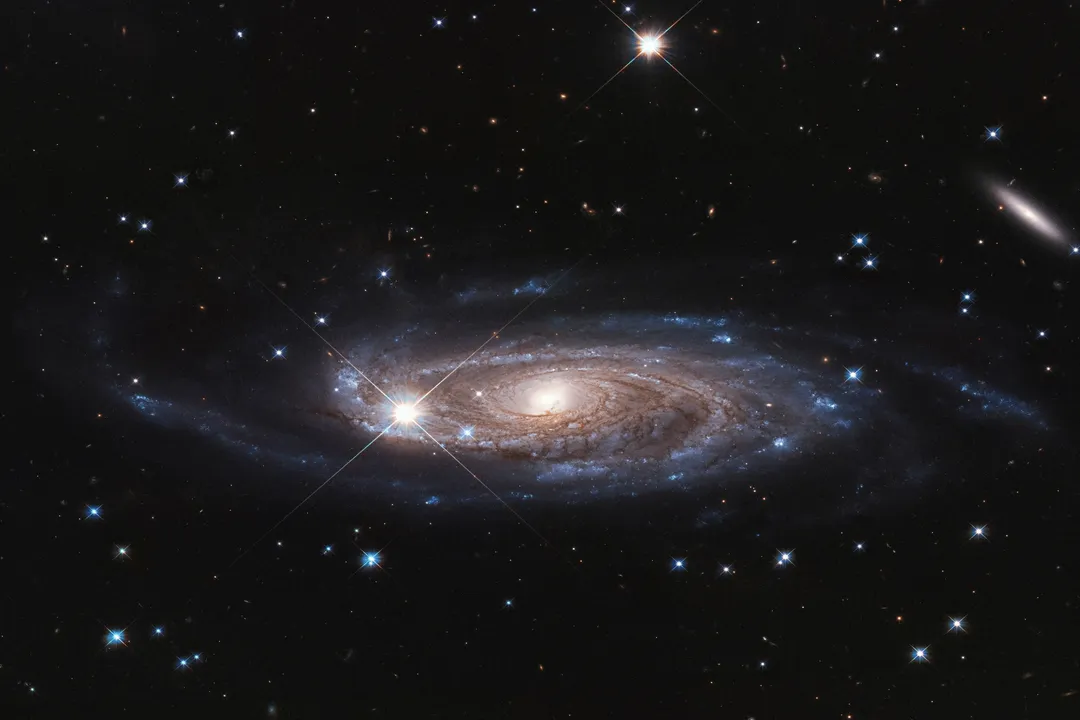
Vera Rubin and her colleagues conducted meticulous measurements of rotational velocities of stars and gas clouds at increasing radii from the centers of numerous spiral galaxies during the 1970s. They employed the Doppler shift of the emitted light to gather this velocity data, spanning regions well past where the visible light, and thus most of the normal baryonic matter, is concentrated. The key finding that established the galactic rotation problem was the failure of these observed velocities to decline as standard Newtonian predictions based on visible mass required. Instead of decreasing significantly as predicted by Keplerian dynamics when moving into the outer reaches, the measured velocities were found to either remain surprisingly constant (a flat rotation curve) or, in some instances, even show a slight increase as distance from the galactic center increased.
#Videos
Dark Matter: The Math Behind Galaxy Rotation Curves - YouTube