What does the mass discrepancy imply about the dominance of unseen mass in the outer regions of a spiral galaxy?
The required mass contribution from the unseen component often outweighs the mass of all visible matter by a factor of five or even ten to one.
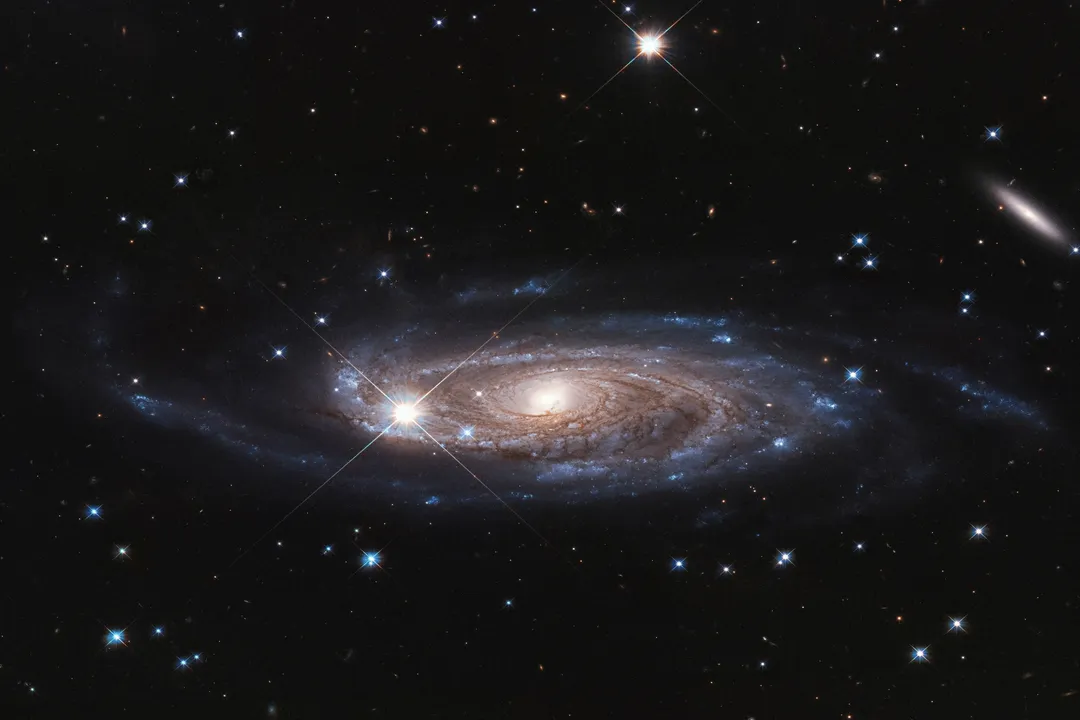
The quantification of the galactic rotation problem reveals a staggering mass deficit when comparing the gravitational influence inferred from orbital speeds against the mass calculated from light output. When astronomers apply Kepler's laws using the observed high orbital velocities at large radii, the calculated total enclosed mass significantly exceeds what the light measurements account for. This calculation consistently yields a factor where the required mass from the invisible component is five to ten times greater than the total mass attributed to stars, gas, and dust. This stark imbalance demonstrates that the dynamics of the galaxy's outer regions are almost entirely governed by this missing gravitational source, indicating that the majority of the matter holding the galaxy together is electromagnetically dark.
#Videos
Dark Matter: The Math Behind Galaxy Rotation Curves - YouTube