What are the disadvantages of rocket fuel?
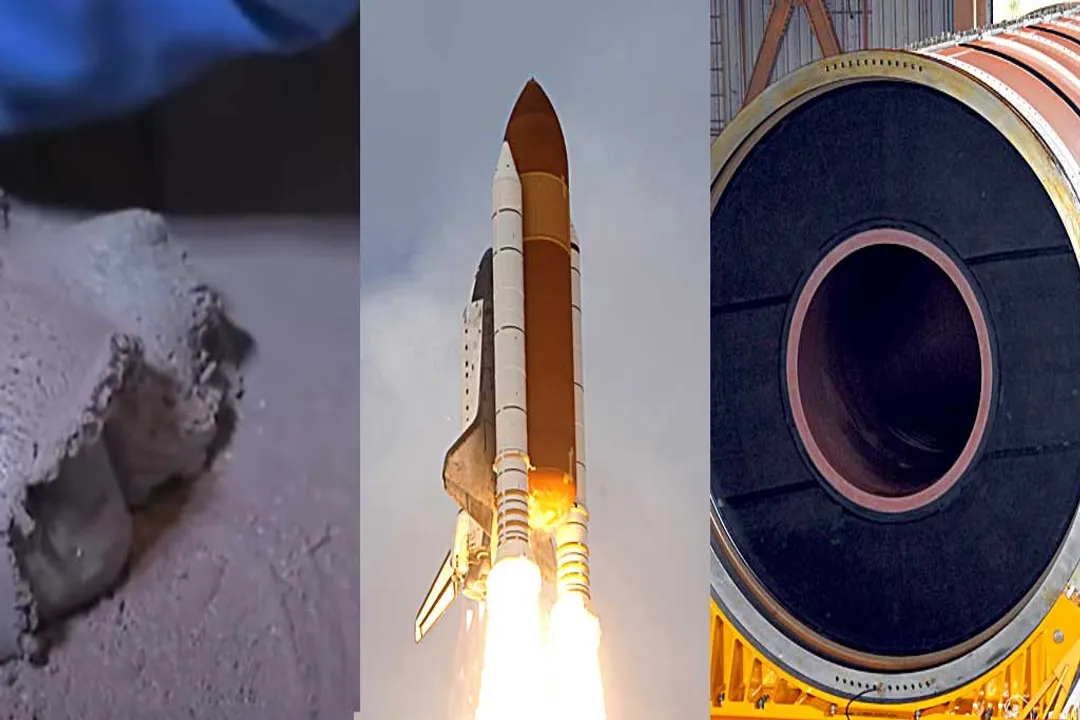
Rocket propulsion, the engine driving humanity's push into space, relies on highly energetic chemical reactions, but the fuels that make this possible carry significant inherent drawbacks. Whether considering the dense, pre-mixed nature of solid propellants or the ultra-cold, complex requirements of liquid combinations, every choice involves substantial engineering trade-offs related to control, infrastructure, and safety. [4][8] Understanding these limitations is crucial for appreciating why modern rocketry often settles on systems that are incredibly sophisticated rather than inherently simple.
# Immutability Limits
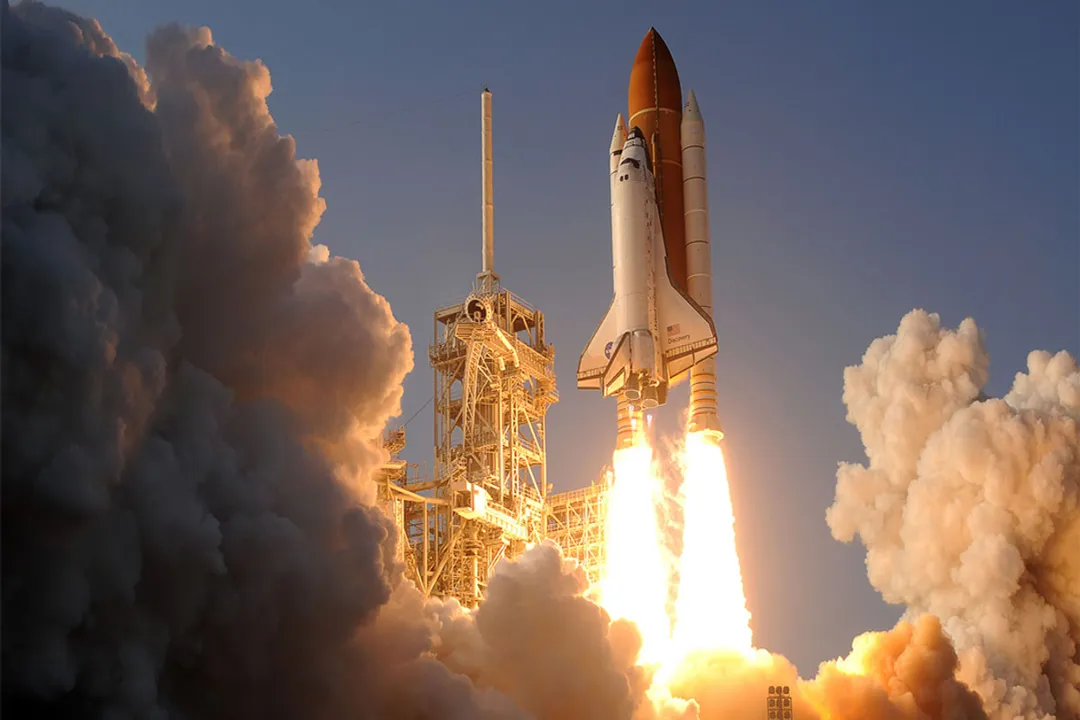
Perhaps the most defining disadvantage of solid rocket motors centers on their complete lack of in-flight operational control once the ignition sequence begins. [1][2] The fuel, which is a pre-mixed composite of oxidizer and fuel bonded together within the casing, burns uniformly from the inside out based on its manufactured geometry. [7] This means that, unlike a liquid engine which can have its flow valves adjusted, a solid rocket cannot be throttled down, restarted, or shut off prematurely if an anomaly occurs during ascent. [1][2] This absolute commitment introduces a major failure mode: if the casing fails or an unintended crack develops in the propellant grain, the resultant increase in surface area leads to an immediate and uncontrollable surge in thrust and chamber pressure, often resulting in catastrophic destruction. [2] This inherent inflexibility means mission safety must rely entirely on exhaustive pre-launch checks, as there is no recourse once the process starts. [7]
# Handling Solids
Beyond the operational inflexibility, solid fuels present significant challenges during manufacture and long-term storage. [2] Creating the propellant grain involves mixing and casting a heterogeneous material, which must be inspected meticulously for voids, cracks, or inconsistent bonding throughout its massive structure. [2] A small, hidden flaw, perhaps invisible to routine inspection, can act as a stress riser or premature ignition point under the intense heat and pressure of flight, causing the motor to fail catastrophically. [2] Furthermore, as these motors age, chemical changes and thermal cycling can cause the propellant to crack internally, altering the surface area exposed to combustion and changing the intended thrust profile over time. [2] While solid motors are celebrated for their mechanical simplicity—lacking the need for complex turbopumps and extensive plumbing—this simplicity comes at the cost of absolute operational dependence on perfect manufacturing and material integrity. [3]

# Liquid Complexity
Switching to liquid propellants swaps the material integrity problem for an infrastructure and temperature nightmare, particularly when examining high-performance combinations like liquid hydrogen () and liquid oxygen (). [4] These cryogenic fuels must be maintained at staggeringly low temperatures to remain in a liquid state; boils at approximately $20$ Kelvin (). [4][6] Keeping propellants that cold during long integration times, payload fairing encapsulation, or extended launch scrubs requires intensive ground support equipment (GSE) and constant chilling processes. [4] This necessary cryocooling and insulation adds significant complexity, time, and operational cost to any launch campaign, contrasting sharply with storable propellants that can sit ready for long durations. [6] Moreover, the inherent volatility of these substances means that even slight thermal excursions cause boil-off, leading to mass loss and reduced performance if the launch window is delayed. [4][6]
When considering the operational costs associated with the extreme conditions required for cryogenics, one can see that the simplicity touted by solid motors carries a price tag in terms of mission availability. While a solid motor is ready to fire (barring structural concerns), a cryogenic liquid system requires a dedicated, temperature-controlled infrastructure right up to the moment of ignition, meaning ground delays cascade into immediate performance penalties due to propellant loss. [6]
# Engine Mechanics
The very nature of liquid-fueled propulsion demands systems orders of magnitude more complex than their solid counterparts. [4] Liquid propellants require intricate plumbing, reliable check valves, robust injectors, and, most critically, high-speed turbopumps to force propellants into the combustion chamber against immense pressure. [4] The failure of any single one of these auxiliary components—a seal, a bearing, or a pump blade—can lead to a total mission failure, often with little warning, a scenario that solid motors avoid by design. [4] These complex mechanical systems inherently reduce the engine's overall reliability compared to a simple, self-contained solid rocket motor, even if they grant the advantage of being throttleable or restartable. [4]
# Propellant Handling
Beyond the thermodynamic and mechanical hurdles, the chemical properties of the propellants themselves introduce hazards that require specialized handling protocols. [8] While the focus is often on high-energy performance, many effective propellants are inherently hazardous. Some combinations are hypergolic, meaning they ignite spontaneously on contact, which is useful for engine restarts but extremely dangerous for ground crews during loading and servicing. [8] Others may be highly corrosive or toxic, demanding specialized materials for tanks and lines and stringent safety procedures for personnel. [8] Even "cleaner" options like hydrogen, while not toxic in the traditional sense, present an extreme flammability risk and require meticulous management to prevent leaks or unintended ignition near personnel or equipment. [6] When these factors are combined with the cryogenic demands of LOX/, the logistics of moving, storing, and loading the final vehicle become a significant engineering discipline unto itself, introducing points of failure not present when dealing with a single, stable, pre-packaged solid mass. [4] The selection process for any given mission is therefore a delicate balancing act where the desire for maximum performance must be weighed against the unavoidable penalties of complexity, cost, and risk associated with the chosen chemistry and its required phase state. [8]
Related Questions
#Citations
What are the disadvantages of using solid fuel for launching rockets?
Disadvantages Of Solid Propellant Rockets - Propulsion 2
Solid Rocket Fuel - What It Is And Its Advantages & Drawbacks
What are the advantages and disadvantages of using either liquid ...
Methane vs. Kerosene as Rocket Fuels - Stanford University
Will hydrogen power the future of aerospace? - WHA International
Rocket Fuels- Solid vs. Liquid
Rocket propellant - Wikipedia
Finally, Liquid or solid propellant engine?! - NASA Spaceflight Forum