How big is Elon Musk's rocket?
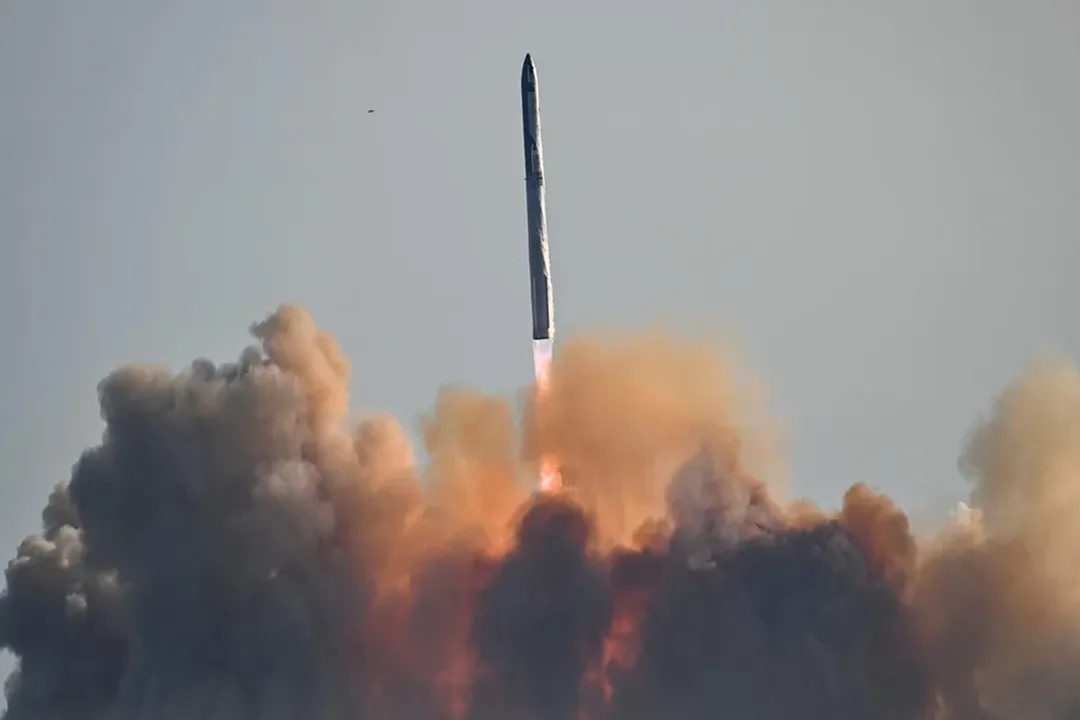
The sheer scale of Elon Musk’s rockets has long been a talking point, but when discussing the biggest of the bunch—the Super Heavy-Starship system—the numbers move from impressive to almost unbelievable. Translating abstract measurements into something understandable takes a moment of recalibration, especially when the vehicle in question is designed not just for orbit, but for Mars and the Moon. To grasp the scope of this undertaking, one must compare it not just to its predecessor, the reliable Falcon 9, but to the very foundations of terrestrial engineering.
# Rocket Dimensions
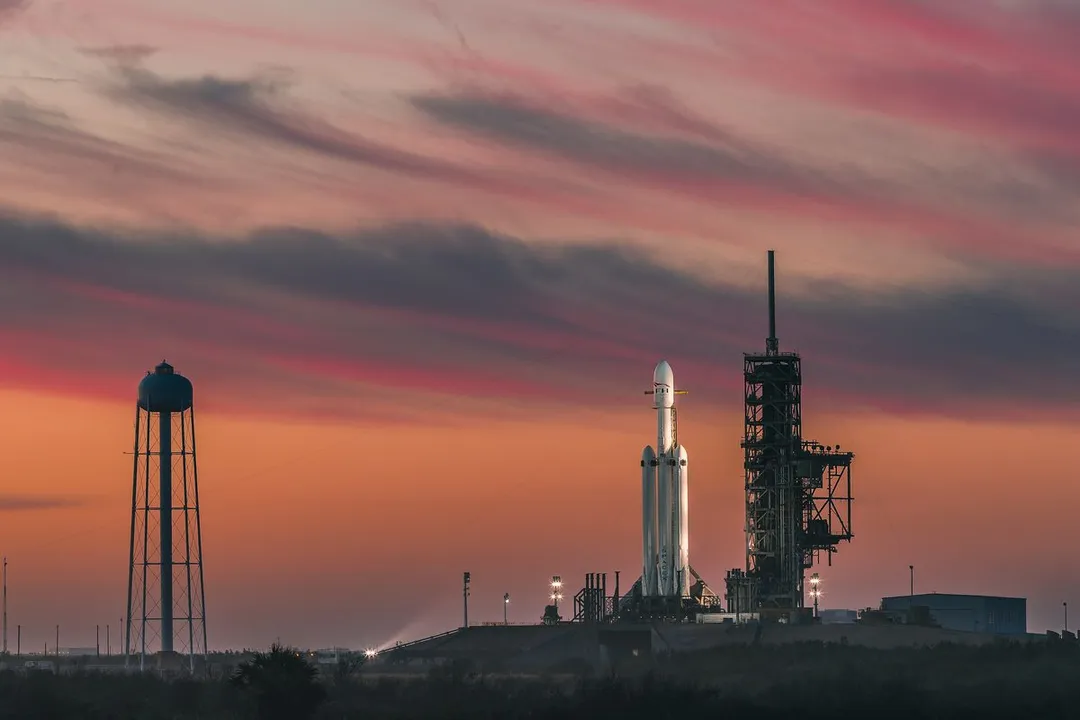
The fully stacked Super Heavy booster and Starship upper stage stand at an imposing 397 feet tall. This measurement puts the entire vehicle into a category where familiar landmarks become the only useful scale reference. Consider the workhorse Falcon 9: it stands at 229.6 feet (70 meters). Even comparing the full Starship stack to the older, larger Falcon Heavy, which reaches about 348 feet (107 meters), shows the new vehicle eclipses previous records.
To give that 397-foot height some context, imagine setting the vehicle down in a major metropolitan area. It would dwarf most residential and commercial structures. For instance, a typical modern office building might reach 20 to 30 stories, placing the Falcon 9 closer to that scale. The Super Heavy-Starship, however, approaches the height of many iconic skyscrapers. If you were to place the launch vehicle next to a structure like the Washington Monument (excluding its antenna), the rocket would still feel incredibly substantial, highlighting the sheer volume of material and propellant needed for deep space endeavors.
The width is just as significant as the height. The combined vehicle boasts a massive 30-foot diameter. This contrasts sharply with the base of the Falcon 9, which measures 12 feet in diameter. This nearly threefold increase in diameter on the first stage is what allows for the massive fuel tanks required to lift the entire structure and the accompanying payload capacity that promises to change access to space. This enormous girth isn't just about raw volume; it fundamentally dictates the infrastructure required around the launch pad, from the sheer size of the assembly building to the complexity of the "chopsticks" designed to catch the booster upon return.
# Ship Size
Breaking down the stack reveals the two distinct components. The Starship upper stage itself, designed to travel to orbit and beyond, is stated to be around 160 feet tall in some descriptions of the flight profile. When stacked on the Super Heavy booster, the combined unit creates the world's most powerful rocket ever built. While the Falcon 9’s fairing, which protects its cargo, has a diameter of 17.1 feet, the entire Starship vehicle at 30 feet wide represents an entirely different class of vehicle, capable of carrying massive amounts of cargo or dozens of people.
# Engine Power

Size on the pad means little without the corresponding power to defy Earth's gravity, and here again, the Super Heavy-Starship delivers a staggering leap in capability over its predecessors. The propulsion system is what truly separates this rocket from anything else SpaceX has previously flown.
The Super Heavy booster, the first stage, is equipped with 33 Raptor engines. These engines generate more than 16 million pounds of thrust at full throttle during liftoff. To appreciate this thrust figure, it helps to look back at the Falcon 9 first stage, which generates more than 1.7 million pounds of thrust from its nine Merlin engines. Simple arithmetic suggests the Super Heavy has nearly ten times the raw liftoff power of the Falcon 9, a fact underscored by reports that it generates more than twice the liftoff power of NASA's legendary Saturn V moon rocket. This immense power is crucial for escaping the atmosphere while carrying the full, reusable Starship upper stage.
The Starship upper stage relies on six Raptor engines for its operations in space and for the descent burn needed for a soft landing. These engines, like those on the booster, burn liquid methane and oxygen, a shift from the Falcon 9's kerosene (RP-1) and liquid oxygen propellant mix. This change in fuel type, coupled with the sheer number of engines, speaks to a significant architectural rethinking aimed squarely at deep-space reliability and eventual Martian operations.

# Falcon Comparison
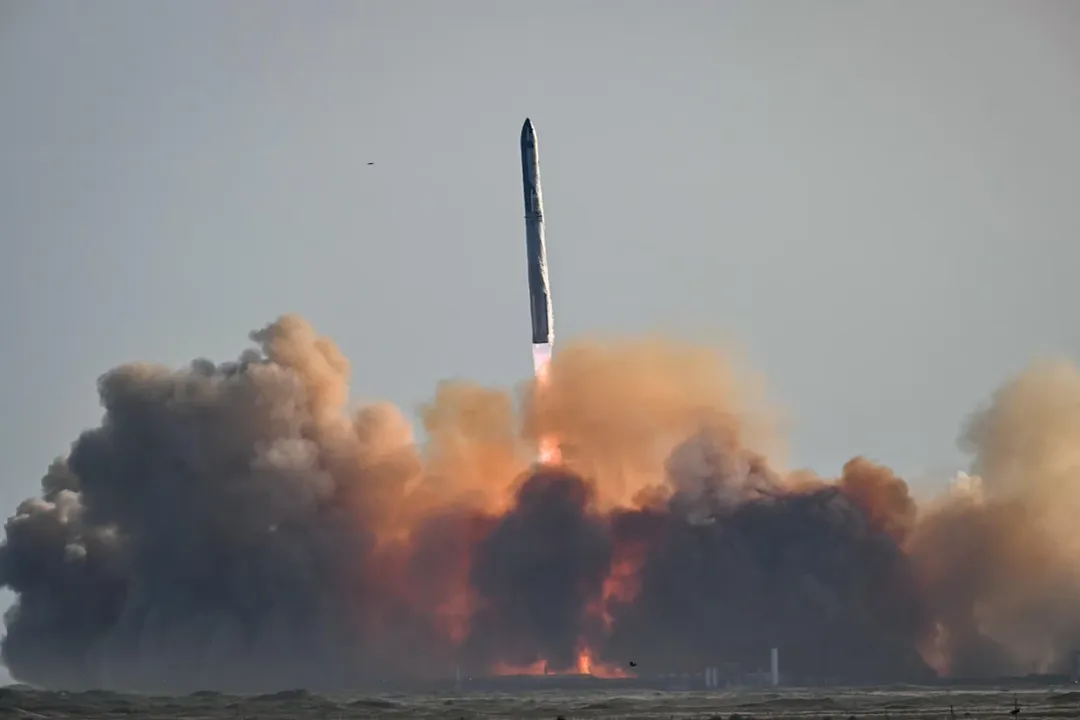
The journey to the Super Heavy-Starship involved incremental steps, most famously demonstrated by the Falcon 9, which pioneered the concept of orbital class reusable rocketry. Understanding the difference between the Falcon 9 and Starship is key to understanding the ambition behind the new design.
| Feature | Falcon 9 (Approximate) | Super Heavy-Starship (Approximate) | Comparison Insight |
|---|---|---|---|
| Total Height | 230 ft | 397 ft | Nearly 70% taller |
| Diameter | 12 ft (Booster) | 30 ft | 2.5 times wider at the base |
| First Stage Thrust | > 1.7 Million lbs | > 16 Million lbs | ~9.4 times the liftoff force |
| Reusability | First stage only | Both Super Heavy and Starship | Full stack reusability is the goal |
The Falcon 9 is an engineering marvel in its own right, having made routine access to orbit achievable by reusing the costly first stage. However, the Starship architecture is designed to reuse both stages, a much more complex engineering challenge. Where the Falcon 9's first stage lands autonomously downrange or back at the pad, the Super Heavy is intended for an unprecedented "catch" maneuver using mechanical arms on the launch tower, aiming for rapid turnaround between flights. This difference in recovery philosophy directly informs the entire vehicle's structure, including the necessary engine configuration for a gentle, controlled vertical landing.
The historic Saturn V rocket, which sent humans to the Moon, serves as the benchmark that Musk’s team is intentionally surpassing, even if the BFR (Big Falcon Rocket, an earlier conceptual name related to Starship) was noted as still being smaller than the Saturn V when it was first conceived. Today, the full Starship stack is positioned as the most powerful ever built. This massive increase in scale is not arbitrary; it is a direct function of the mission profile required for establishing a self-sustaining presence on another world.
# Multi-planetary Goal
The focus on size and power is intrinsically linked to SpaceX's long-term vision of making humanity multi-planetary. The sheer physical envelope of the Super Heavy-Starship is necessary because it must deliver not just a small crew or a few satellites, but the necessary infrastructure, supplies, and eventually, large numbers of people to destinations like the Moon and Mars.
NASA has already selected a variant of the Starship to serve as the initial lunar lander for the Artemis moon program, aiming for a landing in the 2026-2027 timeframe. This program requires a vehicle capable of not only reaching lunar orbit but performing the delicate de-orbit and landing maneuvers onto the lunar surface, then returning to orbit for rendezvous. The necessary propellant mass to achieve this, plus cargo or crew, necessitates the gargantuan scale we observe today.
The development process, which involves numerous test flights focusing on upgrades like heat shield experiments and engine restarts in space, is iterative. Each physical parameter, from the 30-foot width to the 33 Raptor engines, is a calculated step towards reducing the cost and increasing the reliability required for frequent, heavy-lift missions that were simply impossible with prior rocket generations. The success of the earlier Falcon 9 in establishing routine orbital access has paved the way for this leap in scale required for establishing off-world bases.
When you calculate the sheer volume difference between the Falcon 9 and Starship, you begin to appreciate the manufacturing expertise required. If the Falcon 9’s 12-foot diameter is roughly the size of a small city bus, the Starship’s 30-foot diameter is more akin to a short, wide cargo container stacked three high. This difference means that instead of building rockets piece-by-piece in specialized factories, SpaceX had to develop new construction and integration techniques at Starbase, often rolling out components that are already fully assembled to the pad, which is a testament to their on-site, rapid iteration experience. The ability to process and integrate materials on this scale, demonstrated by the 30-foot width, is an unsung capability that underpins the entire program's ambition.
This pursuit of scale also suggests a near-term outlook for interplanetary logistics. If a single vehicle can carry the equivalent payload mass of several prior heavy-lift rockets combined, the cadence of missions required to build a Mars base becomes feasible within a shorter timeframe, perhaps within the next decade, as suggested by experts observing the program's acceleration. This is less about building a bigger rocket and more about building the factory that can produce and rapidly fly giant, fully reusable spaceships.
Related Questions
#Citations
Falcon 9 - SpaceX
SpaceX Launches Super Heavy-Starship 6th Flight, Trump Attends
SpaceX Falcon Rocket Size Video | Space
#SpaceX #Starship: largest and most powerful #rocket ever built