How much does it cost Elon Musk to build a Starship?
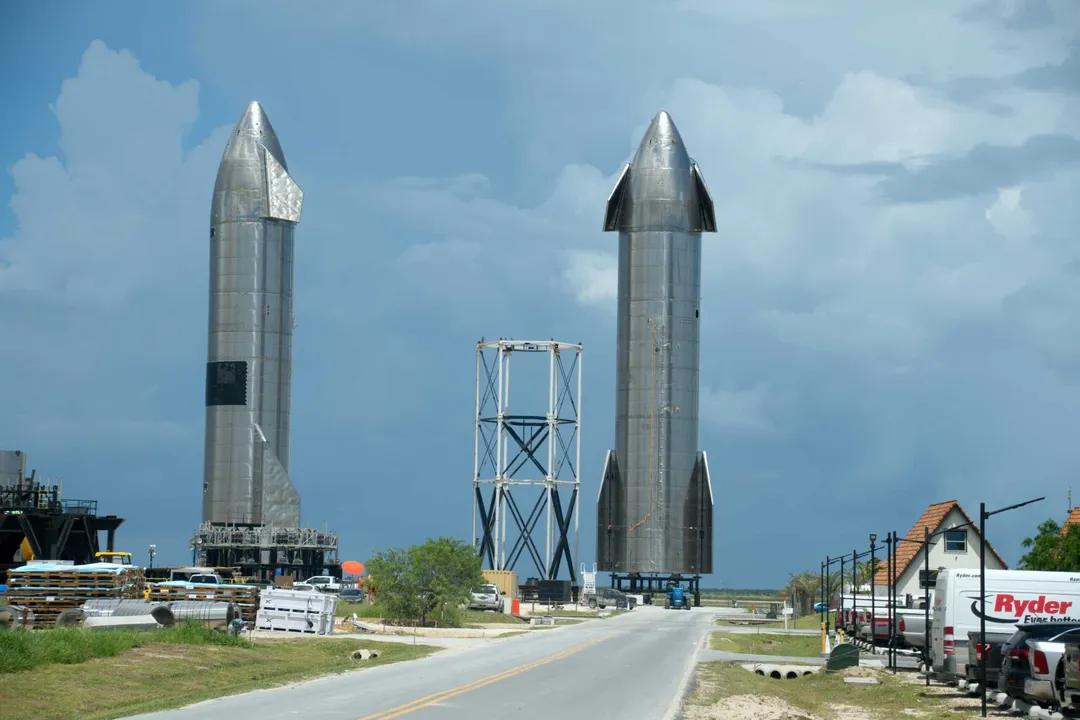
The figure associated with building Elon Musk’s Starship is less a single dollar amount and more a spectrum stretching from astronomical initial investment to a nearly unbelievable future operational cost. Pinpointing the exact accumulated expenditure on the entire Starship program to date proves complex, as much of the spending is developmental, involving massive infrastructure build-out and iterative hardware testing—a necessary component of creating truly reusable heavy-lift rocketry [cite: cnbc].
# Initial Spending
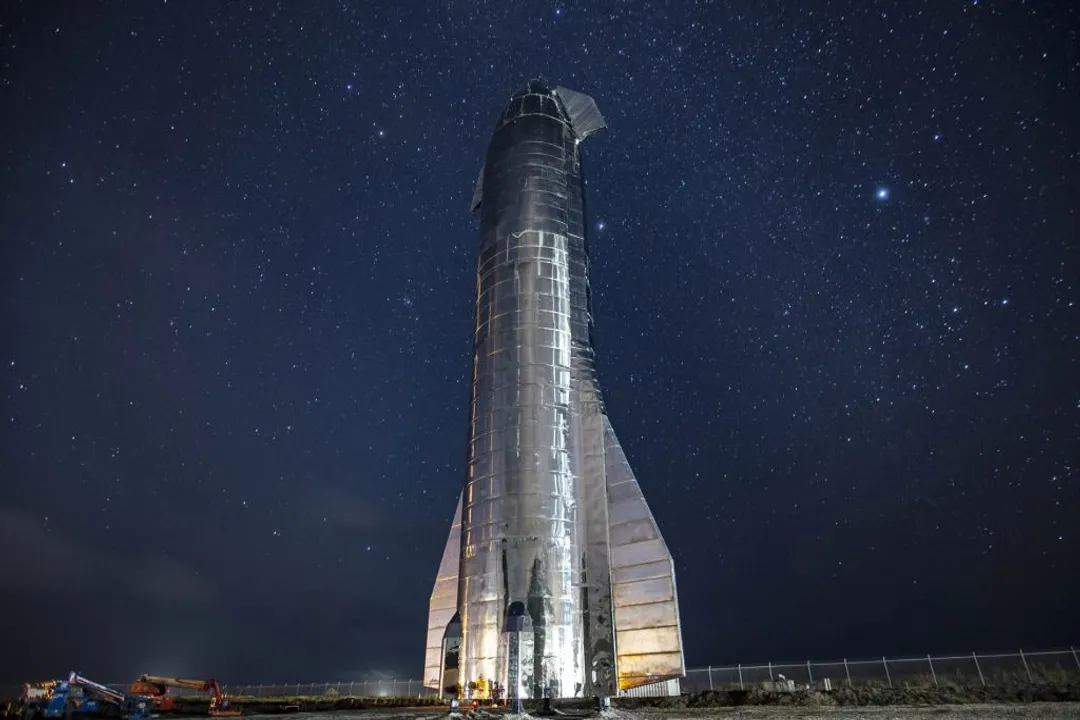
Elon Musk publicly stated in April 2023 that the Starship program was costing roughly $2 billion in that year alone [cite: cnbc]. This staggering annual burn rate underscores the sheer scale of the undertaking. This figure encompasses far more than just the raw materials for assembling a single rocket; it funds the rapid iteration cycles, the construction of Starbase facilities in Boca Chica, Texas, and the significant research and development required to perfect the Raptor engines and the unique stainless steel structures [cite: cnbc]. This developmental outlay is an upfront capital investment, the purpose of which is to eliminate recurrent costs later on.
Community discussions frequently touch upon total accumulated costs, suggesting figures that run into the billions when factoring in years of dedicated engineering effort, multiple destroyed prototypes, and ground testing [cite: reddit]. When evaluating the cost, it is essential to differentiate between the sunk cost of getting the technology to work—the billions spent on R&D—and the marginal cost of producing and launching a flight-ready vehicle once the design matures.
# Reusability Core

The entire economic premise of Starship hinges on achieving rapid and total reusability, mirroring the cost structure of the airline industry rather than traditional expendable rocketry [cite: fool]. This philosophical shift is the primary mechanism intended to drive down costs. For a rocket system to become truly cost-effective, the most expensive components—the Super Heavy booster and the Starship upper stage—must be refurbished and flown again quickly, minimizing the need to manufacture new hardware for every mission.
SpaceX is targeting a turnaround time for refurbishment that approaches that of commercial aircraft [cite: fool]. If a Falcon 9 first stage can fly dozens of times, Starship aims for hundreds, if not thousands, of flights per vehicle over its lifespan. This longevity fundamentally alters the amortization schedule for the initial development expenses.
The high initial spending—like the $2 billion annual figure—is effectively being spent to buy down the future operational cost, making the upfront investment worthwhile over decades of operation [cite: cnbc].

# Flight Price Goals
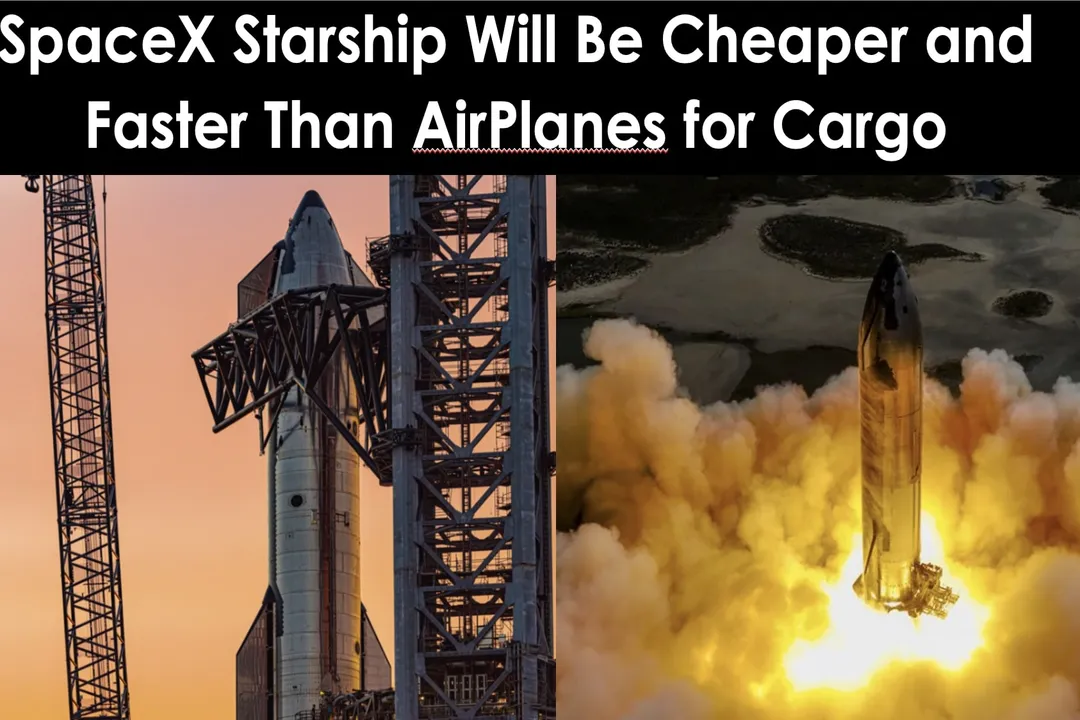
Once the system achieves its intended full reusability cadence, the projected cost per flight drops dramatically, which is where the real disruption occurs. Reports suggest an ambitious target for the fully operational, rapidly reusable Starship to cost only about $10 million per flight [cite: fool]. This number is revolutionary when contrasted with the hundreds of millions historically required for comparable heavy-lift vehicles.
To put this into perspective, consider the amortization calculation. If SpaceX were to spend 10 million each, the 20 billion development cost would be spread across those 500 flights, adding $40 million in amortized development cost per flight. However, the goal is to fly so frequently and for so long that this initial development debt becomes negligible relative to the lifetime revenue stream.
If we look purely at the operational goal of $10 million, this cost structure allows for comparisons that seem absurd in the context of conventional spaceflight. One analysis suggests that with such low per-flight costs, reusable Starship could potentially become cheaper than intercontinental airplanes for moving bulk cargo here on Earth [cite: nextbigfuture]. This highlights that the true cost metric isn't just dollars to orbit, but dollars per kilogram delivered, regardless of destination.
# Economic Comparison
The economic case for Starship extends beyond simply lowering the price for NASA or launching satellites. If the operational costs truly approach the 150 million or more per launch [cite: reason]. Even if Starship were to cost $100 million per flight today while still in the early, non-fully-reusable phase, the potential savings compared to traditional heavy-lift options are significant, leading some observers to suggest NASA should evaluate switching future missions to the vehicle based on its developing economic viability [cite: reason].
The ultimate goal for crewed missions is also surprisingly low, reflecting this aggressive cost model. Elon Musk has suggested that in the distant future, the ticket price for a seat on a Starship flight to Mars could eventually be comparable to the cost of a median-priced house on Earth [cite: space]. While this is a long-term passenger vision, it reinforces the focus on driving the marginal cost of adding one more passenger or kilogram of cargo as close to zero as possible through reusability and propellant mass fraction optimization.

# Investment Reality
The $2 billion annual cost is the price of innovation under high-speed iteration. It represents a commitment to overcoming engineering hurdles that have historically bankrupted or severely delayed rocketry programs. To an investor or analyst, this high spending indicates the sheer risk being taken upfront. Every failed landing or engine test that requires replacement hardware adds to that yearly expenditure [cite: cnbc].
When considering the total financial outlay, an interesting thought experiment emerges concerning the initial investment versus the projected long-term revenue potential. If the 2 billion spent annually were hypothetically allocated solely to building *production capacity* (factories, tooling, specialized machinery) rather than just R&D prototypes, that expenditure would be amortized over potentially thousands of flights over a decade or two. In contrast, an expendable rocket program pays that development cost *every single time* it launches. The difference between the2 billion development spending and the $10 million operational goal illustrates that SpaceX is betting that the operational savings realized from extreme reusability will quickly dwarf the initial, very large, developmental investment required to make that reusability a reality. The entire program structure is designed to front-load the expense so that future competitors face an impossibly high initial development cost barrier just to reach parity with SpaceX’s operational prices.
#Videos
Elon Musk finally revealed Starship's cost somehow ... - YouTube
Related Questions
#Citations
How much has the starship program cost so far? : r/SpaceXLounge
The Secret to SpaceX's $10 Million Starship, and How SpaceX Will ...
SpaceX Reusable Starship Could Become Cheaper than ...
Elon Musk finally revealed Starship's cost somehow ... - YouTube
NASA should consider switching to SpaceX Starship for future ...
I believe this is factually inaccurate. What's your source? Though ...
Elon Musk: SpaceX's Starship costing about $2 billion this year
Starship Development and Operation Costs at SpaceX - Facebook
SpaceX's Starship May Fly for Just $2 Million Per Mission, Elon ...