What acute chemical pollutants are released by solid rocket boosters using ammonium perchlorate composite propellant (APCP)?
Answer
Hydrochloric acid ($ ext{HCl}$), chlorine gas, and aluminum oxide particles
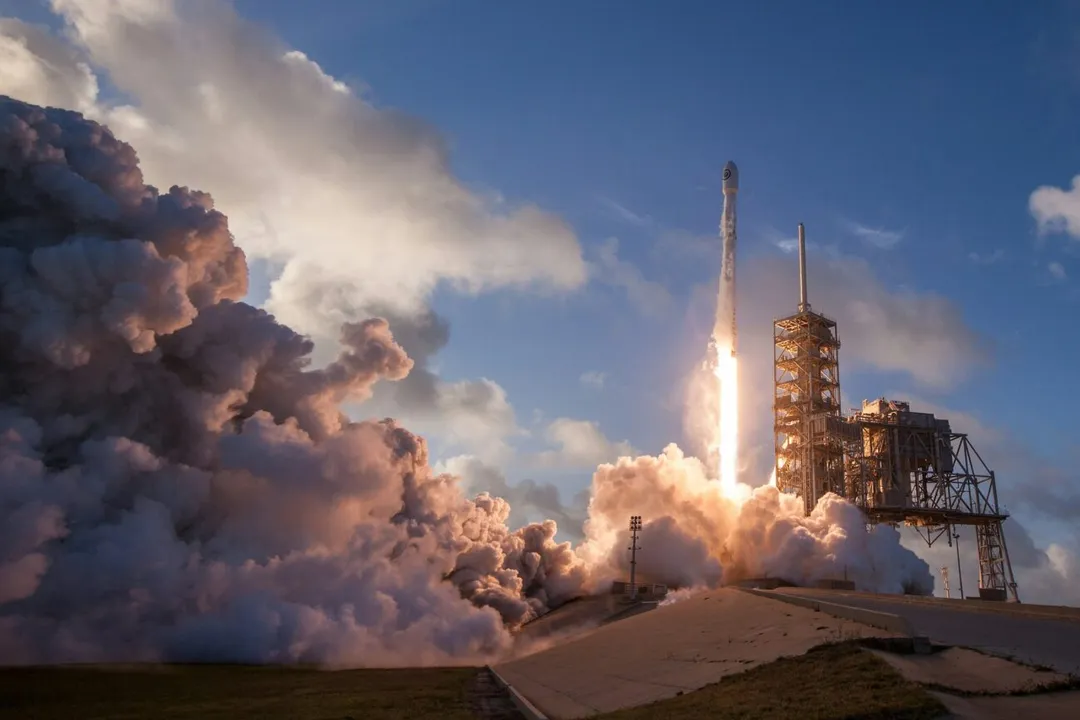
The exhaust from solid propellants like APCP releases hydrochloric acid ($ ext{HCl}$), chlorine gas, and aluminum oxide particles, which are chemically active pollutants.
Related Questions
What is the main environmental concern when black carbon (soot) from kerosene is released into the stratosphere?What chemical characteristic makes methane combustion generally considered cleaner than kerosene (RP-1) combustion regarding upper atmosphere pollution?Despite producing almost exclusively water vapor, what specific environmental issue is associated with injecting large quantities of $ ext{LOX}/ ext{H}_2$ exhaust directly into the stratosphere or mesosphere?What acute chemical pollutants are released by solid rocket boosters using ammonium perchlorate composite propellant (APCP)?Why do emissions deposited in the stratosphere pose a greater global threat than those released in the troposphere?Regarding the mass of exhaust produced for the same thrust, how does the $ ext{CO}_2$ output of a $ ext{LOX}/ ext{Methane}$ engine compare to a $ ext{LOX}/ ext{Kerosene}$ engine?Why might the instantaneous environmental disruption from a solid rocket burn be considered the most aggressive of common propulsion types?Defining rocket fuel cleanliness ultimately depends on prioritizing which of the following environmental metrics?What is the primary purpose of the large amounts of water used at the launch pad during large launch operations?What crucial element, when multiplied by the type of fuel used, determines the true long-term environmental impact of rocketry?