Would a dead human body decompose in space?
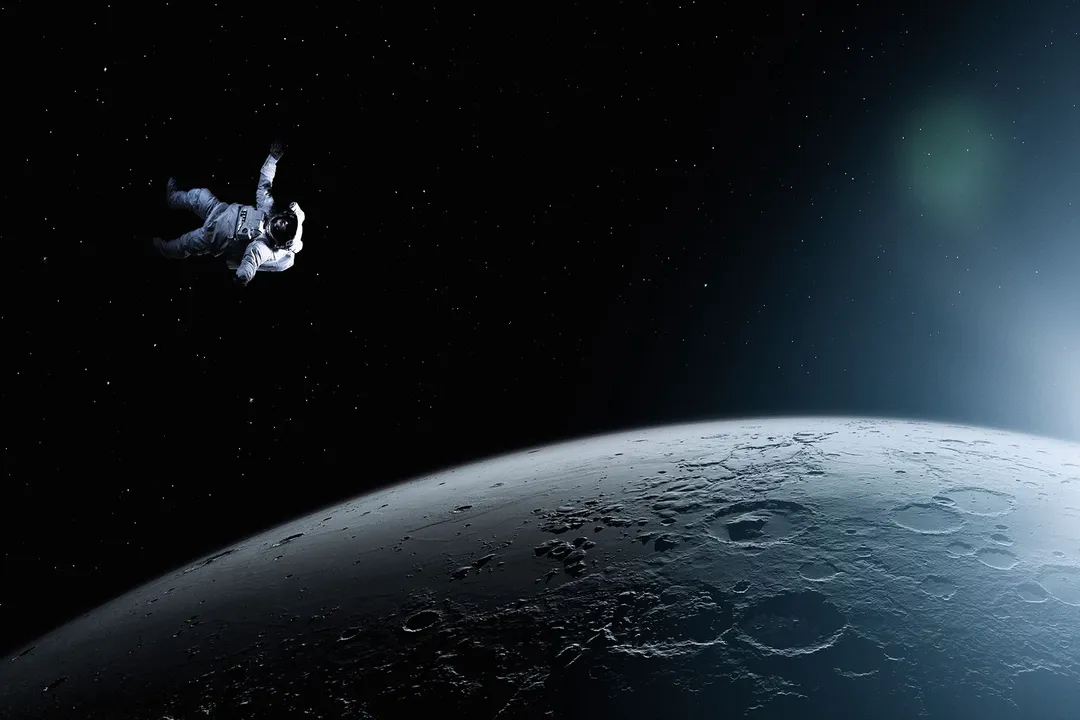
The fate of a dead human body exposed to the environment of space presents a fascinating departure from terrestrial biology. On Earth, decomposition is a guaranteed process driven by bacteria and the presence of oxygen, leading to putrefaction. In the vacuum of space, however, those necessary conditions vanish, fundamentally altering the body's trajectory from life to dust. [1][4] Instead of rotting away, the body enters a state of extreme preservation, albeit one punctuated by rapid physical changes and slow molecular degradation.
# Immediate Changes
When death occurs unprotected in the vacuum of space, the body immediately faces an environment of near-absolute zero pressure. [3] This lack of external pressure causes the liquids within the body—primarily water—to behave counter-intuitively. The boiling point of water drops dramatically in a vacuum, leading to a phenomenon known as ebullism. [3][7] Body fluids begin to boil off rapidly because the vapor pressure of the water inside the tissues exceeds the surrounding pressure. [7]
Despite this boiling, an unprotected body will not explode dramatically. Human skin and connective tissues possess enough tensile strength to temporarily contain the swelling caused by the expanding gases and vaporizing fluids. [7] This initial outgassing and boiling leads swiftly to freezing. [3][6] As the water rapidly converts to vapor, the remaining liquid body mass experiences significant evaporative cooling, quickly dropping its temperature to extremely low levels. [3] The timeline for this initial freeze-drying process, depending on mass and solar exposure, could be relatively swift, locking the structure of the corpse into a frozen, desiccated state. [4]
# Microbial Stasis
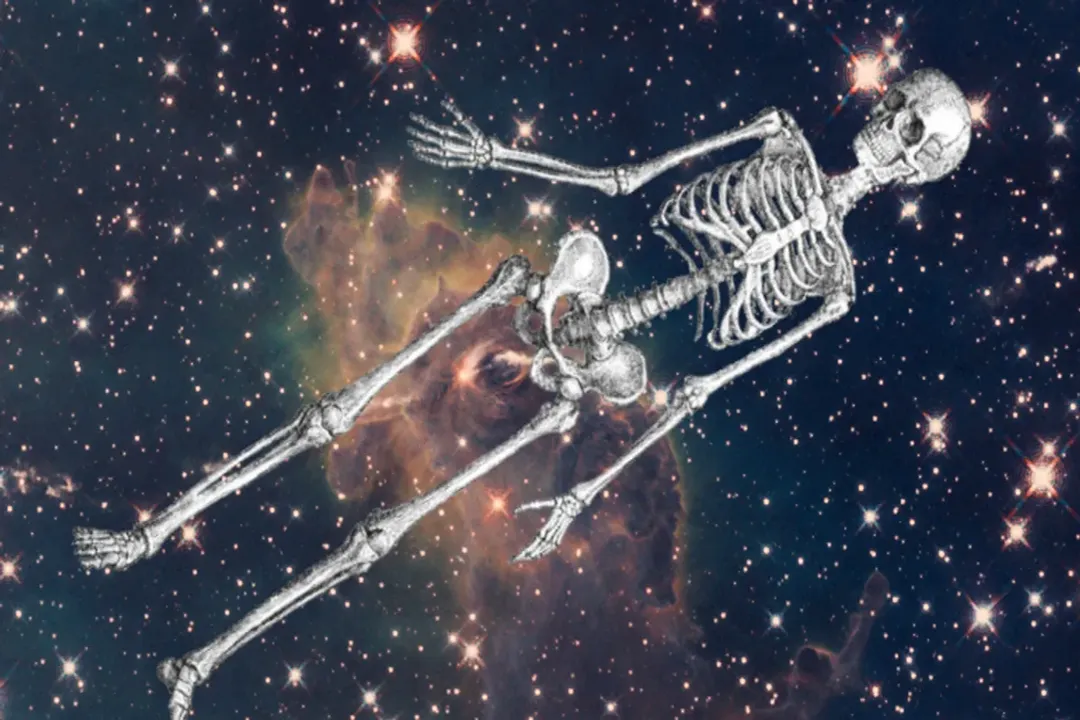
The key difference between space decay and Earth decay rests on the presence of microorganisms. [1] Standard decomposition relies on anaerobic and aerobic bacteria consuming soft tissues. [4] In space, there is no atmosphere to support these aerobic microbes, and the near-vacuum prevents the necessary water activity required for most biological processes to occur. [8] Therefore, the typical process of putrefaction—the decay we associate with rotting—simply does not happen. [1][4] What remains is essentially a preserved, albeit frozen, specimen. [3]
If we consider a body left in the perpetual shadow of a spacecraft or an asteroid, the main physical state achieved would be deep freezing, similar to being cryogenically preserved. [4][6] The structure would remain largely intact, minus the water lost to ebullism and sublimation. [3] If the body were exposed to direct sunlight in orbit, the side facing the sun would bake and dry out intensely, while the shadowed side would remain frozen. [4][6] This differential exposure highlights that 'space' is not a single temperature environment, but a gradient of extremes dictated by solar proximity.
# Radiation Degradation
While bacterial decay is halted, the destructive forces of the space environment are far from absent. Over longer timescales, the body is subjected to high-energy radiation that is normally filtered by Earth's atmosphere. [2] This includes intense ultraviolet (UV) radiation from the Sun and constant bombardment by cosmic rays. [8]
This radiation acts over years, decades, and centuries to break down the complex organic molecules that make up tissues, proteins, and DNA. [3][4] It is a chemical, rather than biological, form of breakdown. UV light, for instance, is highly effective at attacking biological structures, causing degradation and bleaching the surface layers exposed to the Sun. [2] Over vast periods, this continuous radiation damage ensures that some form of breakdown is inevitable, even without bacteria. [8]
If a body were found after a century, say on the airless surface of the Moon, it would likely be a desiccated, freeze-dried mummy, physically intact but chemically altered by radiation. [2] Its appearance would be more akin to ancient terrestrial remains found in exceptionally dry, cold conditions than to something that had rotted. [2]
# Environmental Context Matters
The exact fate depends heavily on the body's final location, which dictates the balance between freezing, drying, and radiation exposure. [4]
# Open Space Orbit
In an orbit around Earth or transiting between planets, temperature is the immediate variable. A body tumbling slowly would experience cycling between extreme heat and cold. The initial boiling and freezing sequence would occur, followed by slow desiccation if the vacuum exposure continues, with radiation acting as the long-term molecular solvent. [3][6]
# Planetary Surfaces
The environment on a planetary body without a substantial atmosphere, like the Moon or Mars, introduces different dynamics, particularly regarding temperature swings. [8]
On the Moon, which has virtually no atmosphere, the situation is quite similar to open space, but with a solid surface anchoring the remains. [2] The temperature differential between the lunar day (reaching well above boiling point) and the lunar night (plunging to hundreds of degrees below freezing) would subject the body to severe thermal cycling. [8] This cycling could accelerate physical breakdown, causing materials to crack and flake over millennia, but the lack of air prevents classic decomposition. [8]
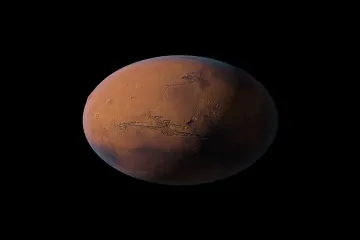
Mars presents a slightly different case. While it has a very thin atmosphere, it is insufficient to support bacterial life or prevent sublimation of ice. [8] However, the Martian atmosphere does offer a marginal barrier to some radiation compared to the hard vacuum of the Moon or deep space, meaning the rate of molecular breakdown might differ slightly, though preservation would still be the primary mode over biological decay. [8]
It is an interesting thought experiment to consider the density of the preserved material. If the body is exposed to vacuum, the loss of water—which makes up a significant percentage of soft tissue mass—means that the remaining structure would become far less dense, potentially leading to an extremely light, brittle husk composed mainly of residual carbonized and radiation-damaged organic material and bone. [1] The sheer volume reduction due to water loss, perhaps over 50% of the initial mass going to vapor, is an often-understated consequence of vacuum exposure. [7]
# Comparing Preservation Modes
We can summarize the dominant factors affecting an unprotected body in space using a simple comparison table, which illustrates how preservation mechanisms compete with destructive ones:
| Environmental Factor | Resulting Process | Effect on Body Structure | Time Scale |
|---|---|---|---|
| Vacuum (Low Pressure) | Ebullism followed by Freezing | Rapid loss of water/fluids, structural lockdown | Minutes to Hours |
| Lack of Air/Water | Absence of Putrefaction | Preservation of initial form (mummification) | Indefinite (without radiation) |
| Solar Radiation (UV/Cosmic) | Molecular bond disruption | Chemical breakdown, bleaching, structural weakening | Decades to Eons |
| Temperature Extremes (Surface) | Thermal cycling | Physical cracking, material fatigue | Millennia |
The key takeaway is that while the body would not decompose in the conventional sense—it would not rot—it would certainly degrade. [4] The rate of degradation is dictated by radiation flux, making bodies in high-radiation zones (like outside the protection of a planetary magnetosphere) degrade faster at the molecular level than those in slightly more shielded environments, even if the shielded body appears physically better preserved initially due to consistent deep-freezing. [3] For a body stranded near a celestial body with magnetic protection, the preservation could theoretically last for millions of years before significant molecular collapse due to radiation accumulation, far longer than any Earth-bound remains could survive exposed to the elements. [8]
Related Questions
#Citations
Would a body decompose in space? - Reddit
If an astronaut died on the moon and was found 100 years later ...
What would happen to a dead body in space? - Live Science
What Would Happen to a Decomposing Body in Space?
Do Bodies in Space Decompose? - YouTube
If you die in space, your body will not decompose in the normal way ...
What happens to the unprotected human body in space? - CNET
If a person were to die on the Moon or Mars, would the body ...