What is the primary long-term destructive force acting on complex organic molecules in space?
Answer
High-energy radiation like UV light and cosmic rays.
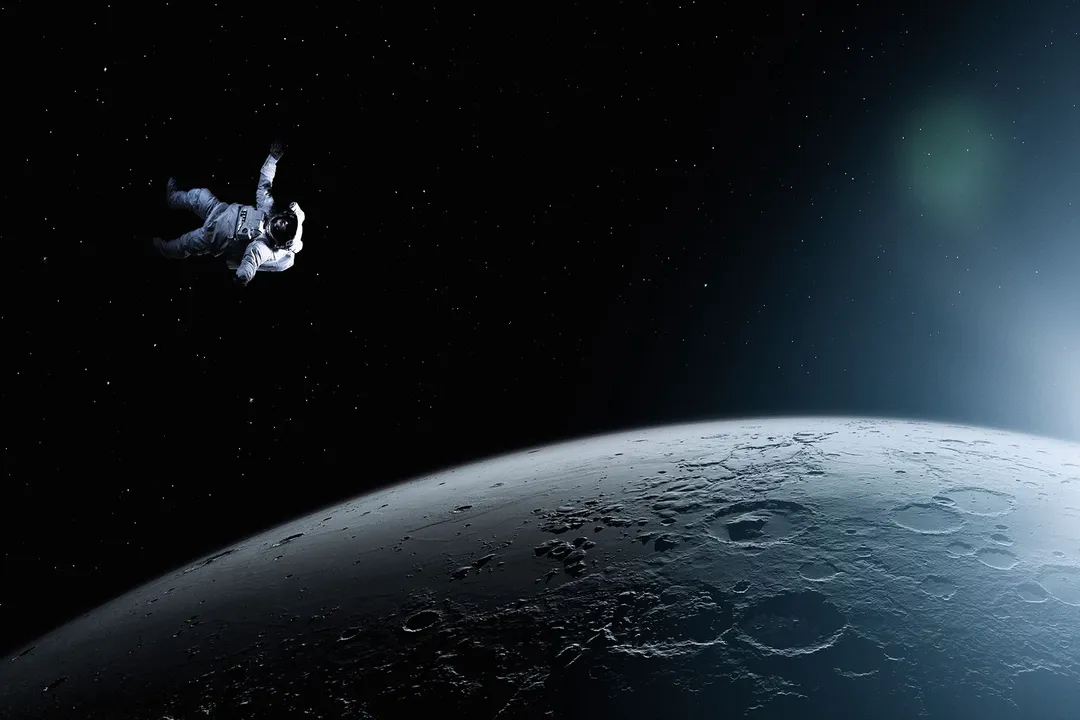
Once biological decomposition driven by microbes is halted by the vacuum, the long-term breakdown shifts to purely physical and chemical mechanisms dictated by the space environment. The most potent of these is high-energy radiation, which is normally filtered out by Earth's atmosphere and magnetosphere. This includes intense ultraviolet (UV) radiation originating from the Sun and constant bombardment by high-velocity cosmic rays. This radiation carries enough energy to break the complex molecular bonds within proteins, DNA, and other organic tissues, causing chemical degradation, bleaching of surfaces, and gradual structural weakening over timescales spanning decades to eons.
Related Questions
What causes body fluids to boil due to ebullism in space vacuum?Why does typical putrefaction not occur on an unprotected body in space?What temporarily restrains the swelling caused by expanding gases and vaporizing fluids?What is the primary long-term destructive force acting on complex organic molecules in space?What would a body found on the Moon after a century likely resemble?What happens to an unprotected body exposed to direct sunlight in orbit?What dynamic defines the environment on the Moon concerning temperature for an exposed body?How does the very thin atmosphere of Mars marginally differ in its effect compared to the Moon's vacuum?What consequence arises from the significant loss of water mass due to vacuum exposure?What is the fundamental distinction between conventional rotting and breakdown in space?