How does the average density within a typical nebula compare to laboratory vacuums on Earth?
Answer
The density is far less than the best vacuum achievable in a laboratory on Earth.
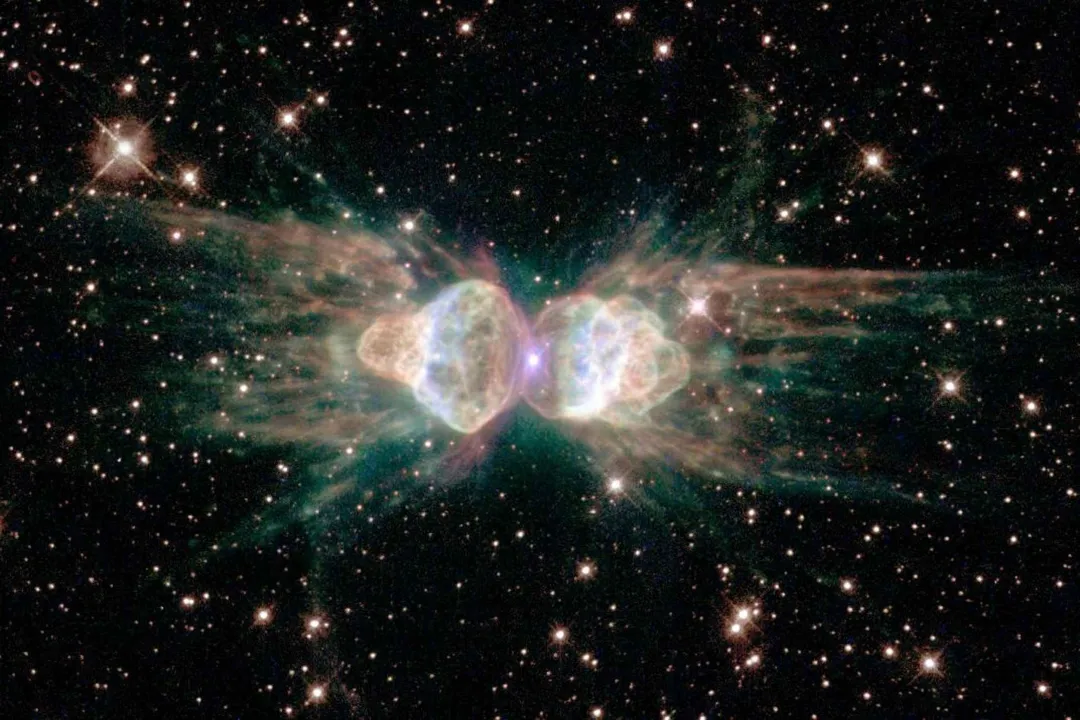
Despite containing colossal amounts of raw material spread over many light-years, the material within a nebula is distributed with an extremely low density. This means that even though the total mass might aggregate enough material to form thousands of stars, the space between individual atoms is immense. To put this in perspective, the average internal density is described as being significantly lower than the highest quality vacuum that terrestrial scientists can produce using sophisticated laboratory equipment. It is theoretically possible to travel a considerable distance through a nebula without encountering a single atom due to this vast emptiness.
Related Questions
What two elements primarily dominate the fundamental gas content of any nebula?Why do Reflection Nebulae frequently exhibit a blue coloration when observed?How does the average density within a typical nebula compare to laboratory vacuums on Earth?What stellar life stage results in the formation of a Planetary Nebula structure?What process causes an Emission Nebula to produce its own visible, often reddish, glow?What physical state characterizes the temperature within dense, cold molecular clouds intended for star formation?What complex materials are cited as the composition of microscopic interstellar dust grains?What interpretation challenge arises when analyzing images of nebulae captured through long exposure times?What visual effect results from floating within the core of a dark nebula?What is the term for the molecular clumps that act as precursors to star systems coalescing inside nebulae?