What interpretation challenge arises when analyzing images of nebulae captured through long exposure times?
Answer
The image represents an accumulation of light over time, painting a composite, time-averaged picture.
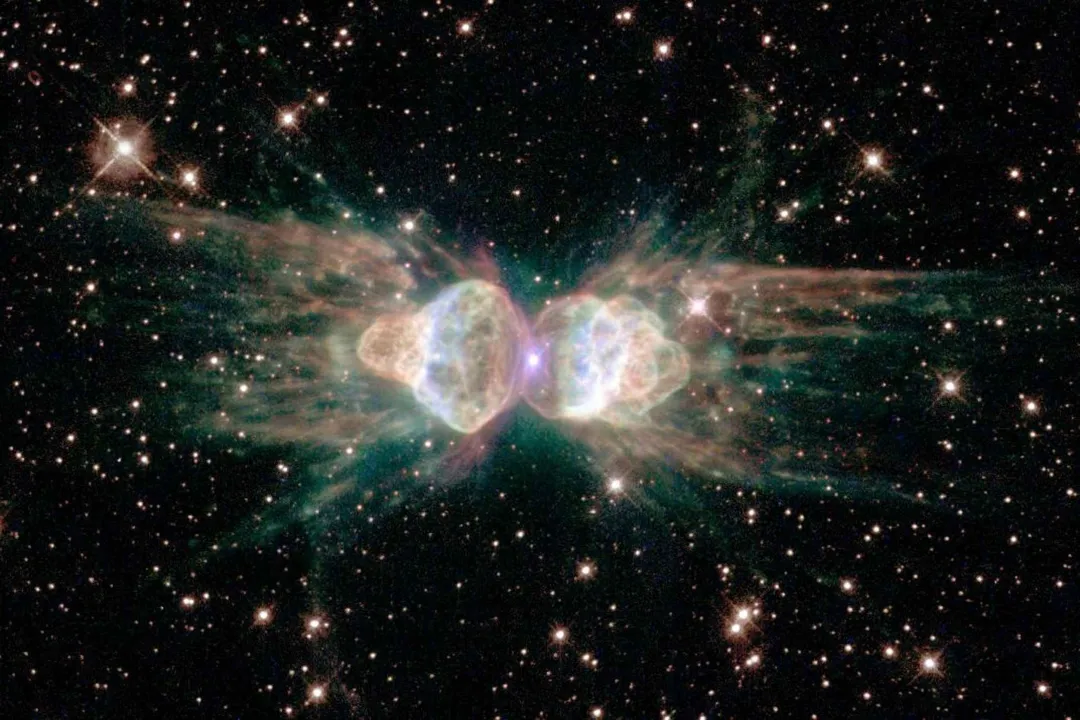
Observing nebulae, especially faint ones, necessitates collecting photons over extended periods, often requiring long exposure times ranging from minutes to hours. This requirement means that the final astronomical image is not a snapshot capturing the nebula at a single instant. Instead, it is a composite picture where light emitted over the entire integration duration is layered together. Because gas and dust within nebulae move slowly over cosmic timescales, the resulting visual representation is a time-averaged portrait of the structure, rather than a real-time observation of its instantaneous configuration.
Related Questions
What two elements primarily dominate the fundamental gas content of any nebula?Why do Reflection Nebulae frequently exhibit a blue coloration when observed?How does the average density within a typical nebula compare to laboratory vacuums on Earth?What stellar life stage results in the formation of a Planetary Nebula structure?What process causes an Emission Nebula to produce its own visible, often reddish, glow?What physical state characterizes the temperature within dense, cold molecular clouds intended for star formation?What complex materials are cited as the composition of microscopic interstellar dust grains?What interpretation challenge arises when analyzing images of nebulae captured through long exposure times?What visual effect results from floating within the core of a dark nebula?What is the term for the molecular clumps that act as precursors to star systems coalescing inside nebulae?