What process causes an Emission Nebula to produce its own visible, often reddish, glow?
Answer
Ionization of hydrogen by powerful ultraviolet light, followed by electron recombination.
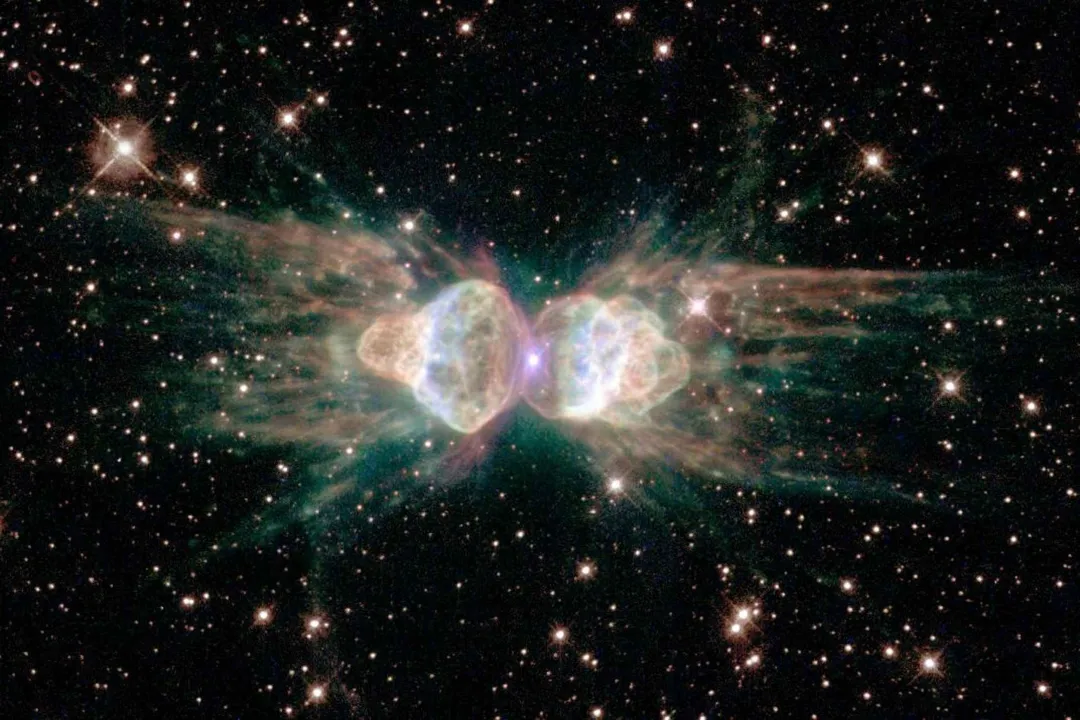
Emission nebulae are characterized by their ability to generate their own light, which typically appears reddish due to the abundance of hydrogen. This process is initiated by proximity to extremely hot, young, massive stars. These stars emit powerful beams of ultraviolet radiation that possess enough energy to strip electrons away from the surrounding hydrogen atoms, resulting in a state known as ionization. When these free electrons subsequently manage to recombine with the positively charged hydrogen nuclei, energy is released in the form of photons, causing the entire cloud structure to visibly glow intensely.
Related Questions
What two elements primarily dominate the fundamental gas content of any nebula?Why do Reflection Nebulae frequently exhibit a blue coloration when observed?How does the average density within a typical nebula compare to laboratory vacuums on Earth?What stellar life stage results in the formation of a Planetary Nebula structure?What process causes an Emission Nebula to produce its own visible, often reddish, glow?What physical state characterizes the temperature within dense, cold molecular clouds intended for star formation?What complex materials are cited as the composition of microscopic interstellar dust grains?What interpretation challenge arises when analyzing images of nebulae captured through long exposure times?What visual effect results from floating within the core of a dark nebula?What is the term for the molecular clumps that act as precursors to star systems coalescing inside nebulae?