Can you see the Chinese space station in the sky?
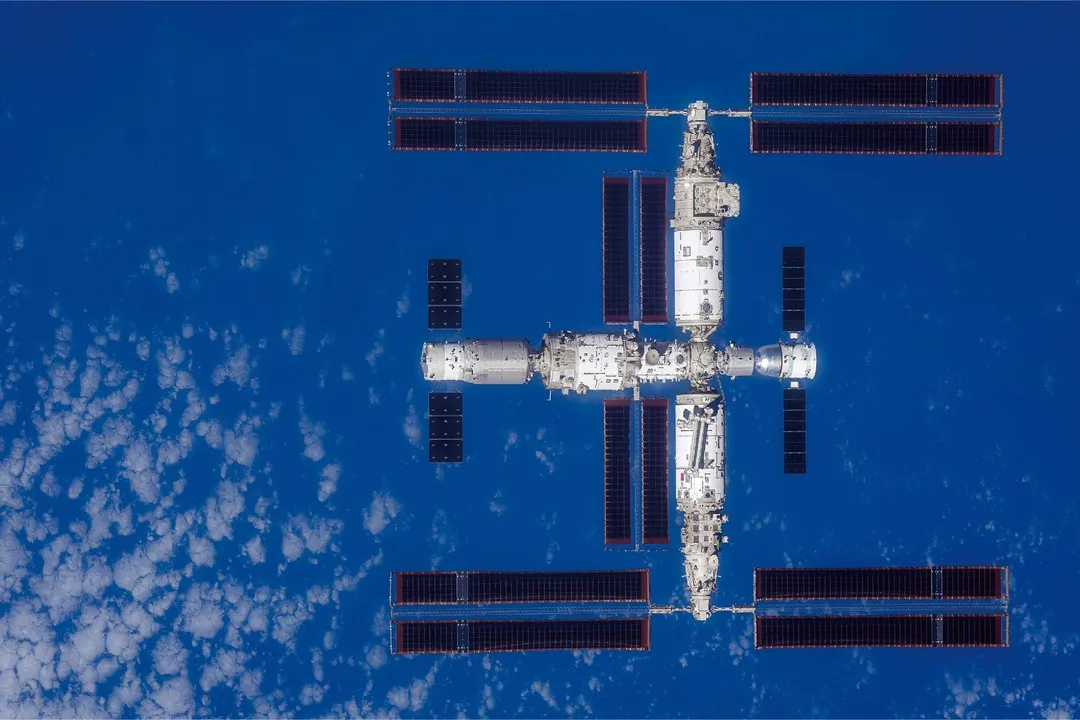
The night sky is changing, and for those who look up past the familiar twinkle of airplanes and the steady gleam of stars, a new, man-made marvel is passing overhead. It is easy to ask if China's Tiangong space station can be seen in the sky, much like its larger counterpart, the International Space Station (ISS). The answer, for many of us, is a resounding yes, though catching a glimpse requires a bit more planning than simply waiting for the ISS to appear. [3] Tiangong, which translates beautifully to "Heavenly Palace," is an operational, permanently crewed orbital outpost, and it's certainly bright enough to be spotted with the unaided eye under the right conditions. [3]
# Brightness Comparison
To a casual observer, the most important distinction between the two major orbital outposts is simply which one shines brighter. The ISS is a famously brilliant spectacle, often shining brighter than the brightest stars, sometimes reaching a visual magnitude of $-3.8$. [3] In contrast, Tiangong is physically smaller; its pressurized volume is just over one-third that of the ISS, approximately . This size difference translates directly into its visual presence. Astronomers estimate Tiangong's peak brightness hovers around magnitude $-2.6$. [3] While this is still quite bright—brighter than most stars—it means the ISS will almost always outshine its Chinese counterpart when both are passing overhead. [3] If you are new to tracking these objects, use the predicted time for the ISS as your initial target. If the ISS is visible, check your tracking software for Tiangong nearby, as the ISS's brightness can help you calibrate your eye to that section of the sky where the fainter Tiangong might soon appear or has just passed. [1]
The station appears as a distinct dot of light, moving slowly and continuously across the celestial sphere. [3] It is crucial for amateur spotters to differentiate it from aircraft; the space station does not blink, and its stately, consistent movement rules out fast-moving, fleeting meteors. [3] If you have a decent pair of binoculars, you may be able to make out the structure slightly, but the best details are reserved for specialized photography techniques. [3]
# Orbital Mechanics
Understanding where and when to look involves grappling with the basic physics of Tiangong’s orbit. Like the ISS, Tiangong circles Earth at a low altitude, currently estimated to be in the range of . [3] Its speed is tremendous, clocking in around , [3] completing an entire orbit in about 92 minutes.
The key element dictating visibility is the orbital inclination, which refers to how far north or south of the Earth's equator the orbit reaches. [3] The ISS has an inclination of about $51.6$ degrees. [3] Tiangong, however, is on a lower incline, sitting at roughly degrees. [3] This difference might seem minor, but it has significant consequences for ground observers. Because its path is less inclined, Tiangong flies quite far to the south compared to the ISS, often appearing low on the southern horizon for observers in the Northern Hemisphere. [3]
This lower latitude means that if you live far north, you might never see it at all. For those residing above approximately $60$ degrees North latitude—covering the northern reaches of Canada, much of Alaska, and countries like Norway, Sweden, and Finland—Tiangong simply does not ascend high enough above the horizon to be a viable target. [3] Even for locations a bit further south, such as Edmonton or Dublin, the station may only scrape above the horizon at an altitude less than 10 degrees, a visual hurdle that requires a very clear, unobstructed southern view. [3] Conversely, for locations between $42.8$ degrees South and $42.8$ degrees North, the station can frequently arc high overhead, offering the best, albeit brief, viewing opportunities. [3] In general, visible passes are restricted to a window of a few hours just after sunset or just before sunrise, as this is when the station is still catching the sun's light while the observer is in darkness. [3] Once it enters the Earth’s shadow, it becomes too dim to track. [3]
# Finding Passes
Relying on luck is not an option for catching a faint $-2.6$ magnitude object passing overhead for only a couple of minutes. You absolutely need prediction software. [3] Several reliable online resources exist to generate personalized viewing schedules based on your location.
One highly recommended resource is Heavens Above. [3] This service provides precise details for satellite passes, including the predicted magnitude (how bright it will look), the start time, the highest point it will reach (altitude and azimuth), and the end time of the pass. [6] An amateur astronomer noted that the maps provided by such services are invaluable for astrophotographers, as they show the exact path the station will trace against the background stars, allowing for careful framing of the shot. [3]
Another powerful tool mentioned is Astroviewer. [3] This platform offers real-time position data, showing the current ground point directly beneath Tiangong, along with its altitude and speed. Crucially for visual spotting, Astroviewer often presents the ground track of the next orbit, color-coding the path: red indicates the path segment where the station is sunlit and visible, while blue denotes the section where it is passing through Earth’s shadow and invisible. This red line is your sighting map.
When using these tools, be mindful of the flight direction. When Tiangong is passing overhead, it typically travels from West to East, which translates to a movement from right to left if you are facing south. [3] Knowing this direction helps confirm your identification during the short sighting window.
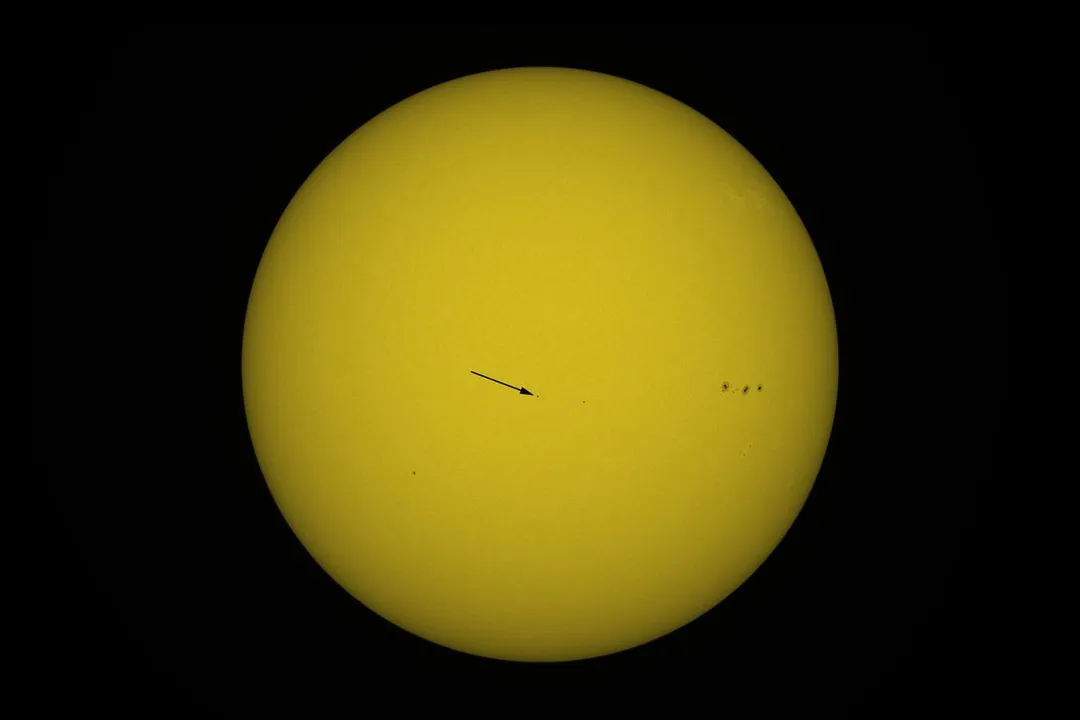
If you are aiming to simply confirm you saw something man-made, taking a photo can be the ultimate proof. For those who are not keen on complex optics, a basic DSLR or even a smartphone mounted firmly on a tripod can capture the station as a streak of light against the stars by using a few seconds of exposure time. [3] This simple method of capturing the trail of light, rather than resolving the station itself, is highly effective for beginners and confirms the object's movement across the sky. [3]
# Station Details
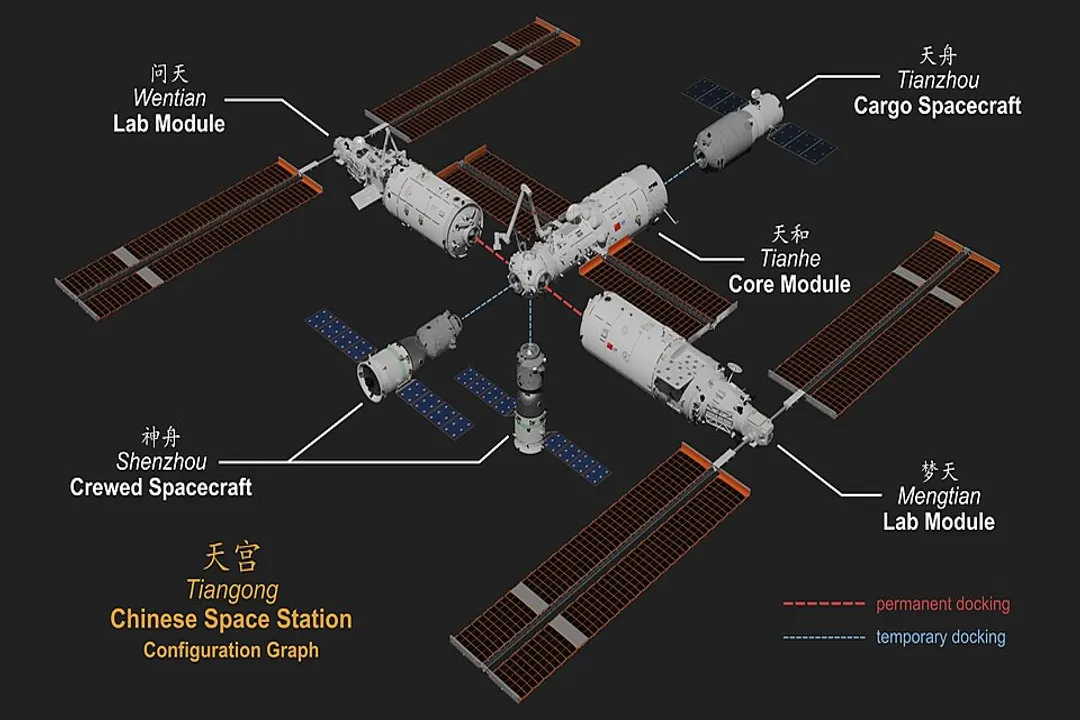
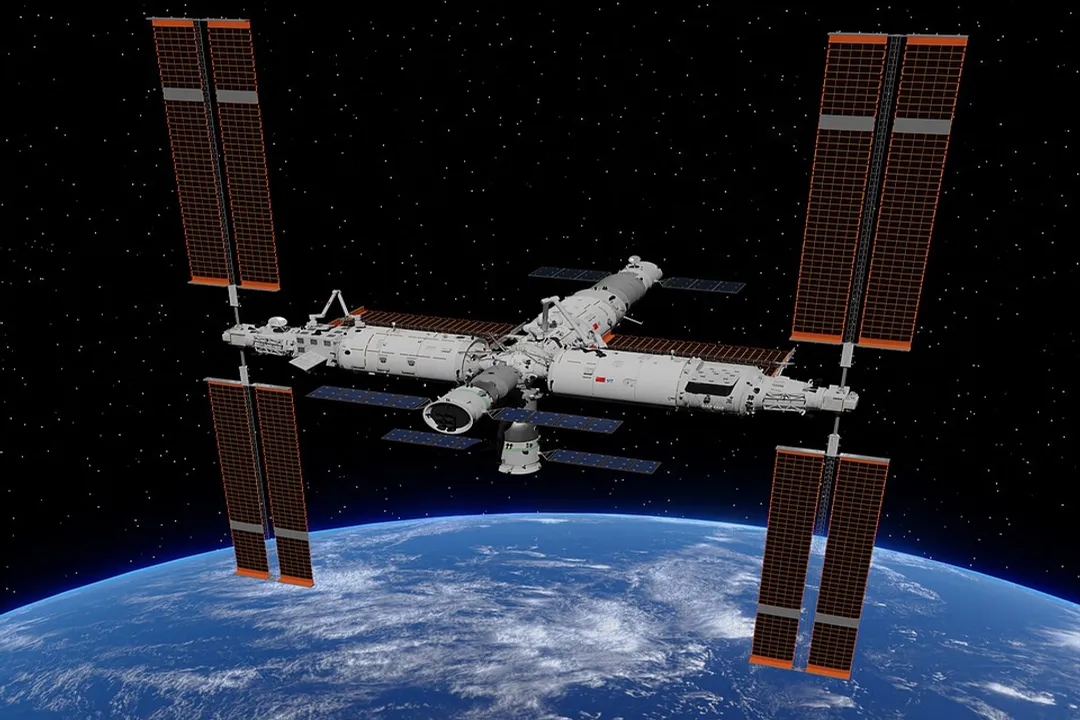
The Tiangong space station is a testament to modern space engineering. As a third-generation, modular facility, its construction built upon lessons learned from predecessors like Mir and the ISS. The primary structure consists of the Tianhe core module, which handles life support and control, flanked by two laboratory modules: Wentian and Mengtian.
A fascinating engineering detail is Tiangong's propulsion system. While it relies on traditional chemical engines for major maneuvers, the core module is equipped with four Hall-effect thrusters. These ion thrusters are exceptionally fuel-efficient, potentially cutting propellant needs by 90% compared to older systems, a design choice intended to help sustain the station's planned 15-year lifespan. Attitude control—keeping the station oriented correctly—is managed primarily by 12 control moment gyroscopes, which use rotational momentum to keep the station stable without expending precious propellant.
The station is also outfitted with a sophisticated robotic arm system. The main arm, Chinarm, is about 10 meters long, comparable to the Canadarm2 on the ISS. The Wentian module added a secondary, more precise arm, and when linked with the main arm, their combined reach offers significant flexibility for external maintenance and experiments.
# International Presence
Despite its name and origins, Tiangong is not purely a domestic venture. While the United States is prohibited from direct collaboration with Chinese agencies due to legislation like the Wolf Amendment, international engagement is present. The station hosts numerous international experiments from various countries, including Germany, France, Italy, and Japan. Furthermore, the station includes an amateur radio payload, the CSSARC, designed to allow radio amateurs worldwide to contact the onboard astronauts, which serves as an excellent educational outreach point. While one report indicated the European Space Agency (ESA) would no longer send astronauts, China has signaled openness to foreign participation, and has agreements in place, such as one to send a Pakistani astronaut on a future mission.
The ability to see Tiangong from your backyard is a constant reminder of the ongoing, competitive, and increasingly international nature of human activity in low Earth orbit. It requires checking prediction sites frequently, as visibility windows shift constantly based on the station's orientation relative to the sun and your latitude, but the faint, steady light of the "Heavenly Palace" overhead is a sight well worth the preparation.
#Videos
What The News Should Have Told You About China's Space Station
Related Questions
#Citations
How to see and track the Tiangong Chinese space station
I captured the Tiangong space station transiting in front of the Moon ...
What The News Should Have Told You About China's Space Station
Tiangong - Visible Passes - Heavens-Above
Current position of Tiangong - AstroViewer.net
Tiangong space station - Wikipedia