What is the oldest Messier object?
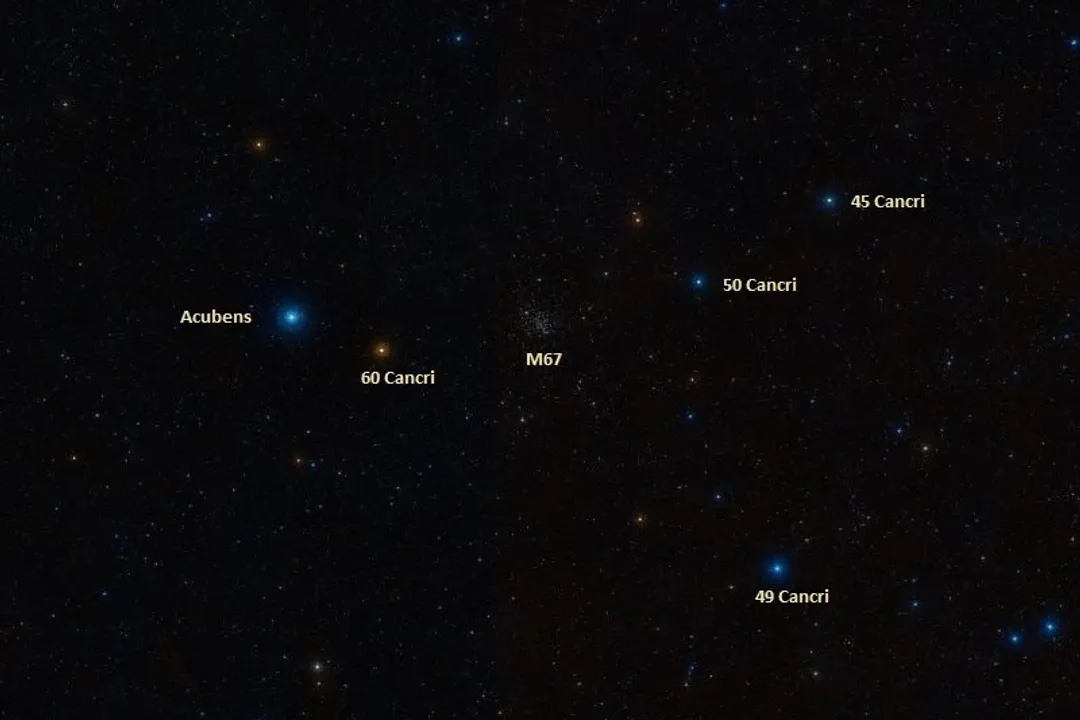
The question of which Messier object holds the title for being the "oldest" in the universe is fascinating because it forces a distinction between when the object was found and how long the object has actually existed. The Messier Catalog, compiled primarily by French astronomer Charles Messier during the latter half of the 18th century, was originally intended as a list of deep-sky objects that might be confused with comets—objects he was actively hunting for. [1][7][9] While Messier recorded the discovery dates, often in the 1760s or 1770s, the objects themselves predate his observations by millions or even billions of years. [9]
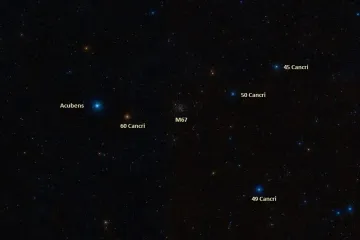
To answer what the oldest object is, we must focus on stellar populations. Galaxies are ancient, but within the catalog, the running contenders for extreme age are the star clusters, specifically the open clusters, as globular clusters are generally much older and most are not in the main catalog or are known to be older than M67. [2] The object most frequently cited as the venerable elder of the collection is Messier 67 (M67). [2][5]
# Catalog Context

The catalog lists 110 recognized objects, ranging from nearby nebulae to distant galaxies and star clusters. [1] When an amateur astronomer or researcher looks at M104 (the Sombrero Galaxy) or M42 (the Orion Nebula), they are looking at objects billions of years old. [1] However, M67, situated in the constellation Leo, is particularly noteworthy because of its nature as an open cluster. [5]
# Cluster Longevity
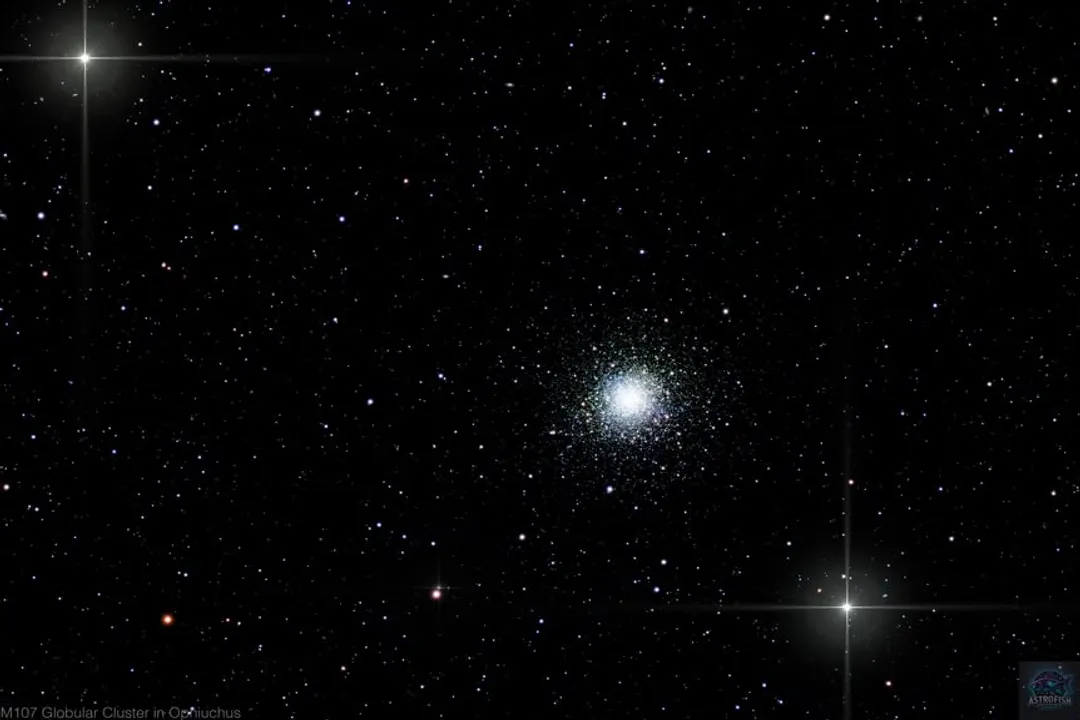
Open star clusters are loosely bound groups of stars that typically form together from the same giant molecular cloud. Because of their relatively low stellar density and the gravitational influence of the wider Milky Way galaxy, they are expected to dissipate or "evaporate" over time, usually lasting only a few hundred million years. [5] This is in stark contrast to globular clusters, which are tightly packed, spherical groupings of hundreds of thousands of stars, often dating back to the earliest epochs of the galaxy, sometimes exceeding 12 billion years in age. [5]
Messier 67 challenges this expected lifespan dramatically. Its estimated age places it around 4 billion years old. [2][5] This makes M67 significantly older than the Sun, which is estimated to be about 4.6 billion years old. [5] For an object whose structure relies on relatively weak gravitational binding to hold its thousands of stars together, surviving for 4 billion years is extraordinary. It is, for all intents and purposes, a fossilized remnant of the galaxy's early life, surviving in a field where its siblings have long since scattered across the spiral arms. [5]
# An Ancient Outlier
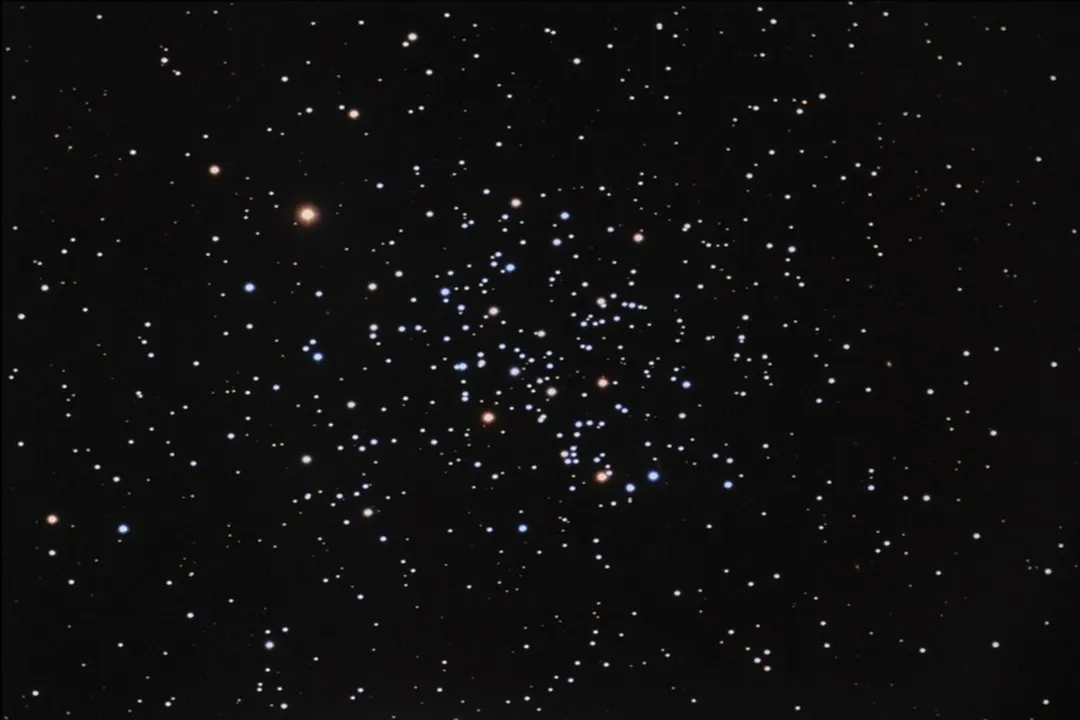
The comparison between M67 and its brethren provides essential context for understanding its seniority. Other Messier objects that are bright, famous clusters, like the Pleiades (M45), are extremely young by comparison, likely only around 100 million years old. [5] Even some of the brighter clusters like Messier 37 (M37) are estimated to be younger, perhaps around 200 to 300 million years old, though they still represent older stellar populations than the most ephemeral ones. [4]
The fact that M67 has remained gravitationally intact for such a long period suggests that it either formed in a much denser environment than is typical for open clusters, or it has been shielded from disruptive tidal forces that usually tear these groupings apart. [5] When observing M67, one is not just seeing stars; one is seeing a record of chemical and dynamic processes that occurred when the Milky Way was substantially younger and still actively forming its major structures. The stellar distribution within M67, while somewhat dispersed compared to younger clusters, still betrays a common origin, unlike the random assortment of stars one sees in the foreground of a galaxy field. [1]
An interesting point for observers is that M67 is often classified as an intermediate cluster, bridging the gap between typical, short-lived open clusters and the more robust globular clusters, though it remains fundamentally an open cluster by structure. [5]
# Practical Viewing Insights
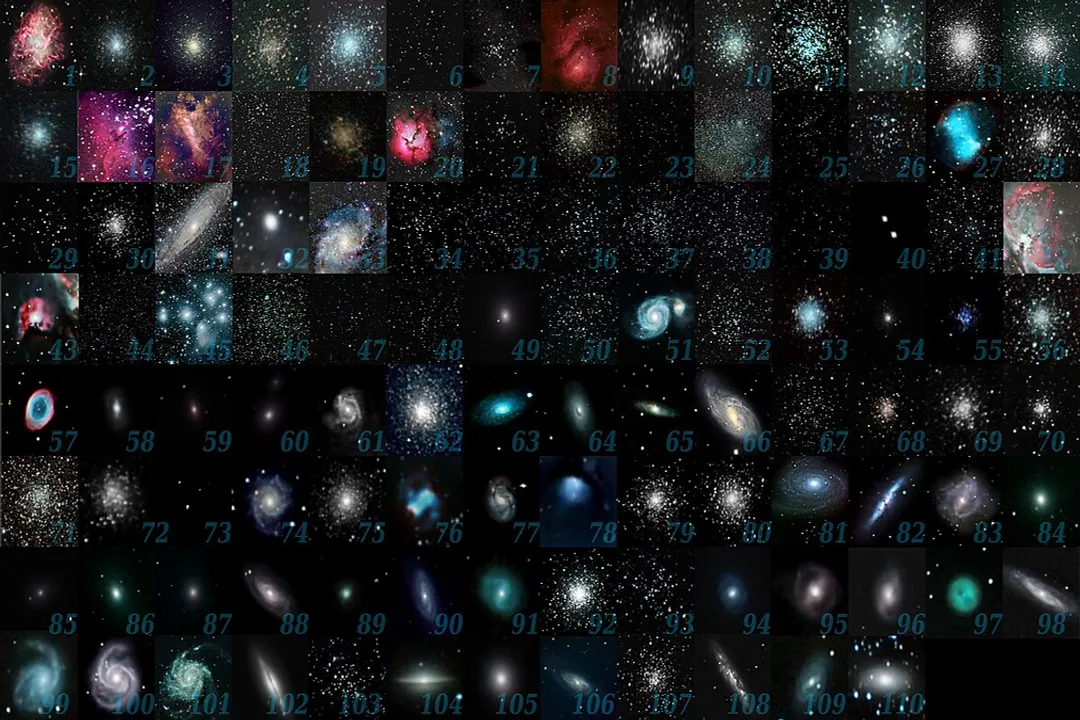
While M67 is the oldest, it is not necessarily the easiest or most spectacular object to find in the Messier catalog, especially when compared to bright nebulae or dense globulars like M13. Because of its advanced age, the hottest, brightest blue stars that characterized the cluster upon its formation have already exhausted their fuel and died, leaving behind fainter, cooler, yellow-orange stars. [5] This significantly lowers the overall visual contrast and brightness of the cluster.
If you are attempting to locate M67 with a modest telescope, recognizing its faint nature is key. While M37 is often visually striking due to its brighter, younger population, M67 requires more patience and generally benefits greatly from averted vision or slightly darker skies than a beginner might initially seek out. [4] For astrophotographers seeking to capture its ancient history, long integration times are necessary not just to gather light, but to resolve the subtle color differences between the ancient cluster members and the foreground/background field stars, giving a visual cue to its long tenure. [4]
For those who enjoy tracking the history of star formation, taking the time to locate M67 offers a tangible connection to the Milky Way's past. It’s a testament to the resilience of stellar gravity, a grouping that has stubbornly refused to dissolve across epochs of galactic evolution.
# Cataloging and Discovery
It is worth remembering the circumstances under which Messier logged this ancient beauty. In the 18th century, telescopes were purely optical, lacking the electronic amplification we rely on today. [9] Messier recorded M67 on May 1, 1779. [2][5] At that time, the concept of stellar evolution, cluster dissipation, or the true vastness of cosmic time did not exist in the way it does now. For Messier, it was simply another fuzzy spot—a non-comet—that needed logging so he wouldn't mistake it for a new discovery later. [7] His meticulous cataloging habits, driven by an obsession to rule out false positives for comets, inadvertently preserved a list of some of the most scientifically significant objects in the northern sky. [1][9]
# Age Comparison Summary
To put the age of M67 into perspective against other Messier objects, we can look at the general types of objects found:
| Object Type | Typical Age Range (Approximate) | Example Messier Objects |
|---|---|---|
| Open Clusters (Young) | 10 Million – 500 Million Years | M45, M37 [4] |
| Open Cluster (Ancient) | ~4 Billion Years | M67 [2][5] |
| Globular Clusters | 10 Billion+ Years | M13 (Not in Messier's list of 110 but used for context) |
| Galaxies | Billions of Years | M31 (Andromeda Galaxy) |
M67’s age pushes it into a category where its physical characteristics—such as the lack of massive, short-lived stars and its relatively low overall luminosity—mark it as truly exceptional among its open cluster peers in the Messier list. While we cannot definitively rule out that a very distant, faint galaxy in the catalog might contain light that traveled longer, M67 represents the single oldest structure of stars that formed together still identifiable as a distinct cluster within the primary 110 entries.
Related Questions
#Citations
Messier object - Wikipedia
Messier 107 globular cluster photography - Facebook
13 hours on Messier 37 to include the oldest planetary nebula ever ...
Messier 67 - the King Cobra Open Star Cluster - Universe Today
[PDF] Messier Objects - Stocker AstroScience Center
Charles Messier - NASA Science
Messier Objects History - Deep Sky Observing - Cloudy Nights
The Messier Objects - Rosliston Astronomy Group