What happens to broken Starlink satellites?
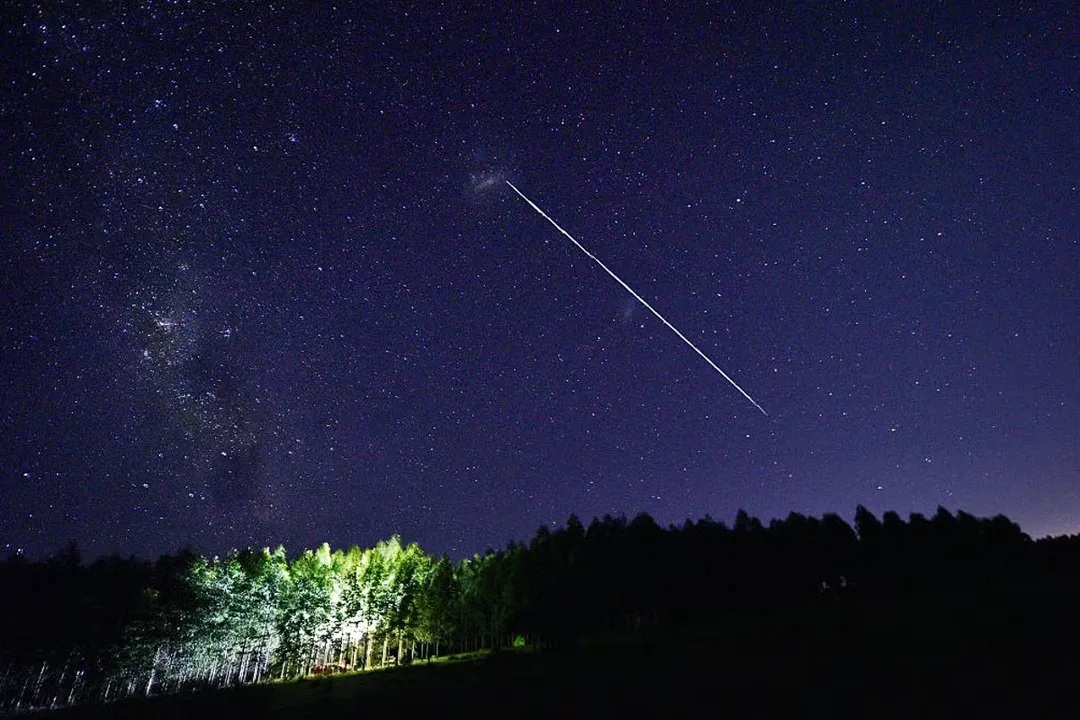
The appearance of a bright streak in the night sky that isn't a meteor is often a sign that something unusual is happening far above our heads, particularly with the ever-growing constellations in low Earth orbit. When an active communication satellite malfunctions or suffers a catastrophic failure, the process of its demise is far from silent or invisible; it becomes a highly tracked event in the space community. For the Starlink constellation, which involves launching thousands of these relatively small satellites, such anomalies do result in specific, observable outcomes, forcing operators like SpaceX to manage the resulting debris and orbital hazards. [1][5]
# Orbital Anomaly

Recent attention has been drawn to a specific incident where a SpaceX Starlink satellite experienced an anomaly, leading to a significant, partial breakup in orbit. [1][9] Unlike a clean, intentional deorbit burn, this failure resulted in the satellite tumbling out of its designated operational path. [1] Reports indicated that after the anomaly on December 17th, the satellite was not maintaining attitude control, causing it to drift and eventually begin falling back toward Earth. [3] The nature of this failure often involves a loss of control, causing the satellite to enter an uncontrolled descent rather than a controlled, planned re-entry. [1][5]
# Fragmentation Events

When a satellite breaks apart unexpectedly, the immediate consequence is the generation of new space debris. In this particular case, the satellite was described as having experienced a partial break-up, causing it to shed fragments that are now being tracked. [1][9] Some initial reports, perhaps due to visual confusion or rapid pressure changes, suggested the object had "exploded" while in orbit. [2][4] Regardless of the precise terminology—whether a slow fragmentation or a sudden burst—the result is the creation of multiple pieces of trackable debris propagating along slightly different trajectories. [10] SpaceX confirmed that the satellite would re-enter the Earth's atmosphere following this event. [4] A key difference here is that the resulting fragments are now independent objects, each requiring its own tracking solution from organizations like the U.S. Space Force’s 18th Space Defense Squadron. [10]
# Debris Tracking

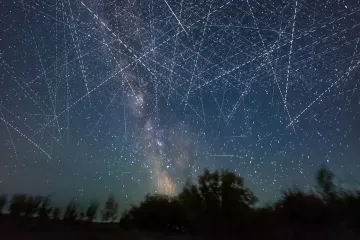
The fate of these pieces depends heavily on their size, initial velocity, and altitude. Small fragments burn up high in the atmosphere, posing no risk. Larger pieces, however, will follow a decaying orbit, eventually leading to atmospheric reentry. [1] For an object that is tumbling or breaking apart, mission control loses the ability to command a specific deorbit burn, which is the standard procedure for ending a satellite's life safely at the end of its operational period. [1] This uncontrolled nature means the exact time and location of reentry become uncertain until the final few hours, although operators can use telemetry to estimate the decay path. [5] The fragments created from this partial failure are being closely monitored because they are now cataloged objects, adding to the overall population of objects orbiting Earth. [9][10]
# Controlled Versus Uncontrolled
To understand the implications of this failure, it helps to contrast it with routine end-of-life procedures. Normally, a Starlink satellite is designed to deorbit within a few years of completing its mission or if a fault occurs early on. [1] This process is controlled: the satellite uses its remaining propulsion to execute a deorbit burn, directing itself to reenter the atmosphere over a remote area, usually the South Pacific Ocean Uninhabited Area (SPOUA). [1] The design philosophy centers on ensuring that any surviving material upon reaching the ground is minimal and poses negligible risk. [1] A catastrophic or partial failure, conversely, turns a predictable event into an unpredictable shower of fragments, even if the overall risk remains statistically low due to the vast coverage of the oceans. [7]
# Reentry Physics
What actually happens when a large piece of space junk hits the atmosphere? The intense friction generates extreme heat, causing most components to vaporize or completely break apart. A typical Starlink satellite is relatively small compared to defunct Cold War satellites, and its construction materials are designed to burn up efficiently. [1] However, if a piece is large enough or dense enough, some fragments can survive the fiery descent. For context, engineers calculate reentry probabilities based on the object's ballistic coefficient. When a satellite breaks up mid-orbit, the pieces scatter across a wide swath of latitude, meaning the risk footprint on the ground is spread out, though the timing remains uncertain until the last moments. [5]
# Navigating Liability
A critical, though often theoretical, aspect arises when uncontrolled debris descends: who is responsible if something lands where it shouldn't, or worse, causes harm? Under international space law, specifically the Liability Convention, the launching state is responsible for damage caused by its space objects, even if they are in orbit due to a malfunction. [7] This principle holds that the nation or entity that launched the object bears the responsibility for any resulting damage or loss of life caused by its space object when it comes down. [7] While a failure like this is unfortunate, the framework for accountability is already established, even if the practical process of claiming damages is complex.
# Debris Mitigation Comparison
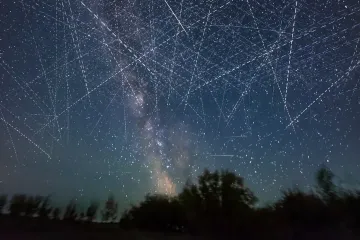
It is worth considering the scale of debris generated by different failure modes. A planned deorbit is an exercise in orbital management, where the operator trades a small amount of fuel for absolute control over the disposal location. The resulting debris signature is concentrated and directed to a known, safe zone. [1] A sudden, mid-orbit breakup, however, disperses the fragments across many degrees of longitude and latitude. [10] This means that while the total mass of debris might be similar to a controlled burn, the spatial distribution is chaotic. This forces tracking agencies to quickly characterize and monitor dozens of new, short-lived objects instead of just one predictable decay corridor. It's an efficiency nightmare for space traffic management, even if the primary collision risk is mitigated by the debris burning up high enough. [9]
Thinking about the engineering trade-offs, if a satellite develops a minor propulsion issue early in its life, the operator faces a cost-benefit analysis: use the remaining limited fuel reserve for an early deorbit burn now, or risk a total anomaly later? The decision to use propulsion for a controlled descent is essentially an insurance policy against the chaotic scattering seen in the uncontrolled event. If a new satellite fleet launches with, say, 5% fuel margins, those margins are specifically there to allow for these early corrective or disposal maneuvers, which is a learned lesson from decades of space operations. [1]
# Public Perception Versus Reality
When news circulates about a satellite "exploding" or falling out of the sky, the public reaction is naturally one of alarm. Images of fiery reentry contrasted with headlines about space junk create a powerful narrative of orbital chaos. [2][4] From a statistical standpoint, however, the risk to any specific individual or property on the ground remains exceedingly low. A significant portion of Earth is covered by open ocean, deserts, or unpopulated areas, which is why the SPOUA is the preferred disposal target. [7] Furthermore, modern satellite construction prioritizes materials that readily ablate. A general rule of thumb in satellite design is that objects under a certain mass threshold—often around 100 kg—are expected to fully burn up. If the fragments from a breakup are small enough, they become indistinguishable from micrometeoroid dust from a risk perspective. The true impact of these events is felt more acutely within the orbital environment, where even small, non-ablating pieces can threaten operational satellites. [9]
If we map the reentries of a constellation that experiences, say, a 1% failure rate over a decade, we could generate a predictive model. For instance, if a constellation has 10,000 satellites, a 1% failure rate yields 100 uncontrolled reentries. Even distributing these 100 events across the Earth’s surface means that statistically, the probability of a major debris event impacting a densely populated area remains far lower than the probability of a severe weather event impacting that same area on any given day. This statistical grounding helps explain why the operational tempo continues despite the visible, dramatic failures. [1]
# Satellite Lifespan Management
The longevity of a satellite is a direct function of the fuel it carries, not just for maneuvering between orbital shells but also for its final death. Every maneuver—station-keeping, collision avoidance, or the final deorbit burn—consumes propellant. For large constellations, the operational lifespan is intentionally truncated by the initial fuel load. When a satellite fails unexpectedly, as noted in the recent anomaly, it essentially means its pre-programmed end-of-life sequence or its ability to perform any terminal maneuver has been compromised. [1][3] If a satellite malfunctions shortly after launch, before it even reaches its operational altitude, the orbital mechanics are slightly different, but the outcome is similar: an uncontrolled descent path dictated by atmospheric drag and initial position, rather than a calculated trajectory. This highlights the critical importance of launch reliability; the better the initial deployment, the less burden is placed on the satellite's onboard life-support systems, including the fuel tank meant for disposal. [5]
# Post-Failure Communication
In the immediate aftermath of an anomaly, information flow is crucial for both the space community and the general public. Initial communications often stem from amateur observers tracking the object's erratic movement. [3][6] Following this, official confirmation or status updates from the operator, such as SpaceX, provide the necessary authority to move from speculation to confirmed facts regarding the object's trajectory and the company’s response. [4] This rapid exchange, often seen across social media platforms, demonstrates a modern form of situational awareness, supplementing official tracking networks with widespread, crowdsourced observation data. [3][6] This transparency, even when discussing a failure, helps build trust that the situation is being actively managed, even if the outcome is an uncontrolled descent. [4]
# Operational Protocols
Understanding the chain of events—from anomaly detection to final reentry—reveals the layers of procedures in place for these systems. Once a satellite loses attitude control and begins tumbling, the first step is typically an attempt at remote diagnosis and potential recovery, often involving thruster firings to regain stability. [1] If recovery fails, the system transitions to the disposal protocol. In an uncontrolled event, this transition is instant and involuntary. The orbital mechanics then take over, governed primarily by atmospheric drag, which is the force pulling the satellite down. The altitude of the initial anomaly dictates the timeline: a satellite at 550 km will decay much faster than one at 1,000 km, potentially reducing the window for tracking and increasing the risk of widespread ground impact footprint before full burn-up occurs. [1] The specific altitude of the failed satellite in question would determine the timeline for its predicted reentry, transforming it from a high-altitude target to a low-altitude threat rapidly. [5]
#Videos
Nearly 1000 Starlink Satellites Destroyed - YouTube
Related Questions
#Citations
A SpaceX Starlink satellite is tumbling and falling out of space after ...
A Starlink satellite seems to have exploded - The Verge
On Dec 17, Starlink experienced an anomaly on sat 35956, resulting ...
Starlink Satellite Explodes in Orbit; SpaceX Confirms It'll Re-Enter ...
Starlink satellite is out of control and 'tumbling' to Earth
Spacex starlink satellite tumbling out of orbit - Facebook
Who's going to be responsible for damage or lost life when ... - Quora
Starlink Satellite Malfunctions, Ejects Debris Fragments - PCMag
Nearly 1000 Starlink Satellites Destroyed - YouTube
Starlink Satellite Breaks Apart in Orbit After Anomaly, Creating ...