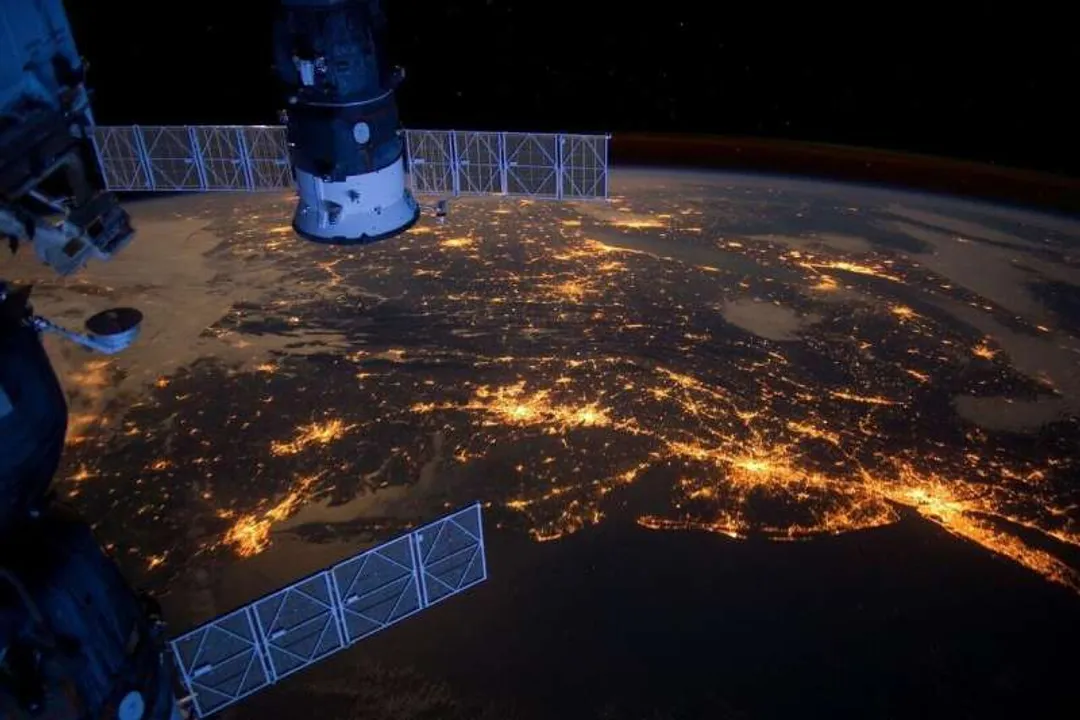
Roughly what percentage of the Earth's surface can a single satellite in Geostationary Orbit (GEO) observe ideally?
42%
Under ideal observational conditions, a single satellite positioned in Geostationary Orbit (GEO) is capable of viewing approximately 42% of the Earth's entire surface at any given moment. This extensive coverage area is a direct result of the high altitude of the GEO ring, allowing the satellite to see a very large slice of the planet below it. It is critical to understand that this figure is theoretical and assumes perfect conditions. In reality, this instantaneous coverage does not account for practical constraints such as the curvature of the Earth near the horizon line, which limits visibility further away, or the necessity of avoiding signal blockage caused by terrain features. Therefore, while 42% is the theoretical instantaneous maximum view, it is insufficient on its own to provide continuous coverage to the entire planet.