How many satellites are destroyed in space?
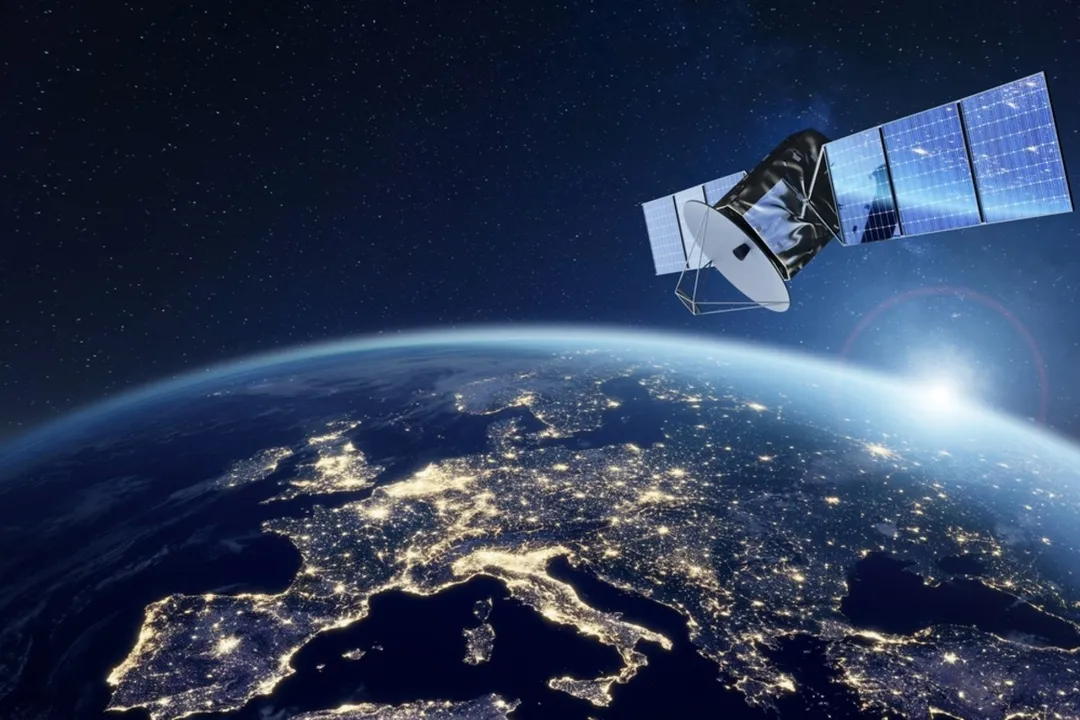
The skies above Earth are not as empty as they appear; they are currently filled with tens of thousands of pieces of human-made debris, a growing population of defunct hardware that orbits at incredible speeds. When considering how many satellites are "destroyed" in space, the answer isn't a single, simple number, but rather a dynamic count reflecting several ongoing processes: operational satellites reaching their end-of-life, collisions shattering existing spacecraft, and intentional tests designed to neutralize targets. [1][6] Understanding this destruction requires looking at what is tracked, what causes the breakups, and what happens to the remnants.
# Tracking Objects
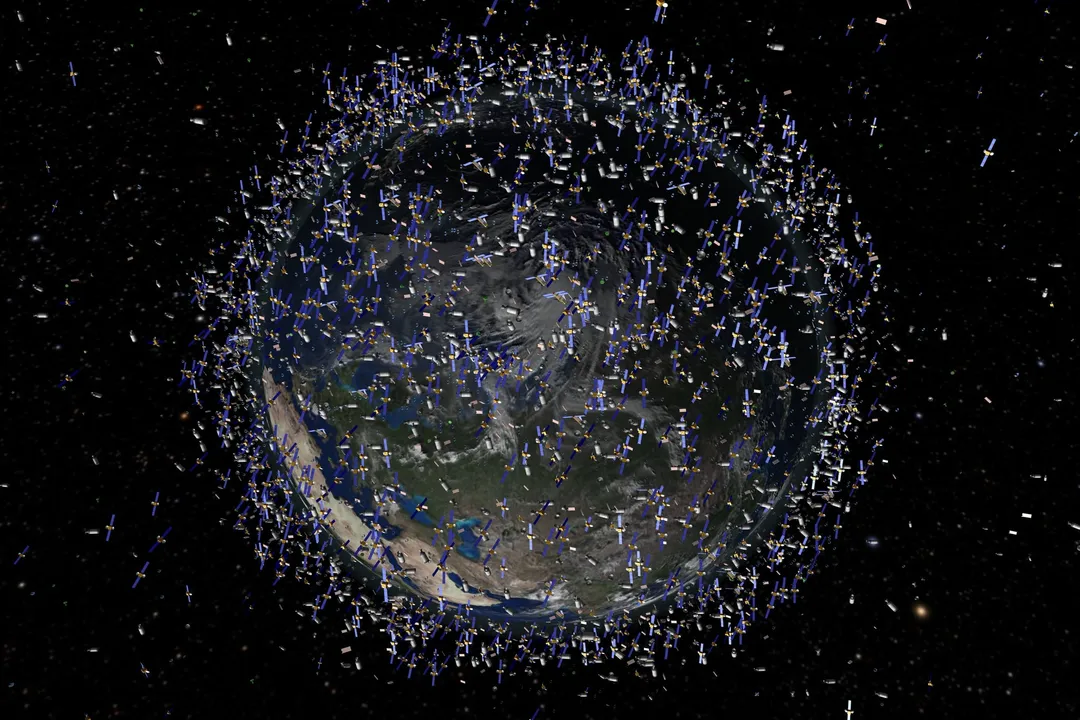
The sheer volume of material orbiting Earth is managed by various agencies, though not all pieces are cataloged. The European Space Agency’s Space Debris Office maintains a database that tracks objects large enough to be reliably monitored. [3] As of early 2024, the number of cataloged objects orbiting Earth hovered around 36,500, according to one agency's statistics, with about 9,500 of those being inactive or defunct satellites. [3] NASA's catalog often reports slightly different figures, listing over 35,000 tracked objects, which includes operational satellites, dead satellites, mission-related debris, and fragments from breakups or explosions. [4][6]
It is crucial to distinguish between operational satellites and destroyed ones. While there are thousands of functioning satellites actively sending data back to Earth, the debris population—the result of destruction—is significantly larger in terms of fragmented pieces. For example, the ESA catalog tracks approximately 18,000 fragments, rocket bodies, and dead satellites, with an estimated 27,000 objects being tracked by US Space Command. [1][3]
# Debris Size
The distinction in size dramatically affects how many objects are counted. The lower Earth orbit (LEO) environment is particularly crowded. [6] Objects larger than 10 centimeters are generally cataloged and tracked, numbering in the tens of thousands. [1][4] However, this tracked inventory represents only a fraction of the total volume of junk. Experts estimate there are hundreds of thousands of smaller fragments—objects between 1 cm and 10 cm—and millions of even tinier paint flecks and particles that pose a threat but are too small to consistently track. [1][4] A statistical breakdown often shows that the vast majority of cataloged items are fragments resulting from past destruction events, rather than intact, non-functional satellites. [3]
# Destruction Events
Satellites are "destroyed" in space primarily through three mechanisms: accidental collisions, intentional anti-satellite (ASAT) tests, and uncontrolled breakups due to internal factors. [1][6]
# Intentional Breakups
Anti-satellite weapons tests, though rare, create massive amounts of debris. The most significant modern contributor to the debris population from intentional destruction was the Chinese ASAT test in 2007, which destroyed the Fengyun-1C weather satellite. [1] This single event is responsible for thousands of tracked fragments. [1] Another major event was the 2021 Russian ASAT test, which deliberately destroyed the Kosmos-1408 satellite. [9] These actions instantly create a field of high-velocity shrapnel, posing a threat to all other operational assets in the vicinity. [1]
# Accidental Collisions
The most infamous accidental destruction in recent history involved two large, operational satellites colliding: the 2009 crash between the active Iridium 33 satellite and the defunct Russian Cosmos 2251 satellite. [1] This collision generated over 2,000 pieces of trackable debris, adding significantly to the orbital inventory. [1][6] Such high-energy impacts are what drive concerns about the Kessler Syndrome—a theoretical scenario where collisions cascade, leading to an unusable orbital environment. [1][6]
# Explosions
A significant number of defunct objects in orbit are not the result of collisions or tests, but rather on-orbit breakups of spent rocket bodies or older, un-maneuverable satellites. [1][3] These often result from residual fuel or aging batteries exploding years or even decades after a mission has ended. [1] ESA statistics consistently show that breakup events, both intentional and accidental, are the primary source for the creation of new, cataloged debris objects. [3]
# Satellite Mass
While the count of debris fragments is staggering, the mass gives a different perspective on the problem. One analysis suggests that over 6,600 tons of space junk are currently floating around Earth. [7] To put this in context, the vast majority of this mass is held by a relatively small number of large objects, such as old rocket stages and the largest, defunct satellites. The millions of tiny particles account for very little of the total weight but present an extreme hazard due to their speed. [4]
If we consider the number of satellites specifically—meaning complete, originally functional spacecraft—the count is much lower than the total debris count. The ESA tracks about 9,500 non-operational satellites. [3] This means that for every intact, dead satellite, there are likely several pieces of trackable debris resulting from either an explosion or a collision that involved another satellite or rocket body. [3] The contrast here is interesting: the debris hazard is dominated by a high number of low-mass fragments, whereas the majority of the total mass is concentrated in a few thousand large, inert objects that pose the biggest re-entry risk should they de-orbit unexpectedly. [4]
# Re-entry and Atmospheric Destruction
Not every destroyed satellite or piece of debris remains in orbit indefinitely. Objects in lower orbits are subject to atmospheric drag, which causes them to spiral inward until they eventually burn up upon re-entry. [8]
# Controlled vs. Uncontrolled
When a satellite or rocket body reaches the end of its operational life, operators try to manage its disposal. A controlled re-entry involves firing thrusters to steer the craft to crash over a remote, unpopulated area, typically in the South Pacific Ocean Uninhabited Area (SPOUA). [2][8] This is the preferred method for large objects like the International Space Station or large rocket stages, ensuring safety on the ground. [8]
However, many destroyed objects, especially older ones or those that break up unexpectedly, undergo uncontrolled re-entry. [2][8] These objects follow the natural decay of their orbit, and their final impact point cannot be precisely predicted until just hours before they hit. [2] While most of the satellite burns up during the fiery descent through the atmosphere, large, dense components—such as titanium fuel tanks or sections of steel structure—can survive and reach the ground. [2][8] Although the chance of any single piece striking a populated area is statistically low given that about 70% of the Earth is covered by water, the risk exists. [2]
# The Burn-Up Process
The destructive process upon re-entry is rapid thermal ablation. Satellites travel at hypersonic speeds, heating up due to air friction. Most modern spacecraft are constructed from materials designed to vaporize relatively easily, like aluminum. [8] However, objects with high mass-to-surface-area ratios, such as thick fuel tanks or dense propulsion modules, are more likely to survive intact to the surface. [2]
A simple way to conceptualize the risk of survival is through the object's material composition and initial orbital altitude. Objects beginning their descent from very high orbits, like Geosynchronous Earth Orbit (GEO), often have enough time to maneuver or are less affected by the earliest atmospheric friction, sometimes remaining in orbit for decades, whereas LEO objects decay much faster. [6] A heavy, dense object that decays quickly from a low altitude might still survive if it retains enough structural integrity against the initial heat pulse. [8]

# Managing Future Destruction
The ongoing process of destruction means that space situational awareness (SSA) is essential. [6] Agencies monitor objects to predict potential future collisions and track descending debris. [4] This predictive capability allows for timely warnings if an uncontrolled reentry is projected over land. [8]
While direct, active removal of existing debris is challenging and expensive, it is an area of development. [9] Various concepts exist, including nets, harpoons, or robotic arms designed to capture large, defunct satellites or rocket bodies and safely de-orbit them. [9] The goal of these removal technologies is to lower the long-term risk of uncontrolled breakups leading to the catastrophic increase in fragments predicted by the Kessler Syndrome model. [1][9] The question is not just how many satellites have been destroyed, but how to prevent the thousands of currently tracked, inert objects from causing the next major destructive event. [6]
Related Questions
#Citations
Space debris - Wikipedia
How Often Do Satellites Crash Back to Earth and Are There Dangers ...
Environment Statistics - Space Debris User Portal
Frequently Asked Questions - ARES | Orbital Debris Program Office
Space debris in numbers - SOLAR MEMS Technologies
Space Debris 101 | The Aerospace Corporation
Over 6600 tons of space junk are floating around in Earth's orbit
Does Space Junk Fall from the Sky? | NESDIS - NOAA
How to remove dangerous space junk? – DW – 04/02/2025