How many images of Venus' surface are there?
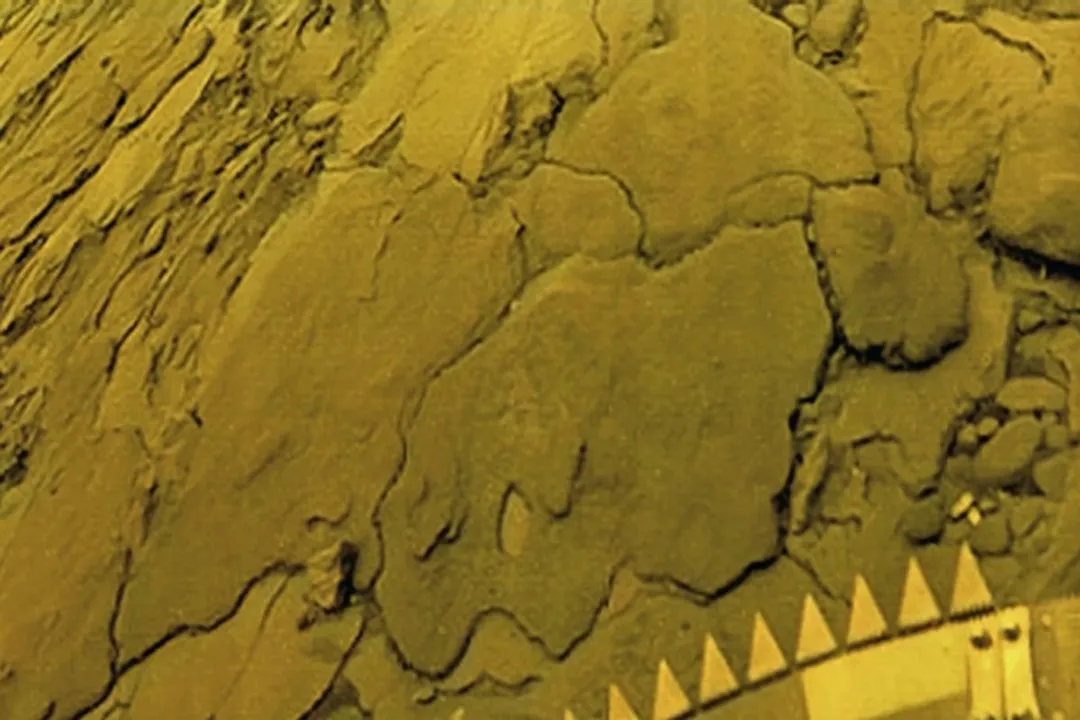
The tally of photographs capturing the actual ground of Venus is surprisingly small, representing one of the great data gaps in our exploration of the inner Solar System. Despite being Earth’s closest planetary neighbor, the vistas we possess from its surface are few, entirely black-and-white or colorized historical captures, and have not been updated in over four decades. The consensus among space historians and enthusiasts points to a total of just six distinct panoramic images returned by robotic explorers.
# The Small Count
It is easy to look at Mars, a world perpetually churned by rovers and orbited by imaging satellites, and assume Venus shares a similar visual record. This is far from the case. Humanity has managed to capture only a handful of surface views from Venus, all thanks to the determined efforts of the Soviet Union's Venera program. While other missions, like NASA’s Mariner 2 flyby in 1962, provided vital atmospheric data, actually setting a craft down proved to be an extraordinary engineering challenge that only the Soviets managed to overcome for imaging purposes.
The photographs originated from four successful landers: Venera 9, Venera 10, Venera 13, and Venera 14. These missions were pioneering, setting milestones for planetary surface exploration. Venera 9 and Venera 10 arrived in 1975 and provided the world with the very first images ever taken from the surface of another planet. These initial snapshots displayed a strange, desolate landscape bathed in the light of a distinctly yellow sky.
# Color and Contrast
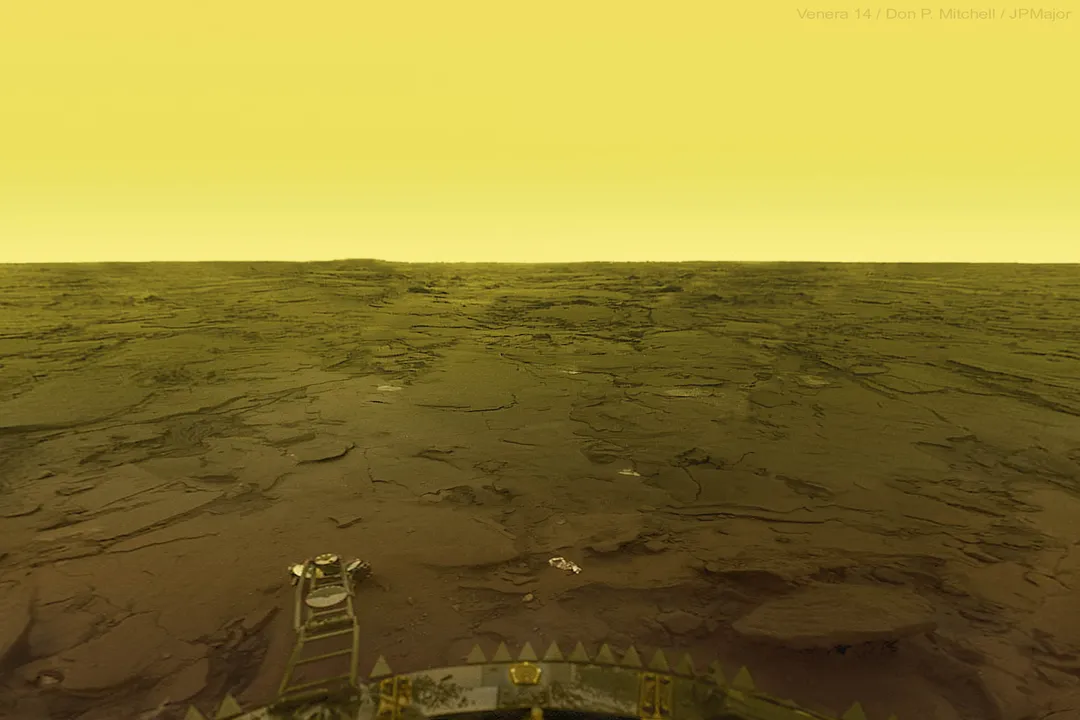
Four years later, in 1982, the focus shifted to colorimetry with the landing of Venera 13 and Venera 14. These two probes managed to return color panoramas, showcasing a world that looked even more severe up close: a dark, rust-colored terrain peppered with small rocks and slab-like features, all viewed under an oppressive yellow-orange atmosphere.
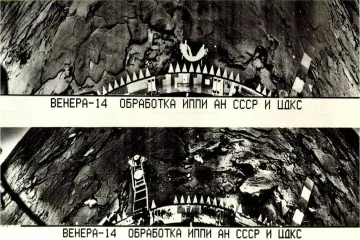
The way these images were constructed speaks to the constraints of early electronic imaging. The probes did not take singular, high-resolution snapshots like modern rovers; instead, they scanned their surroundings slowly, moving their cameras back and forth across the scene to build up a complete panoramic view.
To illustrate the difference in surface composition witnessed by the last pair of landers, one can compare their fields of view. The surface seen by Venera 14 appears more dominated by large, flat, slab-like rocks, whereas the terrain captured by Venera 13 seems to have a greater proportion of sandy areas alongside rockier outcrops. These six panoramas, often processed and color-corrected by modern experts like Ted Stryk, remain our only direct visual reference for what it is like to stand on the surface of our so-called twin planet.
# The Hellish Setting
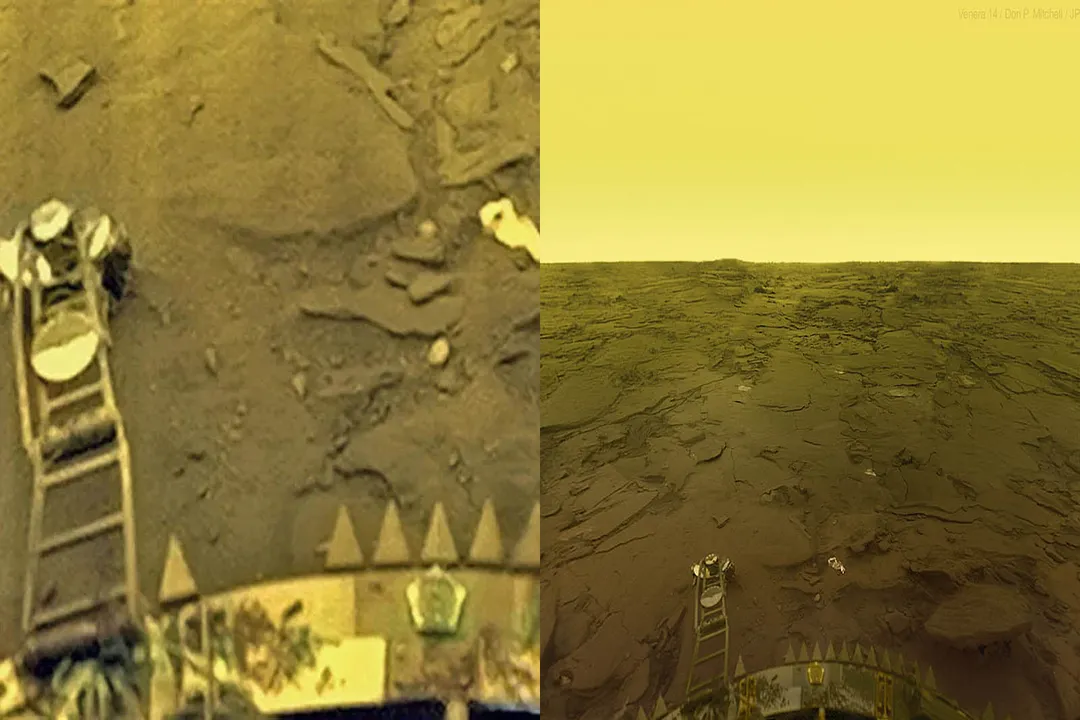
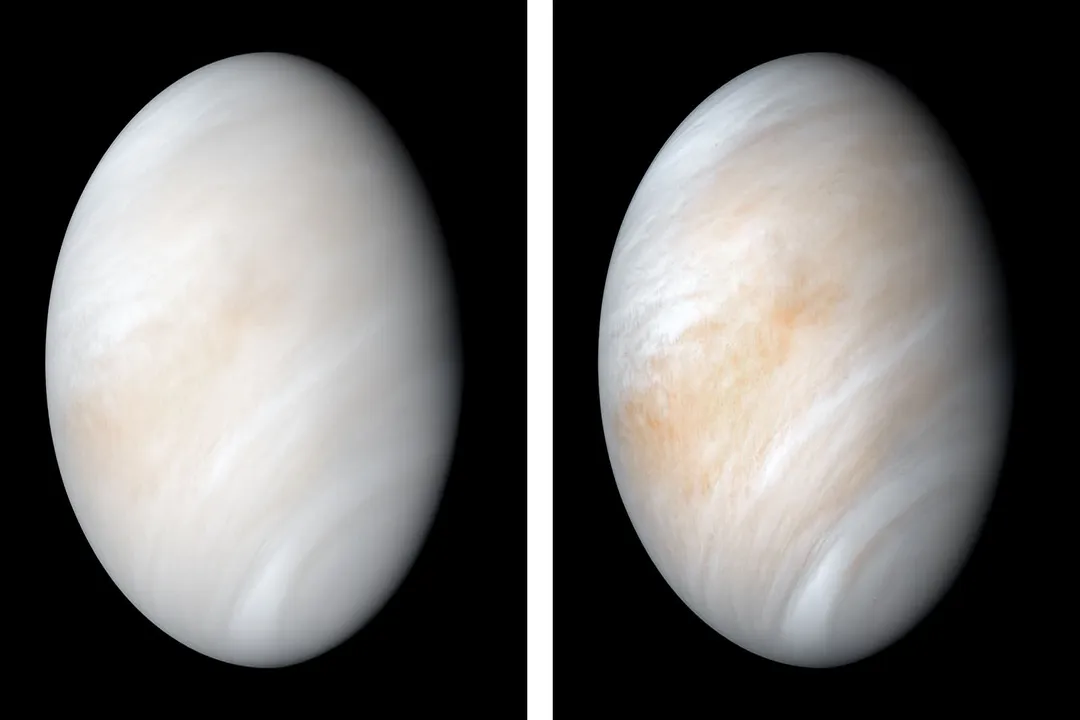
The extreme scarcity of these images is not due to a lack of interest or funding compared to Mars; rather, it is a direct consequence of Venus’s incredibly hostile environment. Venus maintains surface temperatures between about 820 and 900 degrees Fahrenheit (437 to 482 degrees Celsius), which is hot enough to melt lead. Furthermore, the atmospheric pressure at the surface is over 90 times that felt at sea level on Earth, a crushing force dominated by carbon dioxide.
These conditions mean that the lifespan of a lander is measured in minutes, not months or years. Venera 13 holds the record, managing to transmit data for an impressive 127 minutes before succumbing to the heat and pressure. Consider this duration: in the time it takes to watch a standard movie, Venera 13 successfully landed, took two full color panoramas, and analyzed surface material. The environment, blanketed by clouds extending miles high, also renders surface observation from orbit in the visible spectrum impossible, forcing any visual data collection to be done on the ground.
The very fact that we have any usable images at all, given that Venera 3 failed to even survive impact in 1966, highlights a remarkable, if brief, success for the Soviet space program.
# A Static Record
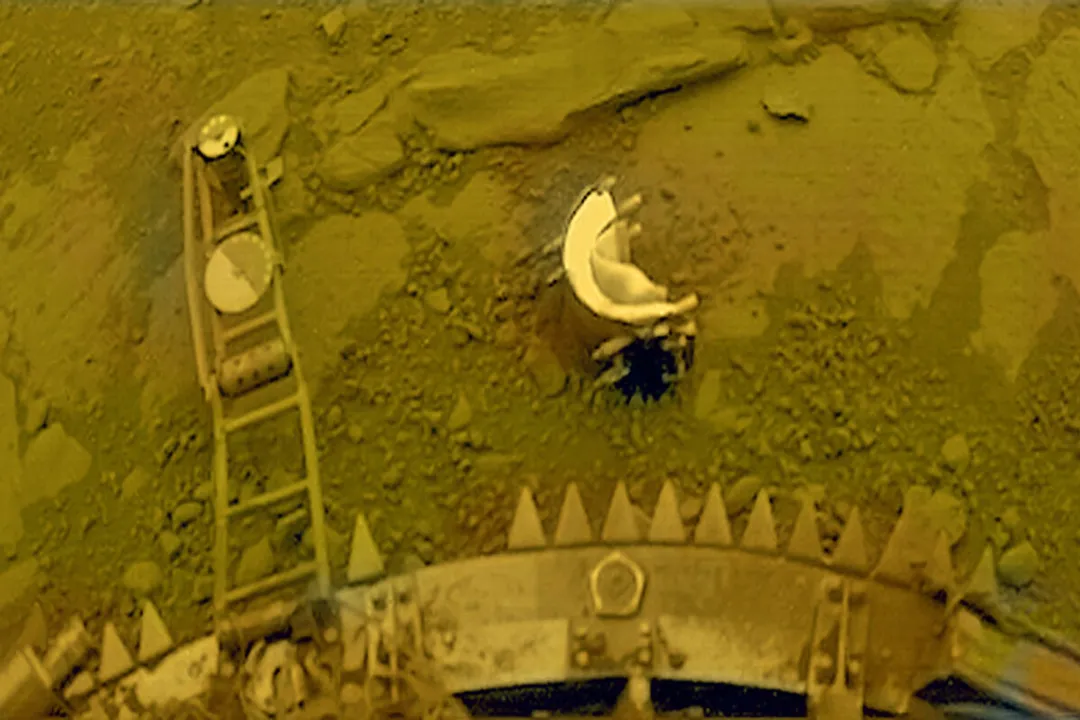
This historical snapshot presents a unique situation for planetary science. When we study Mars, we are watching a world where a rover might take thousands of high-resolution images across a region over several years, observing erosion, dust devils, and seasonal changes, even if those changes are subtle. Venus, conversely, is presented to us through these six, static, time-limited windows.
The images provide a geological freeze-frame, showing us the immediate aftermath of a world that experienced a runaway greenhouse effect. While radar mapping from orbit has provided detailed maps of the rough surface beneath the clouds, these radar views lack the texture, color, and immediate sense of scale that a ground-level photograph imparts. We see the result of this catastrophic planetary evolution, but we see it only from six, brief moments in time, separated by decades. This forces planetary scientists to extrapolate geological processes from incredibly sparse visual evidence, relying heavily on the physical data—like rock composition readings—taken alongside the camera readings, as the landers could analyze the material directly beneath their feet.
# Looking Ahead
The gap since the last surface photo in 1982 is significant, but this may change in the coming years. NASA is developing the DAVINCI spacecraft, expected to launch around 2029, which will function primarily as an atmospheric probe. However, the mission design includes the possibility of sending back high-resolution surface data—perhaps even images—as it descends, though its survival time on the ground will likely be very short, perhaps only a few minutes.
The story of Venus's surface images is less about quantity and more about the extreme engineering required to obtain even a single frame. It is a testament to the difficulty of exploring the solar system's harshest terrestrial environment, leaving the rusty, hazy ground of Venus as one of the most visually elusive locations known to humanity.
Related Questions
#Citations
Every picture from Venus' surface, ever | The Planetary Society
These Are The Only Photos Ever Taken Of The Surface Of Venus
These Are the Only Photos Ever Captured of the Surface of Venus