Does Venus have a stronger magnetic field than Earth?
The immediate answer to whether Venus possesses a stronger magnetic field than Earth is definitively no; in fact, Venus lacks a global, internally generated magnetic field entirely. [2][8] This fundamental difference between our home world and its scorching neighbor sits at the heart of many planetary science mysteries. While Earth is wrapped in a powerful protective bubble, a magnetosphere generated deep within its core, Venus presents a far more enigmatic case regarding how it has managed to retain its incredibly dense atmosphere over eons without this crucial defense mechanism. [1][2]
# Planetary Contrast
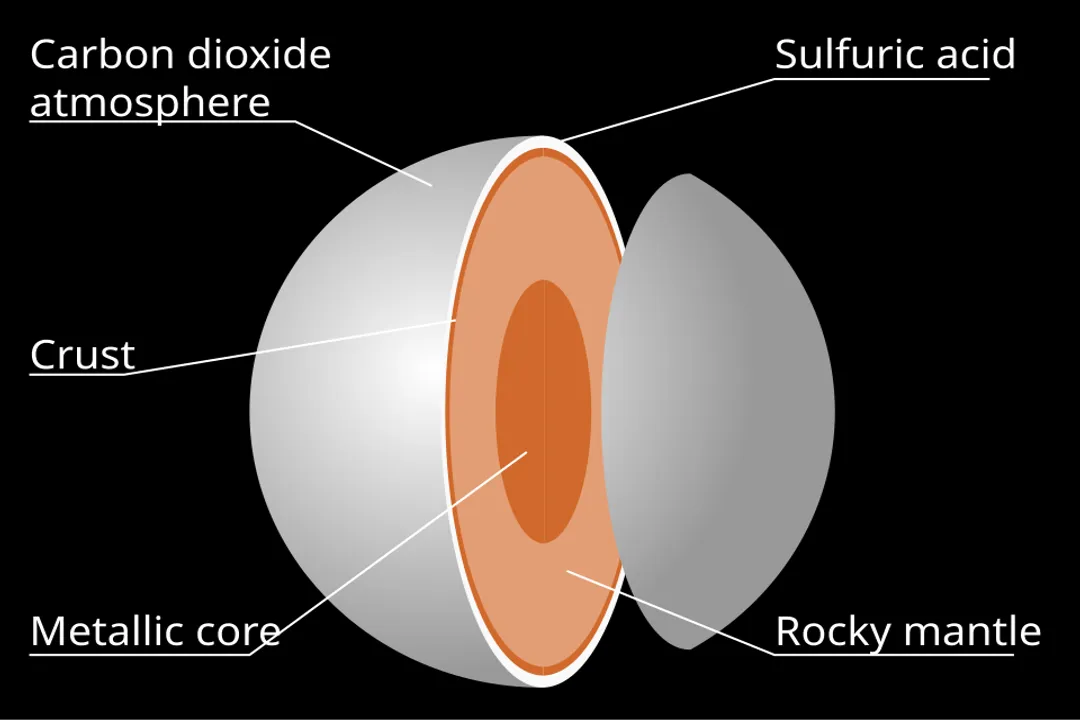
Earth generates its magnetic field through a process known as a dynamo. [8] This happens because the planet has a molten, electrically conducting outer core—mostly iron—that is constantly churning and swirling due to convection driven by heat escaping the inner core. [8] This movement of conductive fluid across a planetary scale generates electric currents, which in turn produce the pervasive magnetic field that stretches far into space. [8] Venus, however, shows no evidence of such a field. [2][8]
When we compare the two, the difference is stark. Earth’s magnetic field, measured at the surface, is approximately $0.5$ Gauss (or 50 microteslas). [8] Venus, lacking the internal dynamo, has an ambient magnetic field that is essentially zero in terms of a global dipole structure. [5][8] When space probes fly near Venus, they don't encounter a strong, consistent magnetic shield generated from the interior, which is what protects Earth from the constant bombardment of the solar wind. [2][8]
# Induced Shielding
If Venus has no internal magnetic field, how does it avoid having its atmosphere completely stripped away by the Sun's outflow? This is where the concept of an induced magnetosphere comes into play. [5] Instead of being generated from within, Venus’s interaction with the solar wind creates a temporary, externally imposed structure that partially deflects the plasma. [5]
As the stream of charged particles from the Sun—the solar wind—slams into the upper atmosphere of Venus, the planet's ionosphere reacts strongly. [5] The magnetic field carried by the solar wind heaps up and flows around the planet, creating a structure of plasma and magnetic fields that behaves like a magnetosphere, though it is vastly different in nature and origin. [5] It forms a boundary layer that shields the lower, denser atmosphere from direct interaction with the most energetic particles. [2][1] It is important to distinguish between the strength of a global dipole field, like Earth's, and the localized magnetic structures generated by this plasma interaction around Venus. [5] While the induced structure provides some deflection, it is structurally and energetically inferior to Earth's protective bubble.
Considering this, an interesting point arises when comparing the effectiveness of the two systems. Earth’s strong internal field acts as a solid barrier, redirecting the solar wind far out into space, providing a large magnetic "standoff" distance. On Venus, this induced shield is formed right at the edge of the ionosphere itself. This means that while the outermost fringe of the atmosphere is protected from the bulk flow, particles that penetrate that initial boundary layer are immediately interacting with a much closer, less organized magnetic environment than those encountered by Mars or Earth. [2] The protection is more akin to a localized buffer zone than a massive planetary defense grid.
# Core Mystery
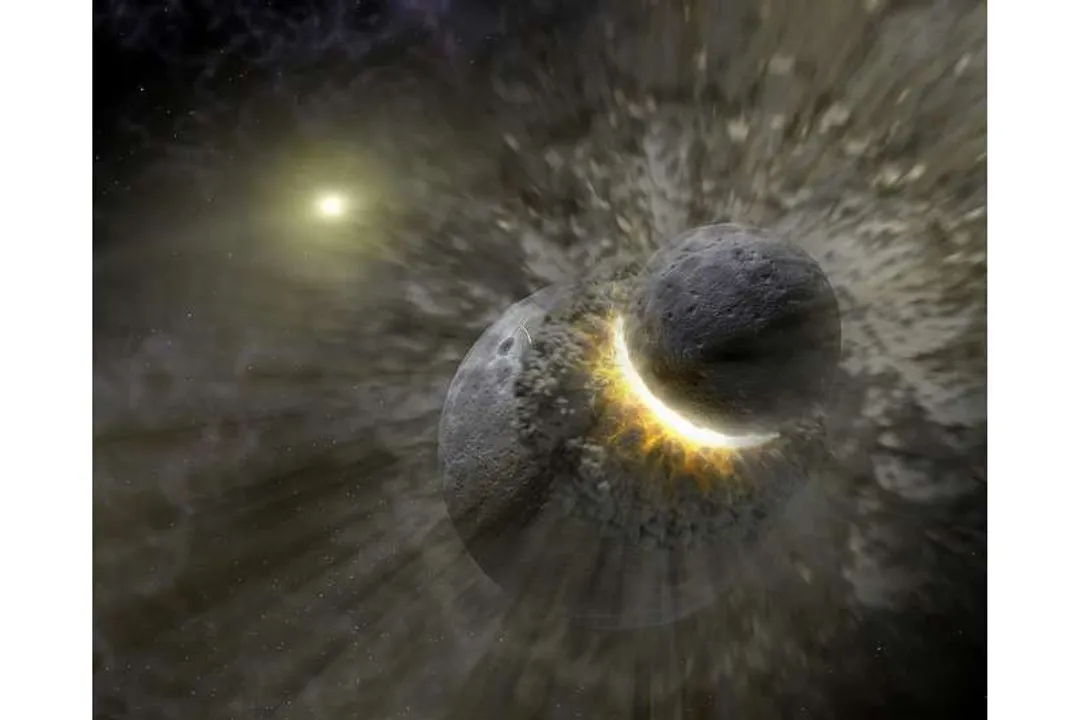
The absence of a planetary magnetic field on Venus is particularly puzzling given its size and proximity to the Sun. [4] Venus is often called Earth’s twin because it is nearly the same size and mass, and both worlds likely formed with similar internal compositions. [4] Mercury, which is much smaller, does possess a weak global magnetic field. [4] This raises the central question: what stopped Venus from sustaining the dynamo that Earth maintains?
One primary hypothesis centers on the state of Venus's core. [4][8] For a dynamo to operate, the liquid iron outer core must be cooling and convecting. [8] Some theories suggest that because Venus lacks plate tectonics—a process that helps Earth shed heat from its interior—its core may have cooled much more slowly, or perhaps it solidified sooner or exists in a stagnant state that prohibits the necessary fluid motion. [4][8] If the core is entirely solid, or if the cooling rate difference has prevented sustained thermal or compositional convection, the necessary movement to generate currents would cease. [4] Furthermore, some ideas suggest Venus may have experienced a catastrophic resurfacing event in its past, which could have drastically altered its internal heat budget and shut down any early dynamo activity. [4]
The geological history of Venus compared to Earth offers another point for analysis. Earth’s continuous magnetic field has shielded surface water and life from solar erosion over billions of years. [8] Venus, on the other hand, experienced a runaway greenhouse effect, likely boiling away its early oceans and resulting in the incredibly hot, dry surface we see today. [4] This suggests that the lack of a magnetic field might have been a major factor in the divergent evolution of the two planets, either by allowing greater atmospheric loss early on, or by permitting intense solar radiation to contribute to the thermal runaway that baked the surface. [2][4]
# Atmospheric Retention
The thick, dense atmosphere of Venus—about 90 times the pressure of Earth’s at the surface—is a direct consequence of its different evolutionary path. [4] While the induced magnetic structure offers some shielding, the primary factors in retaining such a heavy atmosphere might be related to its sheer mass and the way the solar wind interacts with a massive ionosphere. [1][2]
A fascinating, though speculative, concept involves artificially imposing a magnetic field on Venus, as has been proposed in theoretical studies. [6] Scientists have modeled what might happen if a miniature magnetic dipole were placed at the Venus L1 Lagrange point—the spot between the Sun and Venus. [6] Simulations indicated that such a structure could potentially deflect the solar wind enough to slow down atmospheric erosion significantly, perhaps allowing the planet to begin accumulating water vapor again over billions of years. [6] This thought experiment underscores how vital an intrinsic magnetic field is; if a manufactured, distant field can have a profound effect, the absence of an inherent one must have dictated Venus’s current state. [6]
In essence, Earth is protected by its intrinsic shield, a predictable, powerful, and durable magnetic bubble generated internally. [8] Venus, conversely, is protected by an induced buffer, a temporary shield created dynamically by the interaction between its upper atmosphere and the solar wind itself. [5] Therefore, Venus does not have a stronger magnetic field; it simply has a different mechanism for interacting with space weather, one that appears less effective at long-term atmospheric preservation over geological timescales compared to Earth's robust internal dynamo. [2][8]
Related Questions
#Citations
How does Venus retain such a thick atmosphere despite having no ...
Why did Venus not lose its atmosphere without a magnetic field?
Venus - Wikipedia
Venus: Facts - NASA Science
Solar Mission Reveals New Details About Venus' Unusual Magnetic ...
Why doesn't Venus have a magnetosphere? - Phys.org
Why does Venus have no magnetic field despite being volcanically ...
Giving Venus an artificial magnetic field - Explaining Science
Why is Earth Magnetized and Venus Not? - Sky & Telescope