Does Venus always rise in the east?
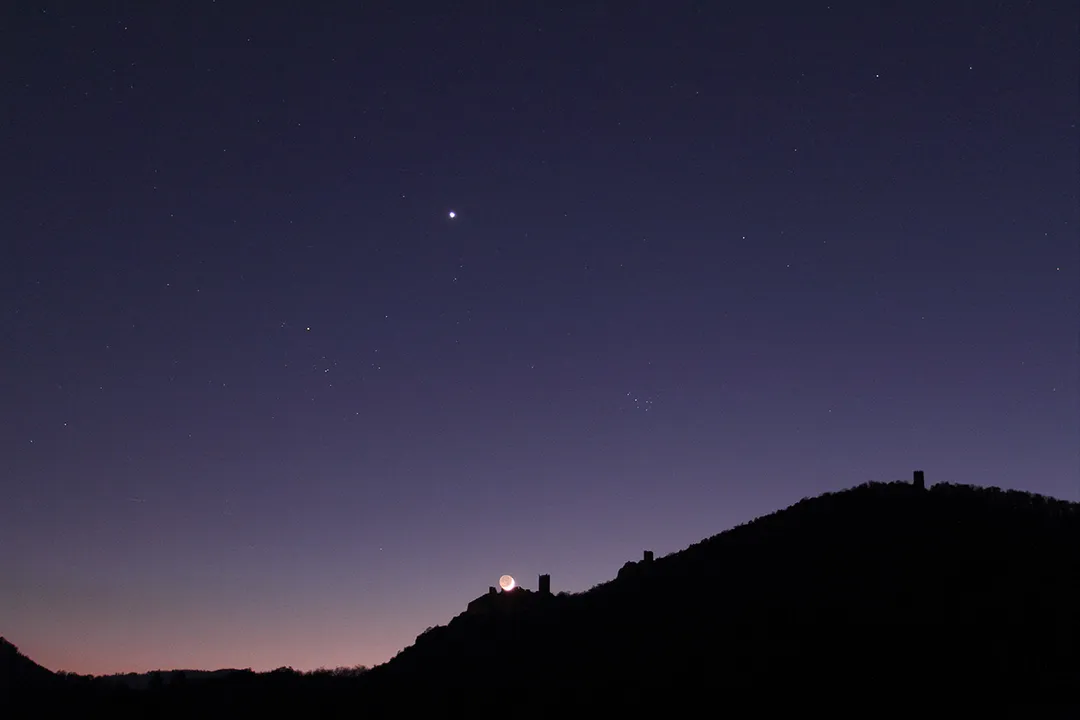
The planet Venus, often dazzlingly bright in our twilight skies, provokes many questions from amateur astronomers, and perhaps none is as fundamental as its point of appearance on the horizon. Most familiar celestial bodies, from the Sun and Moon to the stars, follow a simple script dictated by our own planet's spin: they rise near the eastern horizon and set near the western one. For Venus, however, the answer isn't quite so straightforward, though the general rule often holds true from our Earth-bound perspective.
# Earth's Spin
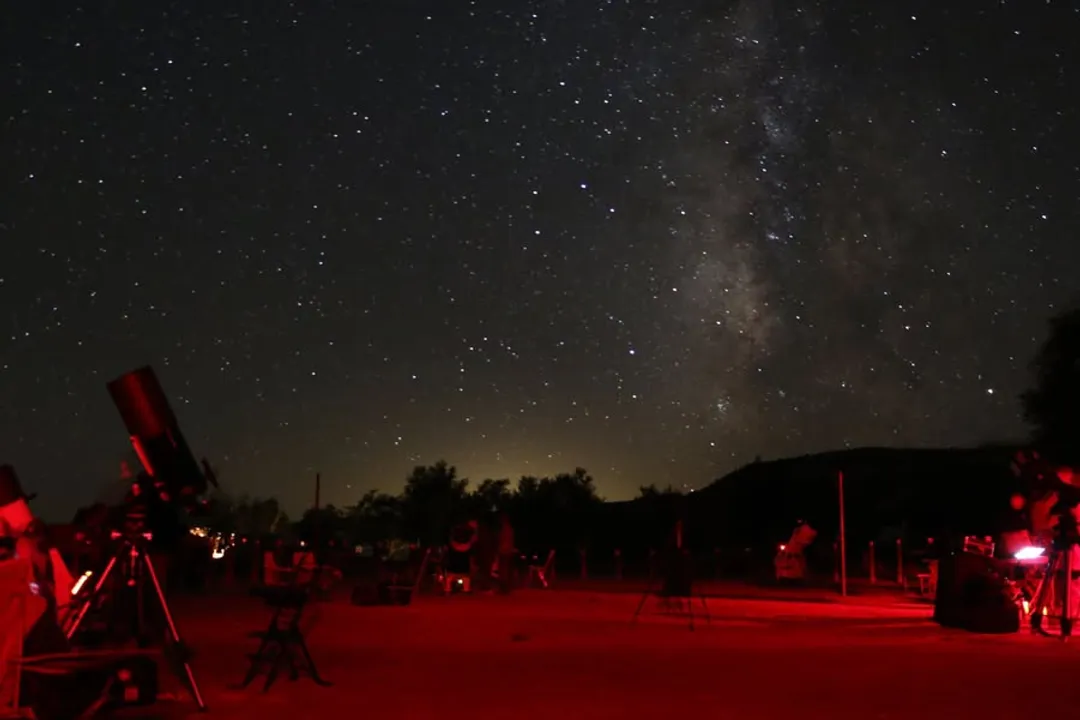
To understand any object's rising direction, we must first consider the motion of the observer. Earth rotates on its axis from west to east, completing one full rotation approximately every 24 hours. This rotation makes everything in the sky appear to move in the opposite direction—from east to west—across the dome of the heavens. This is the mechanism that causes the Sun to rise in the east, giving us our concept of daily orientation.
# Venus's Rotation

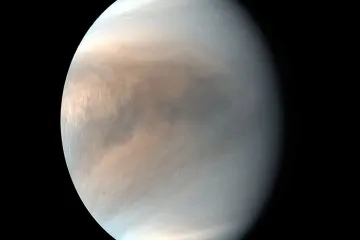
Venus has a rather unusual quirk among the solar system's planets. It spins backward compared to most of its neighbors, a phenomenon known as retrograde rotation. If you were standing on the surface of Venus, the Sun would appear to rise in the west and set in the east, completely opposite to our experience on Earth. This difference stems from the planet's extremely slow rotation, which takes about 243 Earth days, compared to its year of about 225 Earth days.
Because of this retrograde spin, one source points out that on Venus itself, the planet "rises in the west and sets in the east". This fact, while true about the planet's intrinsic rotation, can cause significant confusion when considering what we see from Earth. When we look up at Venus from our vantage point, its path across our sky is overwhelmingly governed by the Earth's rotation, not its own bizarre spin. Therefore, when Venus is visible, it generally adheres to the standard pattern of ascending from the eastern horizon after a period of invisibility, whether as the Morning Star or the Evening Star.
# Morning Evening Star
Venus is famous for being the brightest object in the night sky after the Moon, earning it the titles of the Morning Star when it appears before sunrise and the Evening Star when it appears after sunset. Because its orbit is inside Earth's orbit, Venus never strays far from the Sun in our sky; it is always found relatively close to the Sun's position as seen from Earth. This constraint is why we never see Venus high in the sky at midnight.
When Venus is visible as the Morning Star, it is an object approaching the Sun from the west in our morning sky, meaning it must rise in the east ahead of the Sun. Conversely, when it is the Evening Star, it is moving away from the Sun in our evening sky, setting in the west after the Sun has already gone down. The direction it is observed to rise or set, therefore, depends entirely on whether it is currently in its "morning" phase or its "evening" phase in its orbital dance around the Sun. For instance, a specific observation noted Venus reaching its highest point in the eastern predawn sky for observers at a particular time. This observation confirms the expectation that when visible before dawn, it is indeed associated with the eastern horizon.
| Visibility Phase | Time of Appearance | General Horizon Association | Dominant Motion Across Sky |
|---|---|---|---|
| Morning Star | Pre-dawn | East | Moves from East to West |
| Evening Star | Post-sunset | West | Moves from East to West |
# Horizon Angle Variation
The simple East/West rising pattern can still be misleading to a casual observer. The specific point on the eastern horizon where Venus appears—whether due northeast or southeast—changes constantly throughout the year. This variation is due to the tilt of Earth's axis relative to the plane of the solar system, which affects the angle at which the ecliptic (the path the Sun and planets follow) meets the horizon at a given latitude.
If you were observing Venus on a date when it was near its greatest elongation east (its furthest apparent distance east of the Sun), you would see it in the western sky after sunset. On this night, it would set in the west. Six to eight weeks later, as Venus swings back toward the Sun in its orbit, it would become a morning object, appearing in the eastern sky before sunrise, thus rising in the east. The planet is never visible for more than about 10 hours in total, split between morning and evening appearances separated by a period when it is too close to the Sun to be seen.
Consider what this means for someone standing at a mid-northern latitude, like Chicago or Paris. During the late winter and early spring months, the Sun’s path across the sky is relatively low in the southern sky. If Venus happens to be near its maximum eastern elongation during this time, it will appear low in the southwestern sky after sunset, setting fairly quickly in the west. Conversely, during the early autumn evenings, the ecliptic is much steeper relative to the western horizon, allowing Venus to ascend quite high and remain visible for hours after sunset, still setting in the west. When it transitions to the Morning Star phase later in the year, it will rise far south of due east, closer to the southeast point, because the Sun itself rises further south during those seasons. This angular shift causes many to question the consistent "East" rising rule, even though the phenomenon is merely a consequence of seasonal geometry applied to an object that is never far from the Sun.
# Observer Confirmation
To truly confirm Venus's behavior on any given night, one must reference the relationship between the observer's location, the date, and Venus's current elongation angle. Since Venus appears only shortly before sunrise or shortly after sunset, the time window for observation is narrow. If you catch Venus just before dawn, look toward the eastern horizon; it must be rising there, even if it's south of due east. If you see it blazing brilliantly in the sky an hour or two after sunset, you are seeing the Evening Star, and it will proceed toward setting in the west.
For instance, a helpful, non-instrumental check involves noting the Sun's position. If you see Venus, and the Sun is still below the horizon, Venus is currently in its morning phase and is definitely in the eastern sky, moving toward the rising point of the Sun. If the Sun has already set, Venus is in its evening phase and is moving toward the western horizon, following the Sun's general track. This immediate context—whether the Sun has just set or is about to rise—is the most direct indicator of the general direction you are looking at Venus. The planet is bound to the Sun's celestial longitude, which is why it appears in the east before the Sun and the west after the Sun.
If you are keen to track its precise rising point without a professional telescope, a simple modern check involves using an astronomy application on a smartphone. By inputting the current date and time, these tools use known orbital mechanics to plot Venus's exact position against the local horizon profile. For example, on a specific date, the app might show Venus's rising azimuth (its compass bearing) is 105 degrees. Since true East is 90 degrees, this tells an observer clearly that on that particular morning, Venus is rising slightly south of east, demonstrating the seasonal variation in its appearance point. The question isn't whether it can rise in the East, but where in the East it rises, and when it switches to being a Western object.
# Synthesis of Motion
The consensus for an Earth observer is that Venus follows the standard diurnal motion across the sky—East to West—due to our planet's rotation. The confusion arises from two factors: the planet's proximity to the Sun, which dictates when it is visible (morning or evening), and its singular retrograde spin, which defines its own rotation. When Venus is the Morning Star, it is appearing in the eastern sky before dawn, thereby rising in the east. When it is the Evening Star, it appears in the west after sunset, having followed a path that originated from the east earlier in the day relative to the Sun's motion, and it sets in the west. The fundamental direction of its daily arc remains East to West, just like everything else, even if its specific rising point shifts seasonally along the eastern horizon.
Related Questions
#Citations
Venus: Facts - NASA Science
Venus - Wikipedia
Does Venus travel east to west across the night sky looking ... - Quora
How can Venus always lead the sun and rise before it? - Facebook
Observing Venus, the Morning and Evening Star - Stelvision
Venus' orbit eludes me, help. : r/askastronomy - Reddit
Is Venus' north towards Earth's south - Astronomy Stack Exchange
The Position of Venus in the Night Sky: 2025 Morning Apparition
Venus reaches its highest point in the eastern pre-dawn sky on Aug. 1