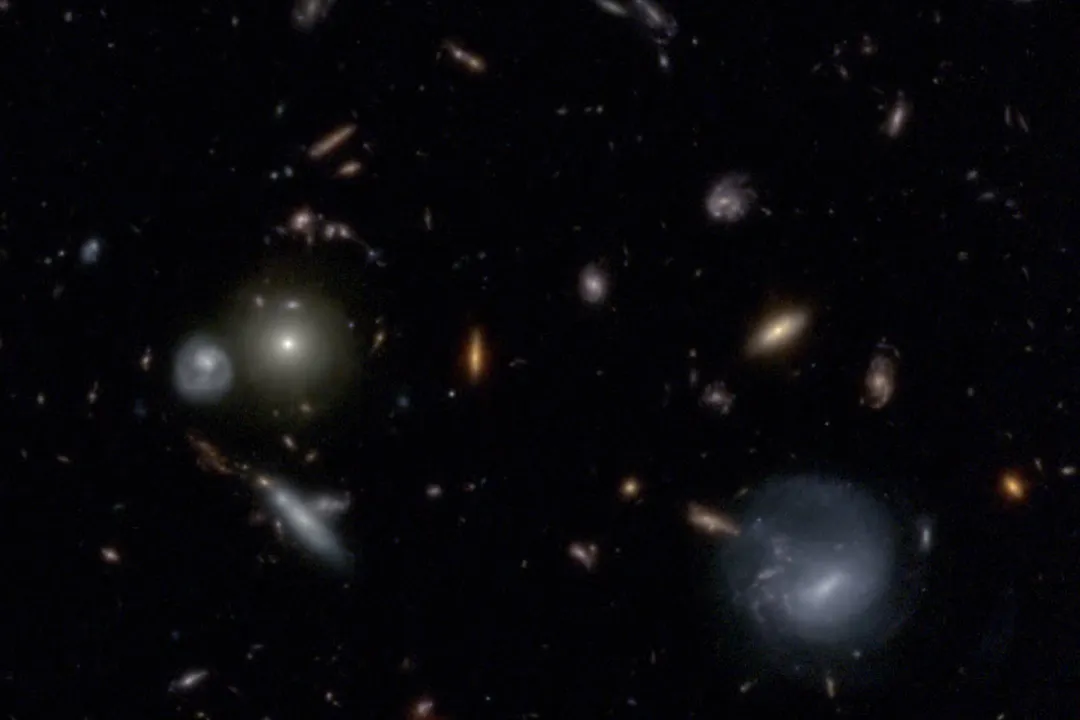
What is the implied outcome if theoretical models predict early large spirals but observations only reveal irregular fragments at high redshifts?
The models require adjustment regarding star formation efficiency or early supernovae feedback
The structural appearance of early galaxies serves as a direct test for theoretical models of structure formation, which attempt to predict how dark matter halos collapse and how baryonic matter (gas and stars) cools within them. If observational data shows an unexpected morphology—for example, if structures that should be large spirals are instead fragmented and irregular—it indicates a mismatch with the theoretical assumptions. Specifically, the model parameters related to how efficiently gas cools to form stars, or the regulatory effects of energy input from early supernovae explosions (feedback) on gas cooling, must be revised until the simulations align with the observed reality of early galactic shapes.