Why do nebulas look so cloudy?
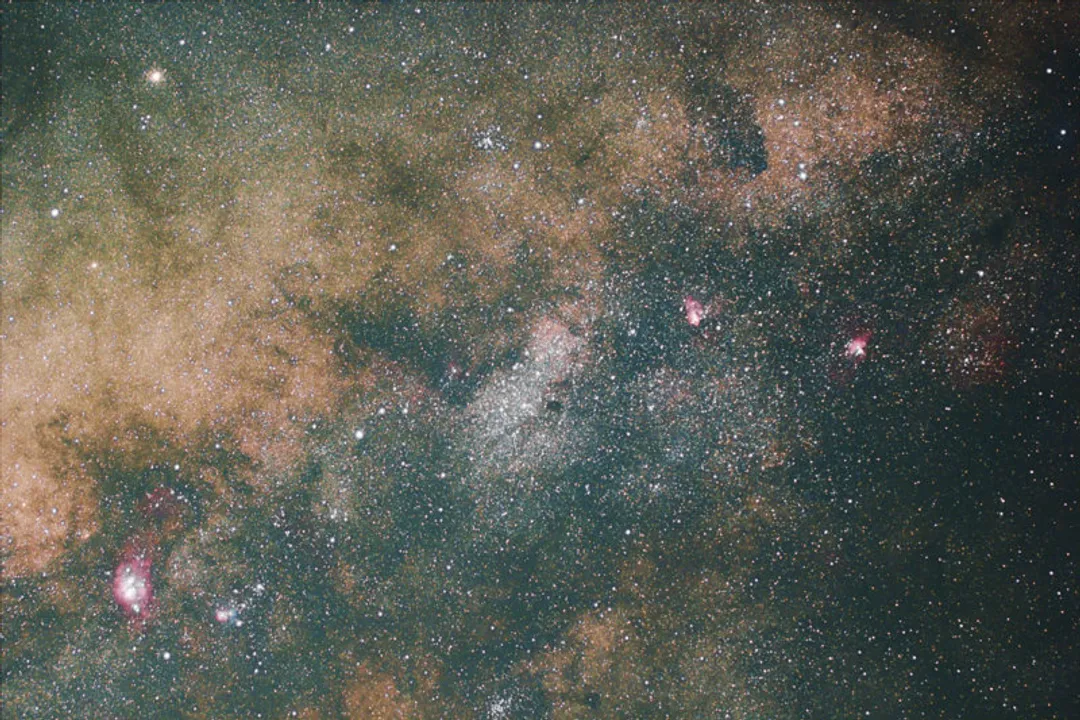
The misty, diffuse appearance of celestial clouds, known technically as nebulae, is one of astronomy’s most enduring visual puzzles. When we look at stunning images of the Orion Nebula or the Horsehead Nebula, the immediate impression is one of cosmic smoke or fog hanging in the void. This "cloudy" look isn't an artifact of poor focus or bad weather; it is the direct result of the physical composition and the way that material interacts with the intense radiation from nearby stars. [2][6]
# Gas Dust
The fundamental reason nebulae look cloudy stems from what they are made of: enormous, yet tenuous, clouds of gas and microscopic dust particles dispersed throughout interstellar space. [2] While space seems like a perfect vacuum, these regions are significantly denser than the average interstellar medium. A nebula might contain billions of times more mass than our Sun, spread out over vast distances, sometimes hundreds of light-years across. [6] The primary ingredients are typically hydrogen and helium gas, but the crucial component contributing to the cloudy texture is the dust. [2]
These dust grains are tiny—often smaller than the wavelength of visible light—and are composed of elements like carbon and silicates. [2] Imagine the finest particles of soot or smoke you have ever encountered, but spread across unimaginable scales. Because these particles are discrete physical objects suspended within the gas, they scatter and absorb light traveling through the cloud, creating shadows, variations in brightness, and that characteristic soft, opaque appearance we associate with clouds here on Earth. [7] A region of space lacking these suspended dust grains would appear nearly transparent, even if it contained the same amount of gas. [3]
# Light Interaction
The specific way a nebula appears cloudy depends entirely on how the light is interacting with that gas and dust mixture. [2] Nebulae are not uniform; they are dynamic environments where material is constantly being illuminated, energized, or obscured. This results in several distinct visual categories. [2]
If the cloud is primarily composed of gas that has been energized by intense ultraviolet radiation from a very hot, young star nearby—often a newly formed star cluster—it becomes an emission nebula. The atoms in the gas are ionized and then recapture electrons, releasing photons of light, frequently resulting in the characteristic reddish-pink glow associated with hydrogen emission. [2] This light emanates from the cloud itself, making the gas glow like an enormous, faint neon sign.
Conversely, if the nebula is composed mainly of dust that is not hot enough to glow but is situated near a bright star, it becomes a reflection nebula. In this case, the dust particles scatter the starlight toward us. [2] A fascinating aspect of this process is that the scattering mechanism—similar to why our daytime sky on Earth is blue—is more efficient at scattering shorter wavelengths. Therefore, reflection nebulae often appear distinctly blue. [2] This scattering of light, rather than direct emission, lends a very soft, luminous haze that perfectly fits the description of a cloud.
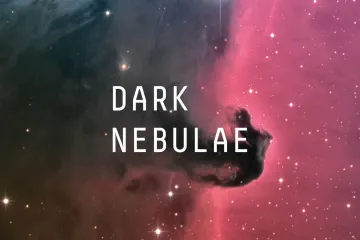
A third scenario creates a cloud that looks cloudy by blocking light. Dark nebulae are extremely dense concentrations of dust and molecular gas that are so thick they completely obscure the visible light from any stars or glowing nebulae lying behind them. [7] The Horsehead Nebula is a classic example: it is not an absence of material but rather a foreground silhouette of dense, opaque dust against a backdrop of glowing emission nebula. [7] Its "cloudiness" is defined by its opacity, appearing as a dark void or cutout against brighter structures.
If we consider the density required to make this visible effect happen, it’s worth noting that while interstellar space is vast, these nebular regions represent a significant local concentration of matter. A typical cloud might have a density on the order of tens to thousands of particles per cubic centimeter. [6] This may sound empty compared to Earth's atmosphere, but it is dense enough for the microscopic dust component to effectively intercept and redirect light across interstellar distances, creating the visual texture we interpret as cloudy, rather than the smooth transition one might expect from a perfectly uniform gas distribution. [3]
# Starlight Influence
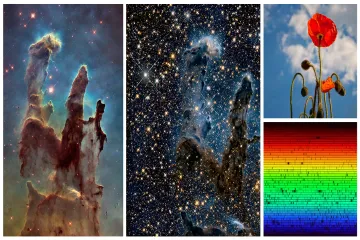
The interplay between stellar energy and the interstellar medium dictates the final appearance, which informs our perception of cloudiness. [2] The quality of the cloudiness changes based on the star’s influence.
Consider a reflection nebula again. If the illuminating star is relatively cool or very far away, the scattering effect is weak, resulting in a faint, wispy, almost ethereal cloud that is barely perceptible unless carefully photographed. [2] If the illumination is intense, the cloud looks brighter but still diffuse because the light is being spread out in all directions by the dust. [2]
In contrast, an emission nebula's cloudiness comes from internal illumination. The gas glows, but the glow is often patchy because the density of the gas itself varies, with some clumps absorbing more energy and others emitting more strongly. This leads to an intrinsically textured, non-uniform cloud structure, rather than a simple haze. [2]
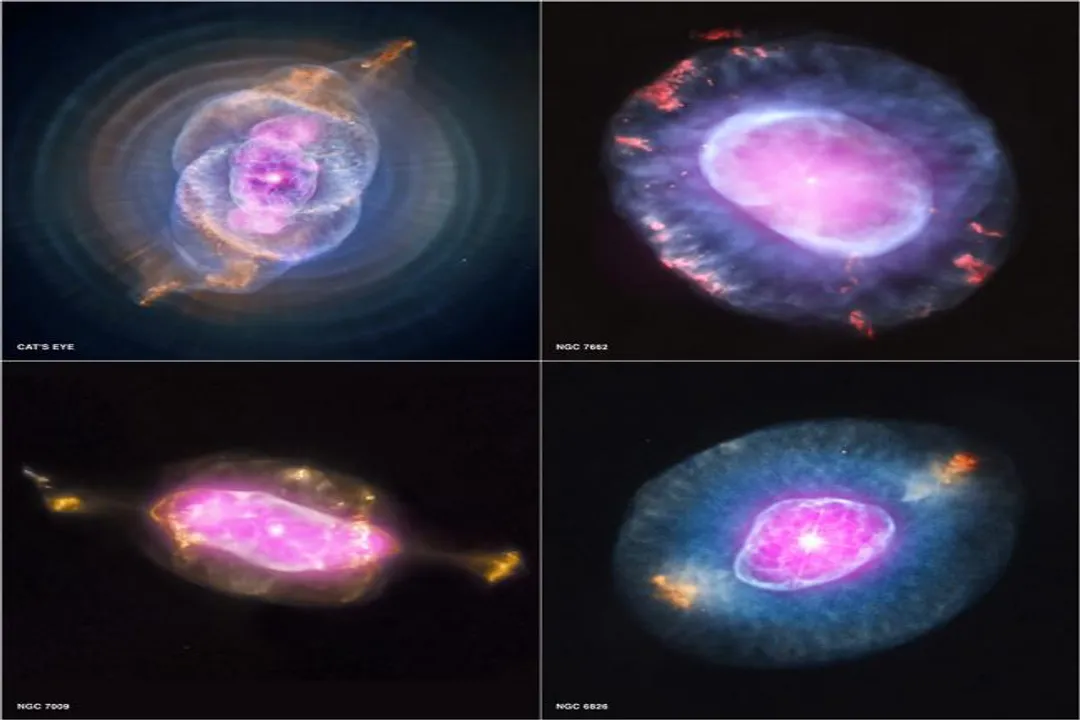
Furthermore, some nebulae are Planetary Nebulae (PNs), which are shells of gas ejected by a dying, intermediate-mass star. [9] While these are often described by their spherical or shell-like shapes, the gas itself often has intricate filaments, knots, and bipolar structures as the material rushes outward. This internal complexity makes them appear highly textured, almost like swirling smoke rather than a uniform mass. [9]
To put this into perspective, we can compare the appearance based on the dominant process:
| Nebula Type | Dominant Process | Perceived "Cloudiness" Source | Typical Color/Appearance |
|---|---|---|---|
| Emission | Gas energized by UV light | Light emitted by ionized gas | Often Red/Pink (Hydrogen) |
| Reflection | Dust scattering nearby starlight | Light scattered by fine dust particles | Often Blue (Rayleigh scattering) |
| Dark | Dust absorbing background light | Opacity/Silhouetted foreground material | Black or negative space against bright sources |
# Eye Limits
A crucial factor in why nebulas seem so universally cloudy, especially when viewed through a small telescope, relates to the limitations of human vision compared to modern imaging equipment. [7] The light coming from these vast structures is incredibly faint. Even bright nebulae, like Orion, are dim when viewed through the vast distance to Earth. [7]
Our eyes employ two main types of photoreceptors: rods, which are excellent in low light but only see in shades of gray, and cones, which perceive color but require significantly more light. [7] When observing a faint nebula, we are usually operating in the scotopic (low-light, rod-dominated) vision regime. [7] In this mode, the fainter parts of the cloud blend together into a uniform, indistinct gray haze because the rods cannot resolve the subtle variations in color or light intensity that distinguish structure. [7] The light is insufficient to stimulate the cones enough to register color or fine detail.
This is why a nebula can look like a slightly brighter patch of sky to the naked eye or a small telescope, yet look incredibly detailed and colorful in a long-exposure photograph. [7] The camera, unlike our eye, can gather light continuously over minutes or hours. This extended integration time allows the camera's sensor to accumulate enough photons from the dimmest corners of the cloud to reveal the underlying structure and color that our eyes simply cannot perceive in real-time. [7] The "cloudiness" seen by the naked eye is often an artifact of visual integration limits—everything below a certain brightness threshold simply smears into the background gloom.
# Imaging Revelation
When astronomers take long-exposure images, the cloudy texture transforms. What appeared as a soft, undifferentiated patch of gray to the eye resolves into intricate tendrils, sharp edges, and vast, sweeping structures. [7] This transformation provides the true "expertise" of astrophysical imaging.
For reflection nebulae, the extended exposure pulls out the detailed structure of the dust lanes where the scattering occurs, often revealing delicate veins of darker material weaving through the blue glow. [2] For emission nebulae, the added integration time reveals the varying temperatures and compositions throughout the cloud. Areas of dense, cooler gas will show up differently from regions near the ionizing stars, highlighting the turbulent boundaries where new stars are forming or old material is being dispersed. [2]
A particularly striking revelation comes when viewing dark nebulae through imaging techniques. Because the dark nebula is defined by what it blocks, a long exposure of the background starfield allows the structure of the dust cloud to be mapped with high contrast. [7] The "cloudy" look of the dust itself—the silhouette—becomes sharply defined against the luminous background, showing that the apparent cloudiness is, in fact, a tangible, physical structure, not just an empty region of space. [7] The perceived cloudiness in an image, therefore, is a direct map of the density distribution of interstellar dust and gas complexes.
#Videos
Nebulae: Crash Course Astronomy #36 - YouTube
Related Questions
#Citations
What is that cloudy looking stuff in pictures of nebulas? Like ... - Reddit
Decoding Nebulae - NASA Science
Why are nebulae so beautiful if they are all dust? - Quora
Nebulae: Crash Course Astronomy #36 - YouTube
The image is likely a nebula, a giant cloud of gas and dust in space ...
Nebulae – Clouds in Space (2011) - Astronomical League
Why does the cloud of Orion Nebula appear more distinct when I am ...
Question re. Dark Nebulae and Reflection Nebulae - Cloudy Nights
Planetary Nebulas - Center for Astrophysics | Harvard & Smithsonian