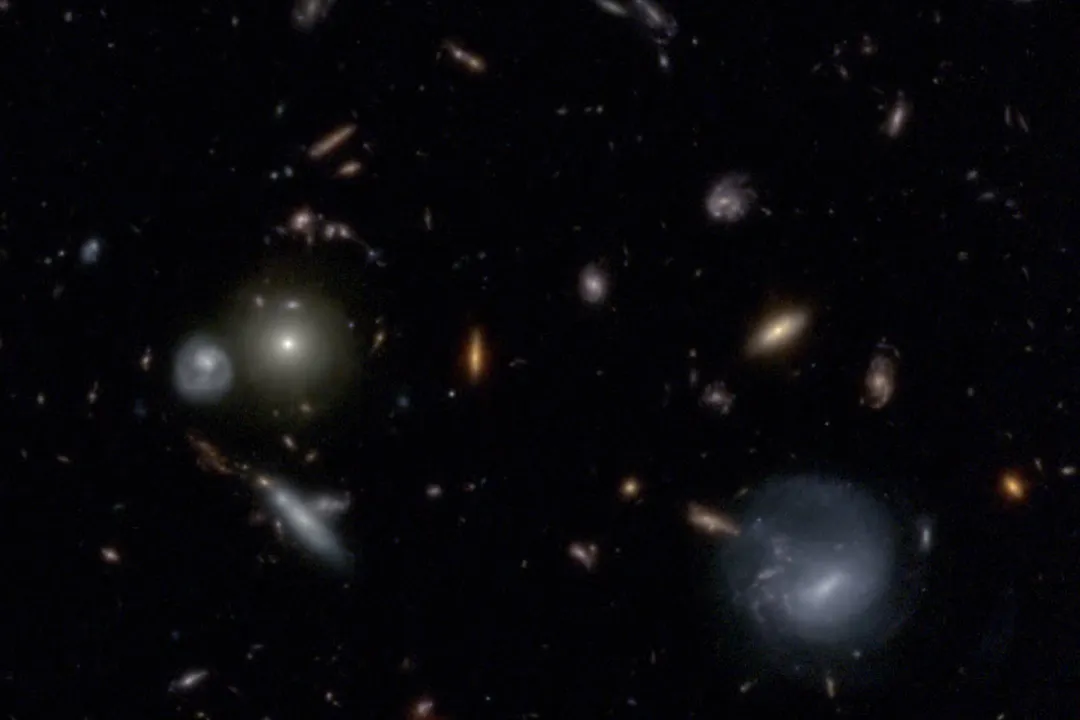
What does a higher redshift (z) value signify regarding a distant galaxy's age and distance?
It corresponds to a greater distance and an earlier time in the universe’s history
Redshift (z) is the quantitative metric used to gauge how much the light from distant cosmic objects has been stretched by the expansion of space during its travel across the cosmos. Critically, a higher numerical value for z directly correlates with an object being farther away. Due to the finite speed of light, greater distance implies a longer travel time, meaning the observer is seeing the galaxy as it existed much closer to the Big Bang. For instance, galaxies with a high redshift, such as z ≈ 10, are observed just a few hundred million years after the universe began, placing them firmly in the infancy stage of galaxy formation, contrasting sharply with low-z galaxies which resemble modern systems like the Milky Way.