How long will it take a human to get to Jupiter?
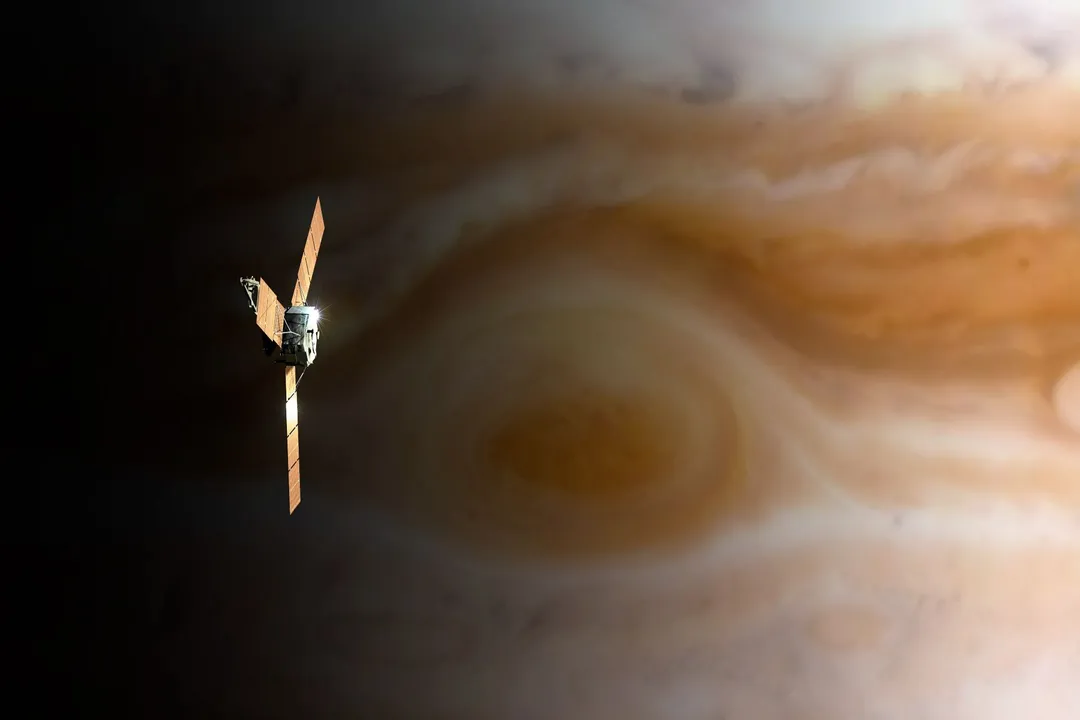
Figuring out how long it takes to travel to Jupiter is less about a single number and more about understanding the immense scale of the solar system and the specific route taken. Jupiter is not a neighbor like the Moon or even Mars; it sits an average of about 629 million kilometers (nearly 390 million miles) away from Earth. [2] This vast gulf means that even our fastest, most efficient unmanned probes take years to arrive, setting a baseline for what a human crew could expect with current technology.
# Vast Distances
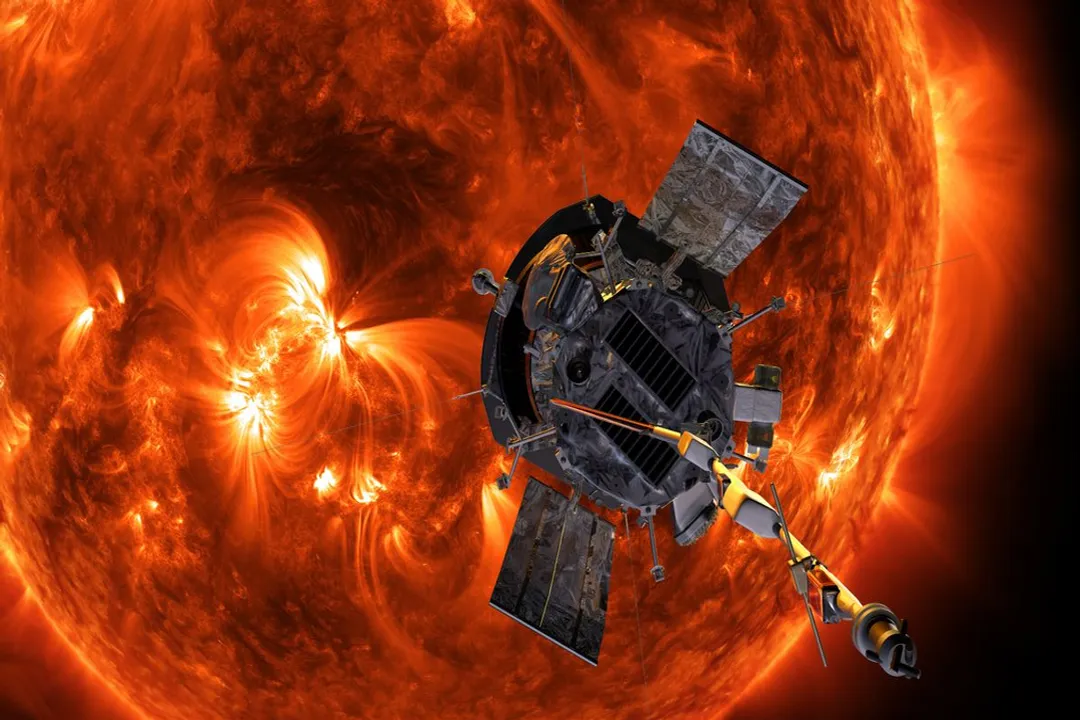
The distance between Earth and Jupiter is constantly changing because both planets orbit the Sun at different rates and distances from it. [5] When the planets are at their closest alignment, the distance can be roughly 588 million kilometers, but at their furthest, it can stretch out to over 968 million kilometers. [5] When we discuss travel time, we are generally calculating the flight path based on the best possible launch window—the moment when the planets' orbital positions allow for the most efficient trajectory. [2]
For an object moving on a direct, relatively straight line—which is rarely the path chosen for deep space missions due to fuel constraints—the travel time would be based on pure speed. Traveling at the speed of light, the journey would take anywhere from 35 to 53 minutes, depending on where the planets are in their orbits. [2] However, our fastest spacecraft move at a tiny fraction of light speed, making the human element the primary constraint.
# Past Missions
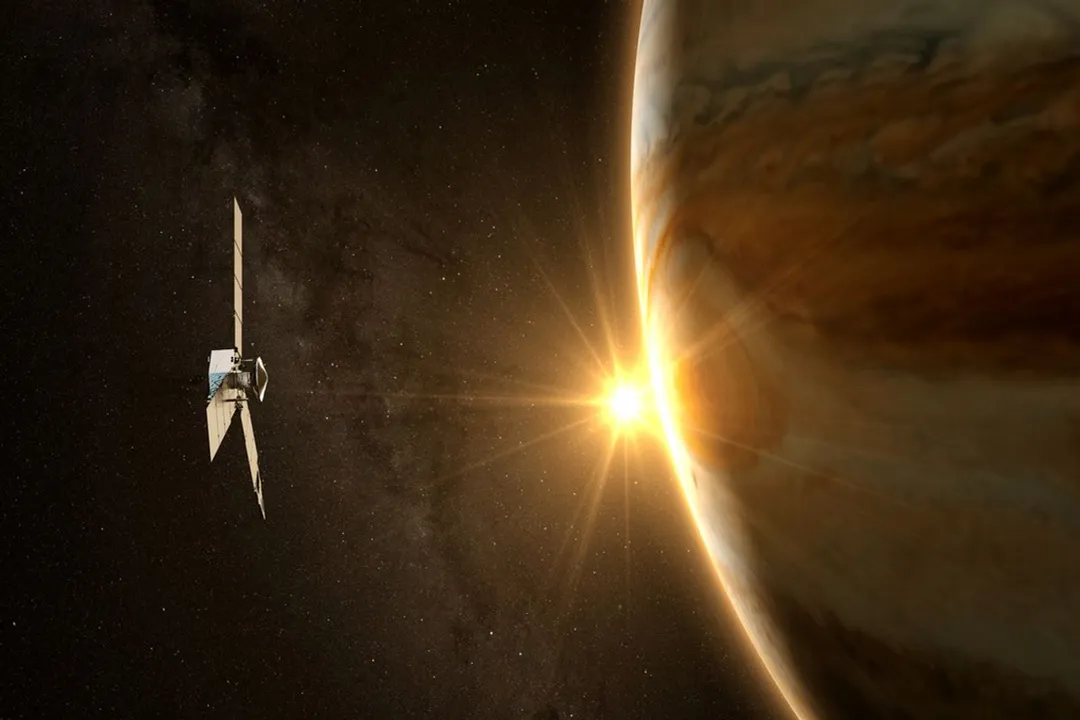
To ground the discussion in reality, we must look at how robotic probes have fared. These missions, which do not need to carry massive life support systems or decelerate significantly upon arrival, represent the fastest trips possible with current chemical propulsion and gravity assist techniques. [3]
The Galileo probe, launched in 1989, eventually reached Jupiter in about six years. [2] This mission relied on a complex trajectory that included gravity assists from both Venus and Earth to gain the necessary speed without carrying excessive fuel weight. [8] It didn't take the most direct path; it took the most fuel-efficient path. [2]
A more recent example is NASA's Juno mission. Juno was launched in 2011 and arrived at Jupiter in July 2016, completing its transit in just under five years. [2][3] The New Horizons probe, famous for its Pluto flyby, also headed in Jupiter’s direction, using the giant planet for a gravitational slingshot to boost its speed toward the dwarf planet. [8] It made its Jupiter flyby in about a year, but this was a fast, targeted flyby, not a mission intended to enter orbit around Jupiter. [8]
These robotic benchmarks suggest that with current chemical propulsion, the absolute minimum one-way trip time to simply reach Jupiter is around five years, assuming an optimized trajectory. [2][3]
# Crewed Challenges
The calculation changes significantly when humans are involved. A robotic probe is designed to coast toward its destination, perhaps making minor course corrections, but it doesn't need to slow down much to enter orbit or land. [3] A human crew, however, must execute a large deceleration maneuver to avoid flying right past Jupiter or being pulled into its intense gravity well destructively. [3]
This deceleration requirement introduces two major penalties: fuel mass and time.
First, you need a massive amount of propellant to slow down the spacecraft carrying people, supplies, and radiation shielding—all of which add significant mass. [3] The mass penalty is enormous because carrying extra fuel requires even more fuel to accelerate that extra mass in the first place, a concept known as the rocket equation.
Second, to conserve fuel and manage the required thrust, mission planners would likely adopt an even longer, slower trajectory than the one used for robotic probes like Galileo. [3] Instead of maximizing speed, the crewed trajectory would optimize for a lower overall (change in velocity) budget to keep the starting mass manageable. [8] A shorter trip implies a much higher launch velocity, which translates directly into exponentially more propellant. [8]
Therefore, a conservative estimate for a manned mission using current chemical propulsion would likely push the transit time closer to six to eight years one-way, simply to accommodate the necessary life support and the massive braking maneuver required to enter orbit safely. [3] If we were to attempt a faster, more direct path to reduce crew exposure to deep-space radiation—a major concern—the required propulsion and resulting mass would push the engineering capabilities of today's rockets far beyond what is feasible. [3] For instance, the New Horizons mission, which flew past Jupiter quickly, was designed for speed, not for stopping, and it didn't need the heavy shielding or return systems a human mission would necessitate.
# Speed Limits
The bottleneck isn't knowing how to get there; it's how fast we can accelerate and decelerate without requiring a launch vehicle the size of a skyscraper packed with fuel. [3] To shave years off the five-year minimum for a robotic probe, we would need propulsion systems far beyond what is currently standard.
Consider the difference between the Juno mission's arrival speed and what might be needed. Juno arrived traveling at about 47 kilometers per second relative to Jupiter, having been accelerated via gravity assists. [2] To cut the travel time in half to, say, two to three years, a spacecraft would need to sustain incredibly high speeds for the majority of the trip, requiring propulsion far more energetic than traditional chemical rockets.
If we move into advanced propulsion concepts—like nuclear thermal propulsion or fusion drives—the picture changes entirely. A nuclear thermal rocket, for example, offers a much higher exhaust velocity than chemical rockets, which could potentially reduce the transit time to Jupiter to perhaps three or four years even with a crewed spacecraft that needs to slow down. [3] While these technologies are being studied, they are not yet ready for a Jupiter-class human mission. [3] Traveling to Jupiter with tomorrow's propulsion might become feasible in three to four years, but today, the laws of orbital mechanics and the limits of stored chemical energy dictate a much longer passage.
Ultimately, the answer hinges on the mission profile: Are we flying by, or are we stopping? For a robotic flyby, around five years is the established minimum today. [2] For a crewed mission that must safely enter Jupiter's orbit, you must budget substantially more time—likely six to eight years—to manage the enormous mass penalty associated with bringing a crew safely to a halt. [3]
#Videos
How Long Is Trip to Jupiter Really? - YouTube
How Long Does It Take To Reach Jupiter And Why Is It Complicated?
Related Questions
#Citations
How long would it take for a human to travel to Jupiter ... - Reddit
How long does it take to get to Jupiter? | Space
How Long Does it Take to Get to the Moon... Mars... Jupiter ... - NASA
How Long Is Trip to Jupiter Really? - YouTube
With current technology, how long would it take to travel to Jupiter ...
How long does it take to get to Jupiter? - Phys.org
hohmann transfer - Voyager Earth to Jupiter journey time
How long would it take for a manned craft to reach Jupiter's moons?