How long will it take SpaceX to get to Jupiter?
The sheer scale of the solar system means that sending any spacecraft, especially one carrying humans or significant cargo, from Earth to Jupiter is a monumental undertaking measured in years, not weeks. While we are actively sending probes toward the Jovian system right now, the timeline changes dramatically when considering the potential capabilities of SpaceX’s next-generation transport system, Starship. Understanding how long this hypothetical trip might take requires looking at the established methods first, as the proposed speed of a fully developed Starship is often discussed only in contrast to current, established transit times.[1][4]
# Clipper Baseline
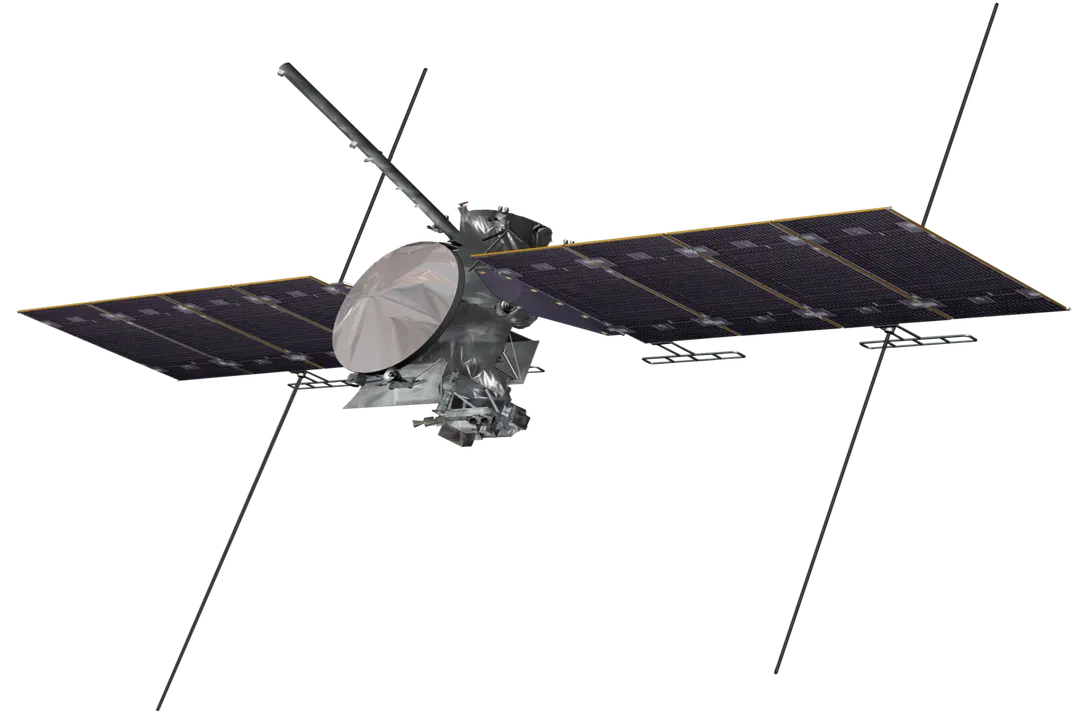
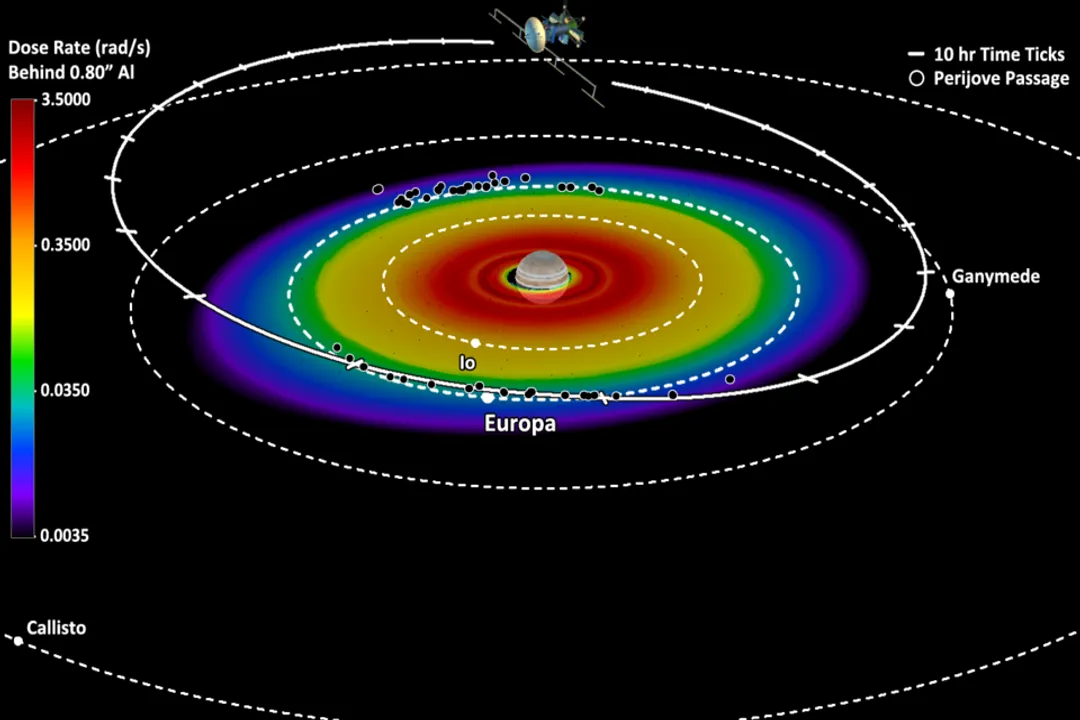
To establish a realistic benchmark for a journey to the vicinity of Jupiter, we can examine a current, real-world mission: NASA’s Europa Clipper. This spacecraft is specifically targeting Jupiter’s icy moon, Europa, which holds significant interest in the search for life. [2] This mission uses a SpaceX vehicle for the initial push off Earth, but it employs a trajectory designed for efficiency over speed.
The Europa Clipper launched in October 2024, utilizing a SpaceX Falcon Heavy rocket for its ascent. [3][7] This vehicle, while powerful, requires the spacecraft to follow a path that conserves propellant for scientific operations upon arrival. Such trajectories often rely on planetary and lunar gravity assists—essentially using other bodies' gravity to "slingshot" the probe faster without burning extra fuel—to reach the outer solar system. [9] Because of this optimized, fuel-saving route, the expected transit time is several years. Official mission timelines indicate an arrival at the Jupiter system around 2030. [3][9] This translates to a travel duration of approximately five and a half to six years for a chemical rocket trajectory designed for long-term exploration, not a rapid transit. [3]
The necessity of these long, looping trajectories highlights a fundamental constraint in space travel: the energy required to change velocity increases exponentially with the desired speed change. For a craft like Europa Clipper, a massive fuel budget is reserved for the critical Jupiter Orbit Insertion (JOI) burn, making a direct, fast path infeasible with its current architecture. [9]
# Starship Potential
When people discuss how quickly SpaceX’s fully realized Starship vehicle could reach Jupiter, they are generally talking about a system with potentially far greater performance and a different mission profile than a dedicated science orbiter like the Clipper. Starship is designed to be fully reusable and capable of massive payload delivery, which suggests its operational parameters might prioritize transit time when speed is essential, such as for crewed missions or time-sensitive cargo delivery.[1]
Estimates for a theoretical Starship transit to Jupiter suggest a significantly shorter duration than the decades-long flights of the Voyager probes or even the six-year cruise of the Europa Clipper. Some projections place the potential travel time for a Starship mission in the range of about four years to reach the Jovian vicinity. [1][4] If one considers an absolute fastest possible trajectory, perhaps one using advanced in-space refueling and optimized, high-thrust burns for the majority of the cruise phase, transit times as low as three years have been hypothesized. [4]
The difference between the Clipper’s five-to-six-year trip and a theoretical four-year Starship trip is not trivial. If we consider the physical distance the spacecraft must cover, Jupiter can be anywhere from about 390 million miles (628 million kilometers) to over 550 million miles (885 million kilometers) away from Earth, depending on the planets’ orbital positions. [4] A reduction of two years or more in transit time represents a substantial increase in average velocity, likely achieved through greater initial departure velocity afforded by the massive lift capacity of Starship or its proposed in-space fueling capabilities, which would allow it to carry far more propellant for the main acceleration burns.
# Comparing Trajectories
The time difference boils down to the mission objective and the propulsion architecture. The Europa Clipper is a highly specialized scientific instrument whose engineering budget prioritizes the science payload and ensuring it has enough (change in velocity) to enter orbit around Europa itself. [3][9] It has to trade time for energy.
A Starship transit, on the other hand, would likely represent a high-energy trajectory where the propulsion system is designed to achieve a much higher hyperbolic excess velocity () after leaving Earth orbit. [1] This requires significantly more propellant mass launched initially or, more realistically for Starship, propellant delivered via orbital refueling depots. If Starship can achieve this high departure speed, it can cut the time to Jupiter considerably.
To better visualize this contrast, we can look at the general flight times often cited for various interplanetary objectives.
| Destination | Typical/Optimized Travel Time | Reference Vehicle/Method |
|---|---|---|
| Mars | 6 to 9 months | Various chemical rockets |
| Saturn | ~7 years | Cassini/Huygens (used gravity assists) |
| Jupiter (Clipper) | ~5.5 to 6 years | Falcon Heavy (optimized for arrival orbit) [3] |
| Jupiter (Hypothetical Starship) | ~4 years | Fully fueled Starship (high energy) [1] |
This comparison shows that while current chemical propulsion with gravity assists sets the floor at around six years for a full Jupiter system mission, Starship’s potential points toward shaving off a quarter or more of that time, bringing the trip closer to what was once considered a theoretical "fast" transit for solar system objects. [4]
# Efficiency and Velocity
One important factor to keep in mind is the continuous nature of the thrust. Traditional chemical rockets burn for a relatively short time to reach escape velocity, then coast for years, relying on gravity assists to subtly alter their path and speed. [9] A truly rapid transit using a high-performance system like a theoretical, fully-optimized Starship might involve a longer burn phase or a higher initial acceleration, meaning the vehicle spends less time coasting passively and more time actively accelerating toward its target. [1]
This brings up a key analytical point: The feasibility of a four-year Starship transit to Jupiter likely hinges entirely on the successful implementation of large-scale in-space propellant transfer. Launching the entire propellant load required for a high-energy Jupiter trajectory directly from Earth on a single Starship launch stack would be extremely challenging, if not impossible, given current mass-to-orbit capabilities. The advertised four-year window essentially presupposes a highly efficient "gas station" system established in Earth orbit, allowing the Jupiter-bound Starship to fully load up on propellant before making its departure burn. [1] Without this orbital infrastructure, even Starship’s capacity might still default to a slower, gravity-assist-heavy trajectory, though perhaps slightly faster than the Clipper due to its sheer size and thrust potential.
Another insight arises when considering the payload's implications. The Europa Clipper is a relatively small probe, weighing around 13,000 pounds at launch. [3] A crewed Starship, or a significant cargo variant, would weigh orders of magnitude more. To achieve a four-year transit time with such a massive object necessitates an unprecedented expenditure of energy relative to the payload mass. Therefore, the four-year estimate isn't just about the rocket; it's about the mission architecture Starship enables—one where propellant is treated almost like a consumable resource that can be topped off, rather than a fixed budget carried from the start. [1] If the mission were uncrewed and focused only on speed, perhaps only a minimal habitat or a small instrument package would be needed, allowing for even greater propellant loading per launch attempt.
# Next Steps
For now, missions like Europa Clipper represent the state of the art for reaching the outer planets, taking the time necessary to ensure arrival with precision and remaining fuel margins. [2][7] When we look toward Jupiter with the lens of SpaceX technology, we are looking at a future where the transit window could potentially shrink by a third or more, fundamentally changing the timeline for human expansion toward the outer solar system. The realization of that faster trip remains tethered to the success of the broader Starship development program, particularly its orbital refueling capabilities.[1]
#Videos
Watch SpaceX Launch NASA's Europa Clipper to Jupiter ... - YouTube
Related Questions
#Citations
SpaceX Starship Travel Time to the Planets How long would it take ...
NASA spacecraft rockets toward Jupiter's moon Europa in search of ...
Europa Clipper - Wikipedia
This is how long it takes to fly to different objects in the solar system.
Watch SpaceX Launch NASA's Europa Clipper to Jupiter ... - YouTube
Nasa's Europa Clipper sets sail for Jupiter's icy moon to study ...
How long would it take a rocket to get to Jupiter? - Quora
NASA, SpaceX launch historic Europa Clipper mission to Jupiter
Mission Timeline - Europa Clipper - NASA Science