What makes galaxies different shapes?
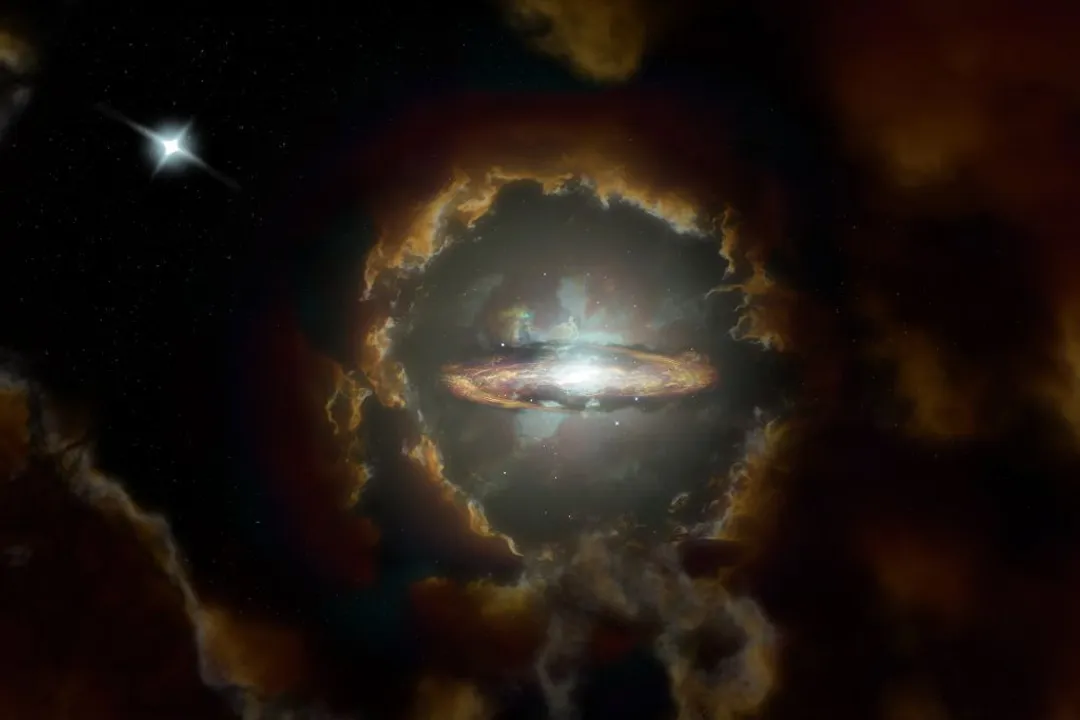
The sheer variety in the cosmos is staggering, from the delicate, pinwheeling structure of our own Milky Way to the vast, featureless, football-shaped giants seen in deep-field images. Asking what causes these dramatic differences in galactic shapes points directly toward the interplay of physics over billions of years, largely driven by two key factors: the initial spin of the material that formed the galaxy and the gravitational interactions it endures throughout its life.
# Basic Forms
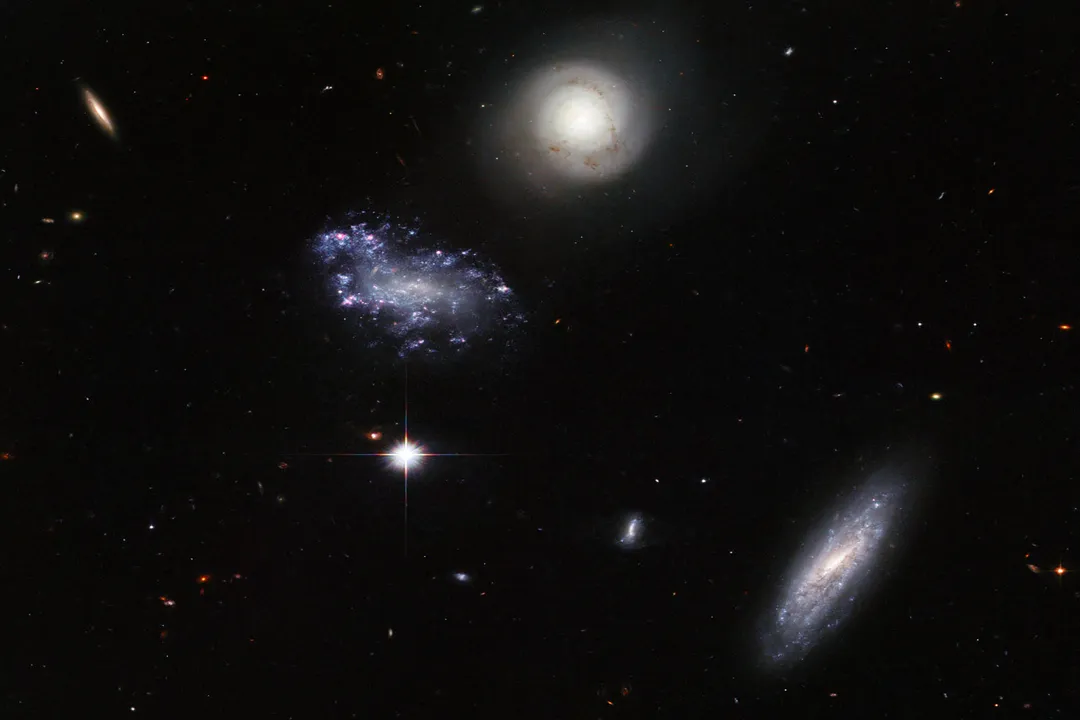
Galaxies are not randomly shaped; astronomers have established classification systems to categorize them based on their visual appearance, most famously detailed in the Hubble sequence. The three major categories are Spiral, Elliptical, and Irregular.
Spiral galaxies, like the Andromeda Galaxy, are characterized by a flat, rotating disk containing spiral arms, usually peppered with bright, young blue stars, dust, and gas, surrounding a central, older bulge of stars. These disks require a very specific formation history where the gas and stars settled into an organized rotation.
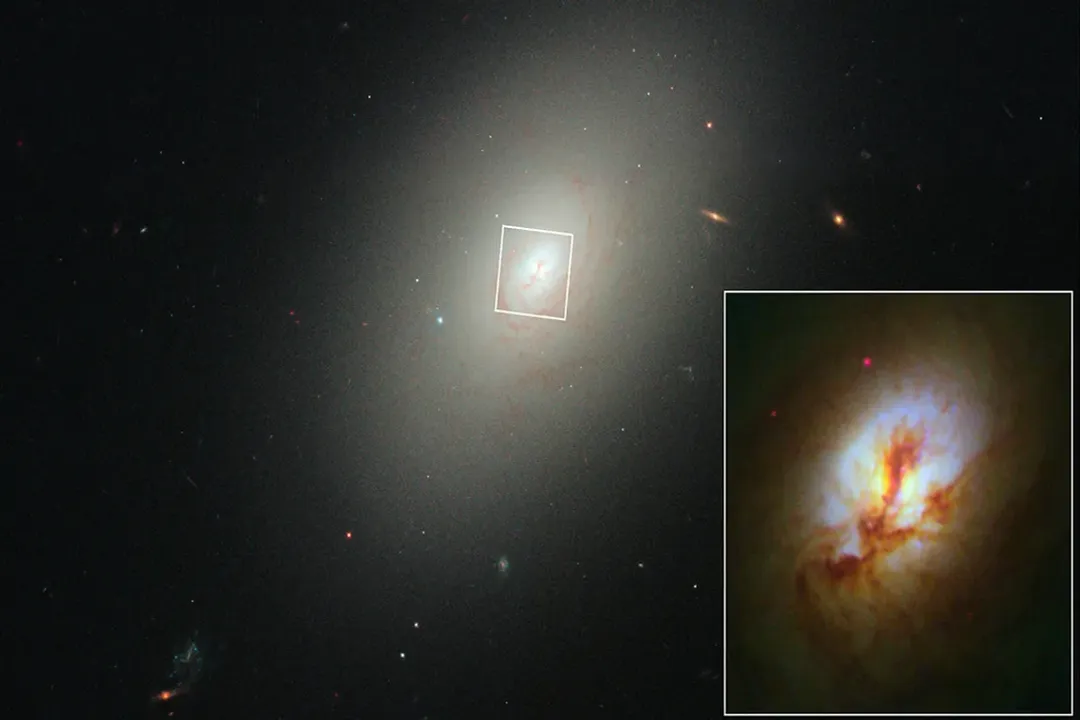
Elliptical galaxies, conversely, appear much smoother, ranging from nearly perfect spheres to highly elongated ovals. They typically contain older, redder stars and very little cool gas or active star formation. Their structure suggests a history dominated by random motion rather than ordered rotation.
Finally, Irregular galaxies lack any well-defined or symmetrical structure whatsoever. These often represent galaxies that have undergone extreme gravitational disruptions or are simply too young to have settled into a stable form.
# Spin Dictates Shape
The story of a galaxy’s shape begins almost immediately after the Big Bang, rooted in how the very first clumps of matter—dark matter and gas—collapsed to form a protogalaxy. This initial collapse is governed by the principles of rotation, specifically angular momentum.
As a massive, diffuse cloud of gas collapses gravitationally, any slight initial rotation inherent in that cloud is conserved. Because the cloud is collapsing inward, the spin must speed up, flattening the material into a disk, much like a spinning clump of putty flattened by a cosmic hand. This conserved, ordered spin is the fundamental prerequisite for forming a flat, spiral disk structure.
If the original cloud of gas and dark matter had very little net rotation, or if the rotation was effectively randomized during the collapse, the resulting object tends to be more spherical or ellipsoidal—the birth of an elliptical galaxy. Imagine the difference between dropping a perfectly balanced spinning top versus throwing a random lump of clay at the floor; the former maintains order, the latter results in a chaotic splash. This conservation law provides a crucial boundary condition: A galaxy with high, orderly angular momentum will almost certainly become a disk galaxy, whereas one with low or chaotic momentum will trend toward an elliptical shape.
# Mergers Transform Galaxies
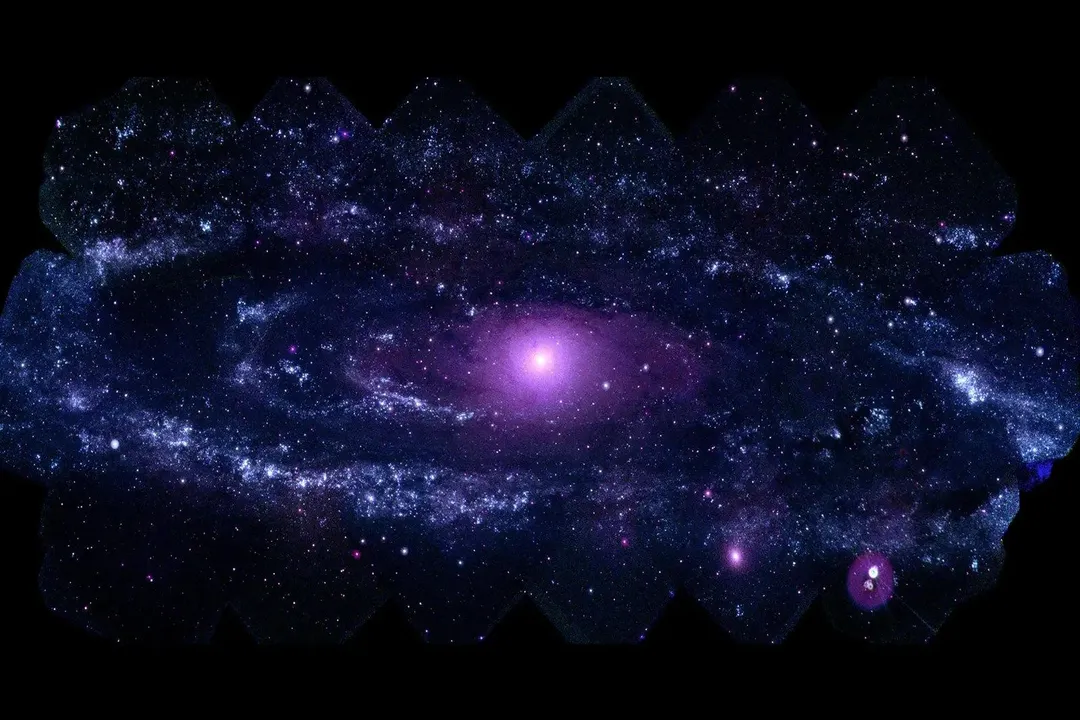
While initial conditions set the stage, the evolution and final look of a galaxy are overwhelmingly sculpted by its neighbors and its environment. Gravitational interactions, particularly mergers, are the main agents of change that shift a galaxy from one basic type to another.
When two disk galaxies of roughly equal mass collide—a major merger—the violent gravitational tug-of-war is highly disruptive. The organized, predictable orbits of the stars and gas in the disks are completely randomized. This process effectively heats up the system, destroying the delicate disk structure and the spiral arms, resulting in a massive, randomly organized, gas-poor elliptical galaxy.
Conversely, a minor merger, where a small satellite galaxy falls into a much larger spiral, can have different effects. While it can sometimes trigger bursts of star formation by funneling new gas into the center, it might also slightly warp the outer edges of the larger disk or contribute to the formation of a central bar structure common in many spirals.
Irregular galaxies are frequently the immediate aftermath of such disruptive events. If two galaxies are currently interacting, or if one has recently passed extremely close to another, the tidal forces literally pull streamers of stars and gas outward, creating chaotic, non-symmetrical forms until the galaxies either settle or complete their merger.
# Cosmic Environment
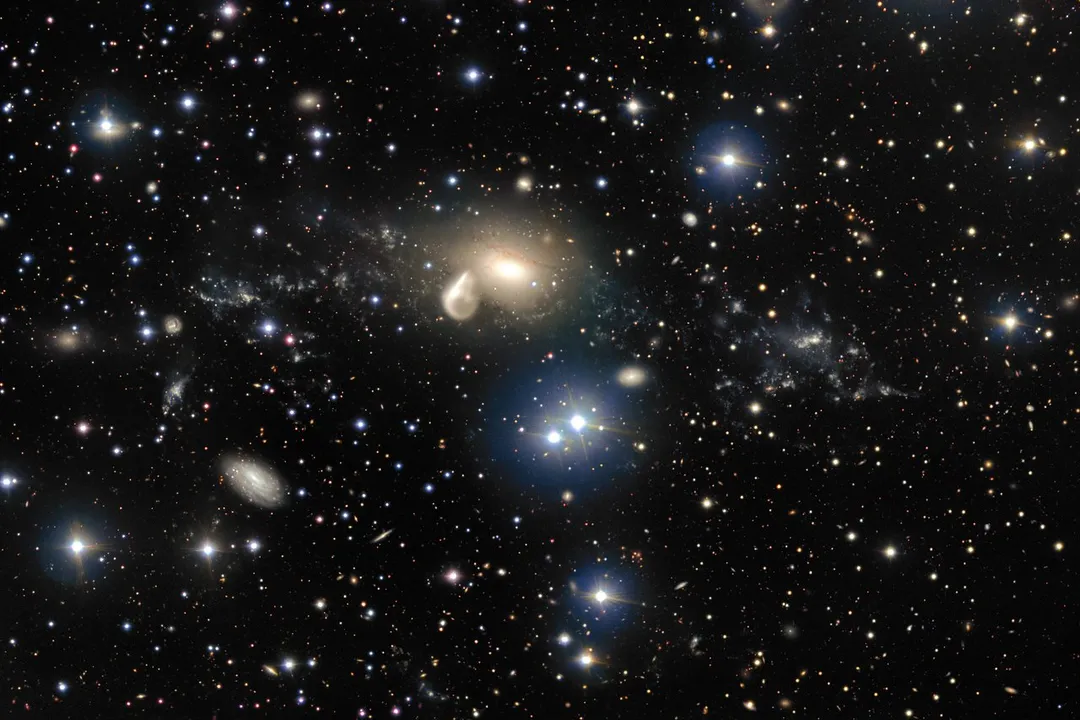
The density of the region where a galaxy resides also plays a strong role in determining its long-term shape and composition. Galaxies that form in the quiet isolation of the field—far from crowded areas—have a much higher chance of retaining their gas supply and maintaining their delicate spiral structure over cosmic timescales. They get the time needed to settle into a stable, rotating configuration.
In contrast, galaxies located in the cores of massive galaxy clusters are subject to intense gravitational influence from hundreds or thousands of neighbors. Furthermore, they must push through the superheated, thin gas that fills the space between galaxies in a cluster, a process called ram pressure stripping. This stripping effectively blows away the cold gas reservoir that spirals need to sustain their beautiful, ongoing star formation in the disk. Without that gas, star formation ceases, and the galaxy eventually fades into a structure resembling an elliptical or a gas-starved lenticular galaxy. It is fascinating to consider that a galaxy's current shape is less about what it is and more about its neighborhood’s traffic density over the last several billion years.
# Evolutionary Path
It is helpful to view galaxy shapes not as fixed identities but as stages in an evolutionary process influenced by age and environment. A galaxy is born with an initial condition set by its angular momentum (leading to a disk or a spheroid), but its destiny is largely determined by whether it stays quiet or gets involved in galactic traffic jams. Over time, spirals convert their gas into stars and are prone to merger events, driving them toward the gas-poor, smooth morphology of an elliptical. Therefore, the largest, most massive elliptical galaxies we see today are generally thought to be the ancient relics of major mergers between massive spirals that occurred long ago in the universe's history. The lack of structure in an irregular galaxy often signals a transient state—it is a galaxy in the process of changing shape due to a recent gravitational encounter.
Related Questions
#Citations
Why do galaxies differ so much in size, shape, composition and ...
Galaxy Types - NASA Science
Types of Galaxies: Why Galaxies Come in Different Shapes
What makes the shape of a galaxy? : r/askscience - Reddit
Why are galaxies disk shaped? - Astronomy Stack Exchange
Why are galaxies different shapes? - Space
The formation and evolution of galaxies is a complex process that ...
How are galaxies formed, and what factors contribute to their diverse ...
ESO Supernova Exhibition — What shapes do galaxies have?