What is the basic shape of an elliptical galaxy?
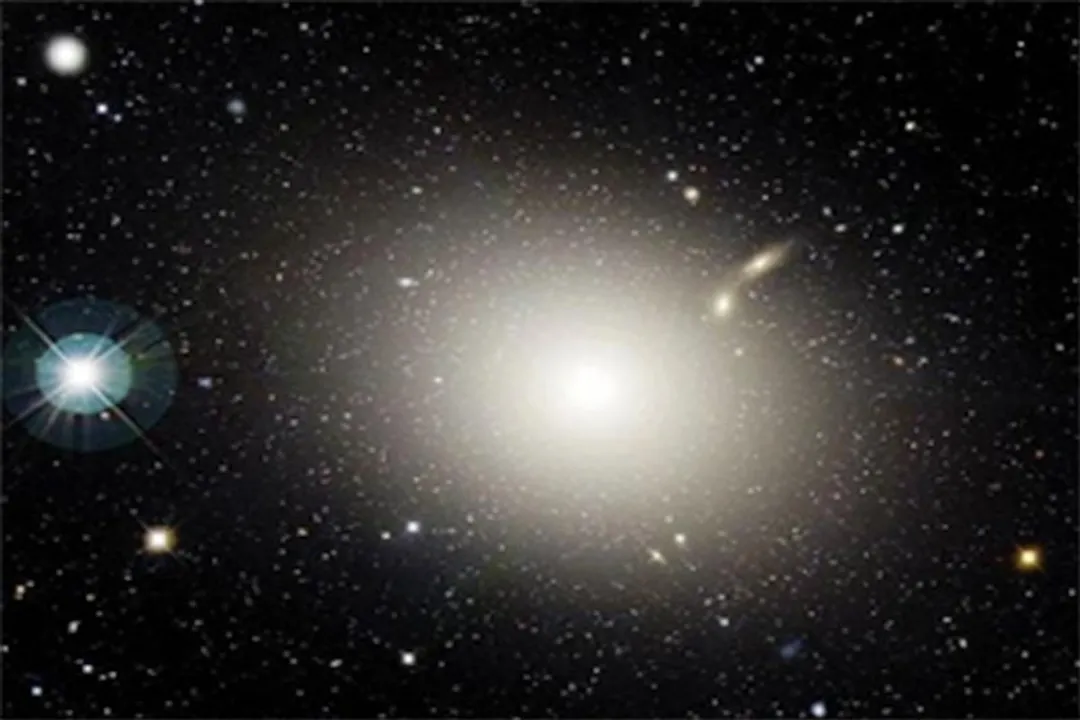
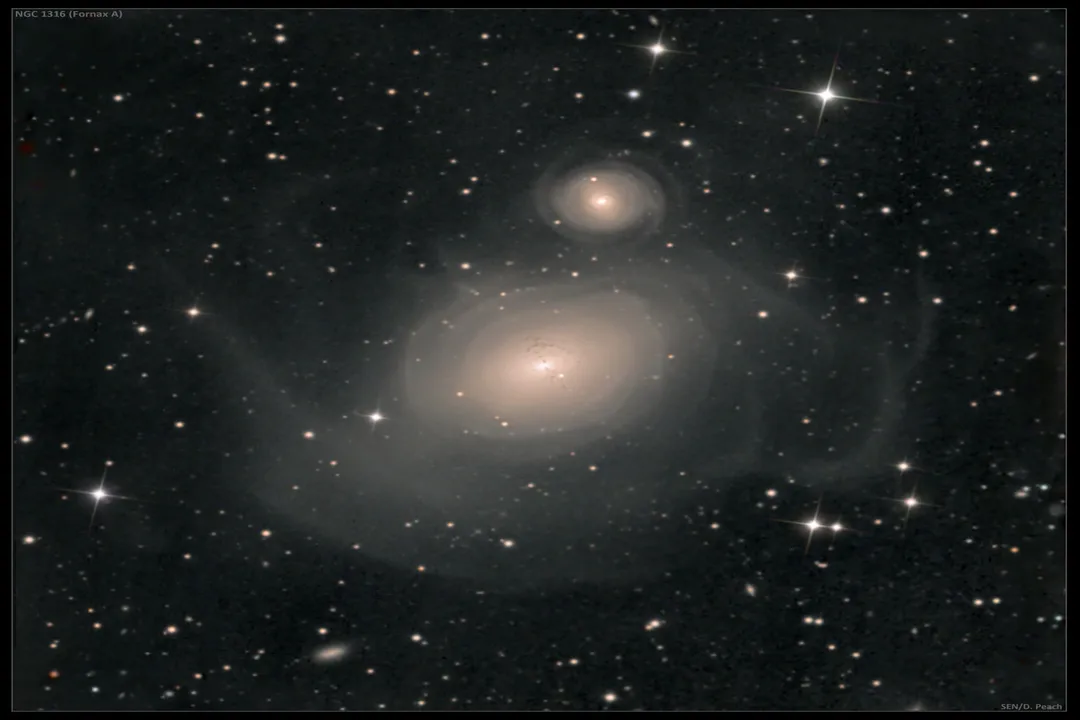
The basic shape of an elliptical galaxy is often described as an ellipsoid, a three-dimensional figure that resembles a squashed sphere or a stretched-out ball. [5][6] Unlike the stately pinwheels of spiral galaxies, these systems are characterized primarily by their smooth, featureless appearance. [1][6] When viewed through a telescope, especially at great distances, they often present as soft, slightly fuzzy patches of light or elongated smudges, lacking the distinct lanes of dust, gas, or bright spiral arms that define other galaxy types. [2][1]
# Galactic Form
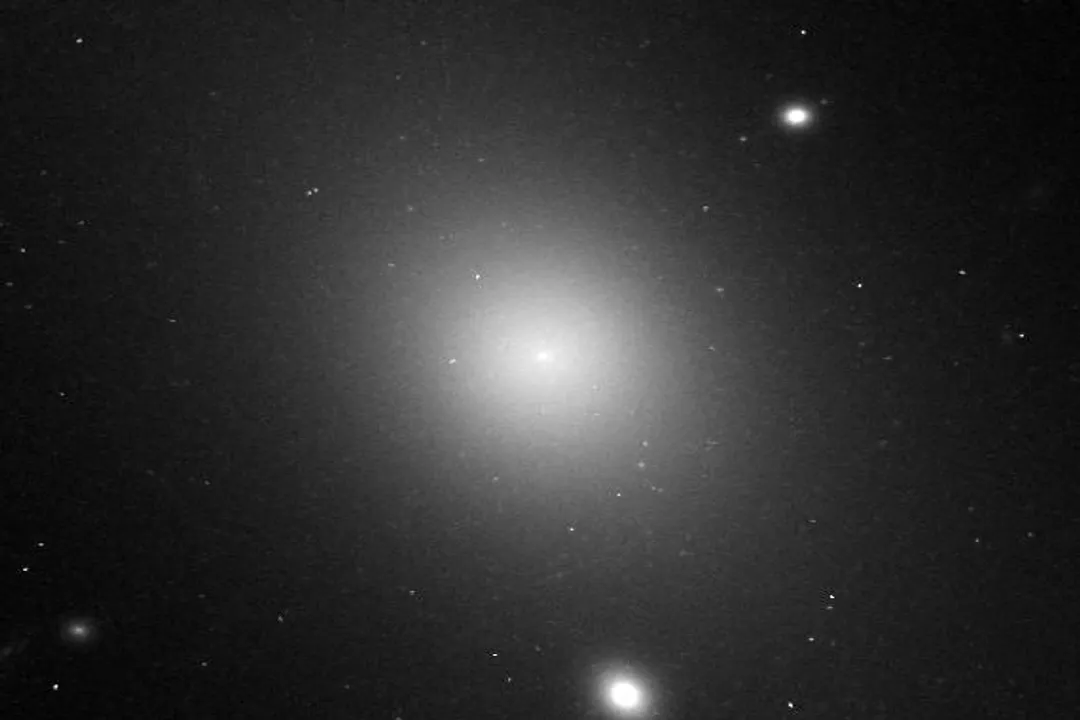
The defining visual characteristic of an elliptical galaxy is its uniformity. There is a relative absence of the cold molecular gas and dust clouds necessary to fuel the birth of new stars. [3][7] This leads to a very homogenous stellar population, usually dominated by older, redder stars, giving the galaxy a consistent, soft glow across its extent. [3][4] Because they lack these prominent internal structures, their morphology is fundamentally determined by the overall distribution of their stars, which declines smoothly outward from the center. [4]
The sheer range in size among elliptical galaxies is astonishing, spanning from very small dwarf ellipticals to the largest galaxies known in the observable universe, often called giant ellipticals. [4][7] This vast scale difference suggests that the processes that shape and sustain these galaxies operate effectively across many orders of magnitude of mass and luminosity. [4]
# Ellipticity Scale
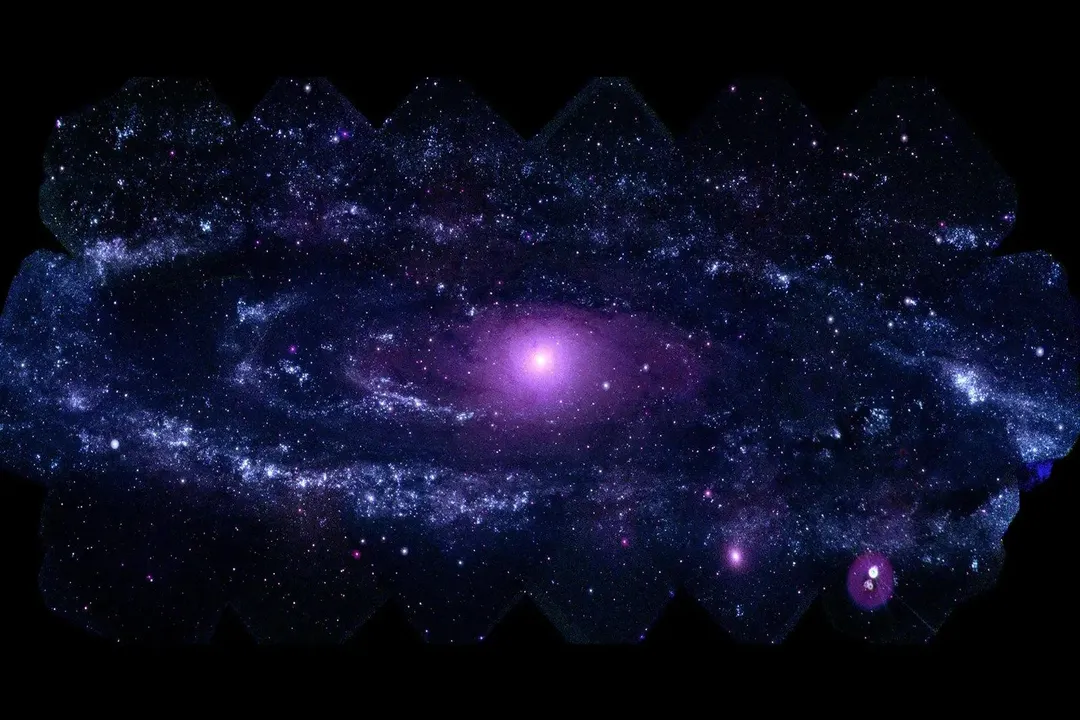
To categorize these smooth shapes, astronomers utilize a classification system based on their apparent flattening, originally devised by Edwin Hubble. [3] This system uses the letter 'E' followed by a number ranging from 0 to 7. [3][5]
The numbers describe the degree of apparent elongation:
- E0 Galaxies: These appear almost perfectly spherical when observed from Earth. [1][3]
- E7 Galaxies: These are the most flattened or elongated systems in the sequence. [1][3]
It is important to recognize that this E0 to E7 scale describes how the galaxy looks to us, not necessarily its inherent three-dimensional structure. A galaxy that is intrinsically quite elongated, but happens to be oriented perfectly face-on relative to our line of sight, will appear as an E0. [3] Conversely, an almost spherical galaxy viewed edge-on might appear more flattened than it truly is. This dependence on viewing angle means that a cluster of E7 galaxies might contain a mixture of shapes that are simply oriented in a specific way relative to the observer, which contrasts sharply with spiral galaxies where the fundamental structure (the flat disk) is more easily recognizable regardless of viewing angle, unless viewed perfectly edge-on. [1]
# True Shape
While the classification deals with apparent flattening, the underlying physical reality is that elliptical galaxies are ellipsoids. [5][6] Think of a rugby ball or an American football; these are three-dimensional objects. An E0 galaxy is analogous to a football oriented with its longest axis pointing directly toward you, making it look like a circle. An E7 galaxy is one where its longest axis is aligned almost perfectly parallel to your line of sight, making it look very thin. [5]
This three-dimensional nature is a key differentiator from spiral galaxies, which are fundamentally flat disks of stars and gas orbiting in a plane. [1][3] The internal dynamics of ellipticals are often described as being more like a swarm of bees moving on complex, randomized orbits within that ellipsoidal volume, rather than the highly organized, circular rotation seen in spiral disks. [4]
# Stellar Populations
The visual simplicity of elliptical galaxies extends to their stellar content. They are often described as being "red and dead" systems. [3][7] The primary stellar population consists of old, low-mass, red-giant and red-dwarf stars (often referred to as Population II stars). [4][6] Because most of the necessary cool, dense molecular gas needed for new star formation has been used up or blown out—likely through violent past events such as galaxy mergers—the production of young, blue stars has ceased or slowed to a crawl. [3][7]
When we look at a giant elliptical galaxy, we are seeing a system whose dominant stellar mass formed billions of years ago. [4] The lack of ongoing star formation gives these galaxies a spectral signature dominated by these older stars, which is a direct consequence of their likely formation history. It suggests that many large ellipticals reached their final major mass configuration via massive collisions and mergers between smaller galaxies. [4] These mergers scramble the organized rotation of the original spirals, redistribute the gas, and heat it up until it can no longer condense into new stars, resulting in the observed random stellar motions and smooth, spherical distribution. [6]
# Galaxy Environment
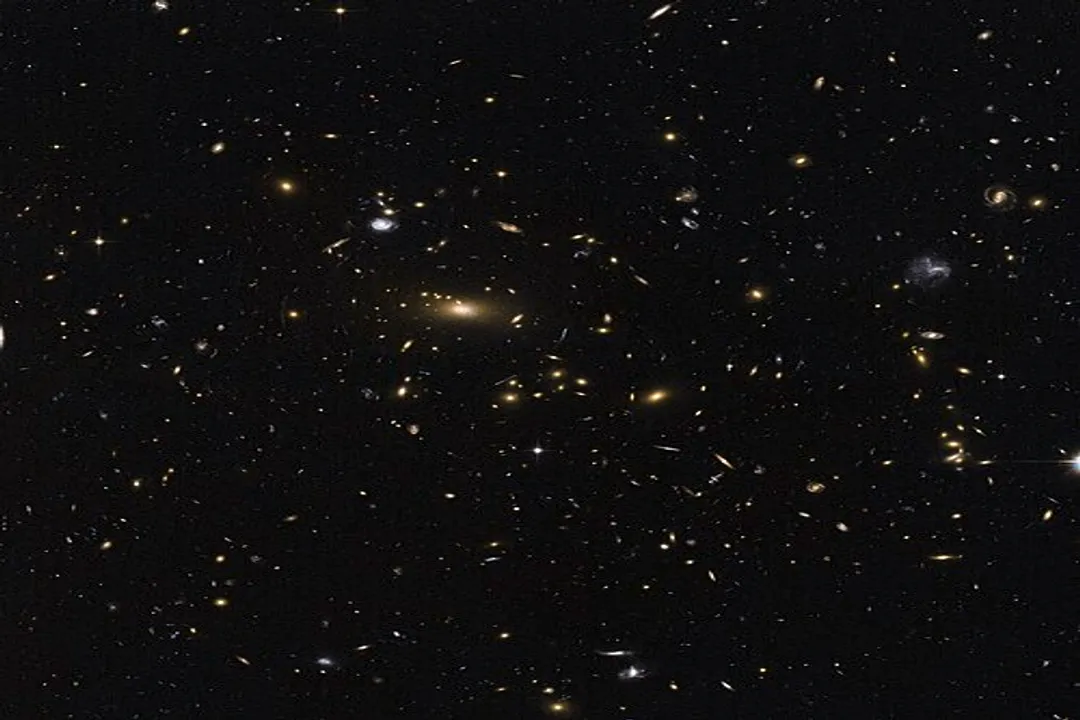
The environment where an elliptical galaxy resides often correlates strongly with its shape. While spiral galaxies thrive in less crowded regions, large ellipticals are overwhelmingly found in the dense cores of large galaxy clusters. [2] This clustering is more than a coincidence; the frequent gravitational interactions and high-speed collisions within these dense knots of matter are the very mechanisms believed to strip gas from galaxies and trigger the mergers that transform spiral structures into the smooth ellipsoidal shapes we observe today. [2][6]
For instance, a dwarf elliptical galaxy might simply be a stripped-down remnant of a larger galaxy that has lost most of its gas and smaller stars due to tidal forces while passing through the dense center of a cluster over eons. [5] The fact that we see such variation, from the almost perfectly smooth E0 to the very elongated E7, suggests that the end state of these violent gravitational interactions isn't always a perfect sphere; some systems retain a degree of elongation based on the relative angular momentum imparted during the final merger. [1]
#Videos
A Simple Guide to Classifying Elliptical Galaxies - YouTube
Related Questions
#Citations
Elliptical galaxy - Wikipedia
Elliptical Galaxies - APOD Index - NASA
13.7: Elliptical Galaxies - Physics LibreTexts
Galaxies, Elliptical
Elliptical Galaxy | All dimensions Wiki - Fandom
Elliptical Galaxies - The XMM Newton Satellite Schoolpage
Elliptical Galaxy | Definition, Characteristics & Examples - Study.com
A Simple Guide to Classifying Elliptical Galaxies - YouTube
Galaxy Types - NASA Science