Do elliptical galaxies have a definite shape?
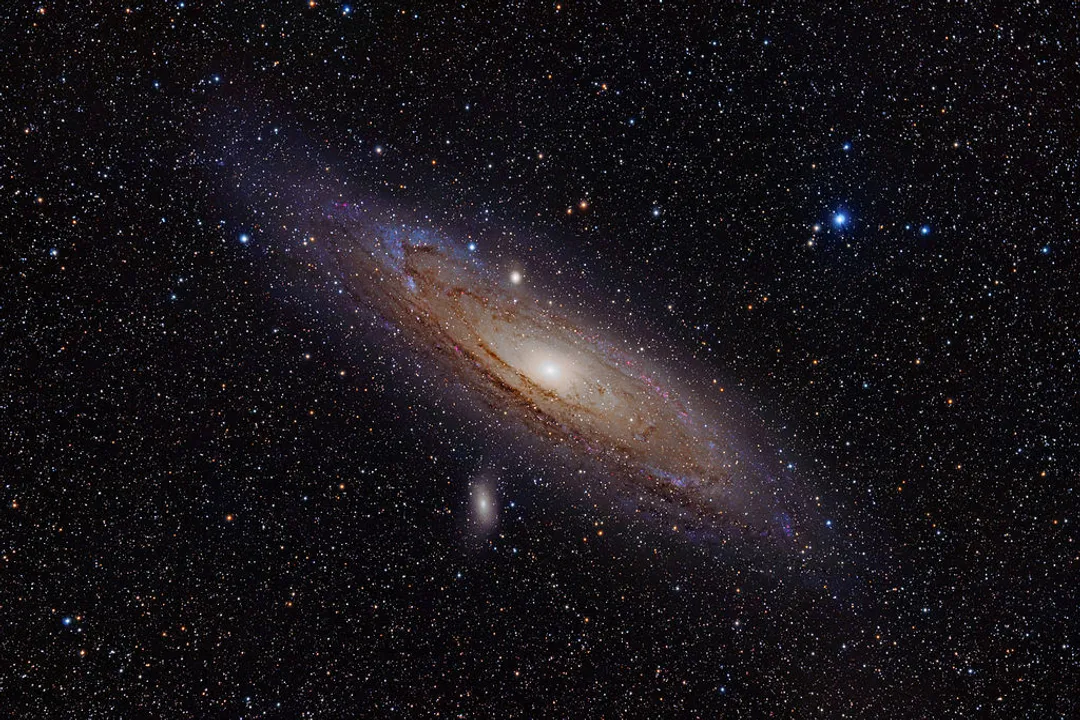
The visual description of an elliptical galaxy—a smooth, featureless ball or oval of light—suggests a straightforward geometry, a predictable arrangement in the cosmos. Unlike their spiral cousins, which boast elegant, rotating arms and distinct dust lanes, ellipticals present a quiet uniformity. However, asking whether these galaxies possess a definite shape is like asking if a shadow has a definite form; what we see is often a matter of perspective, history, and the underlying, chaotic dynamics of the stars within. The answer is far less neat than the Hubble classification system suggests.
# Hubble Classification
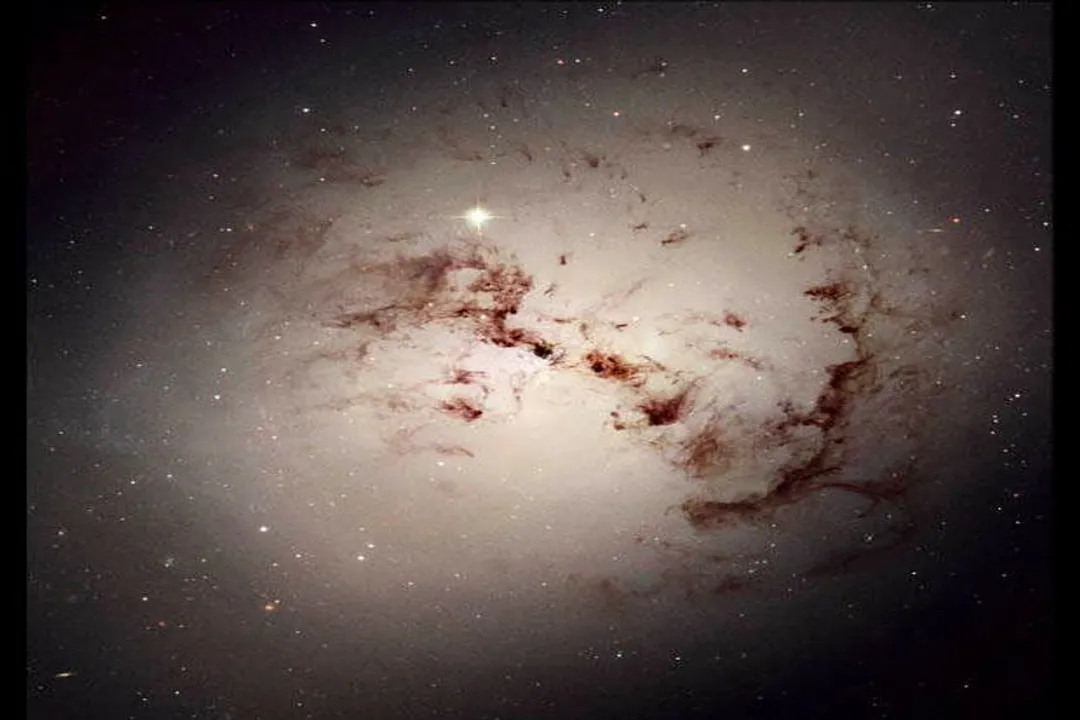
The initial attempt to impose order on the universe’s galaxy population was made by Edwin Hubble, whose sequence organizes galaxies based on visual morphology. In this scheme, elliptical galaxies (designated with the letter 'E') are defined by their apparent deviation from a perfect circle. This classification hinges on a simple mathematical measurement: the ratio between the observed major axis () and the minor axis () of the galaxy's light profile, or isophotes. The specific number assigned to an elliptical galaxy is calculated as .
This system yields a sequence from E0 to E7. An E0 galaxy appears almost perfectly round, mathematically representing a circle where equals . Moving along the sequence, the numbers increase as the galaxy appears more stretched out along one axis, culminating in E7, which describes a very elongated, cigar-like appearance. This classification seems to provide a definite, quantifiable shape descriptor. However, this neat numerical ladder immediately runs into observational physics.
# Projection Confusion
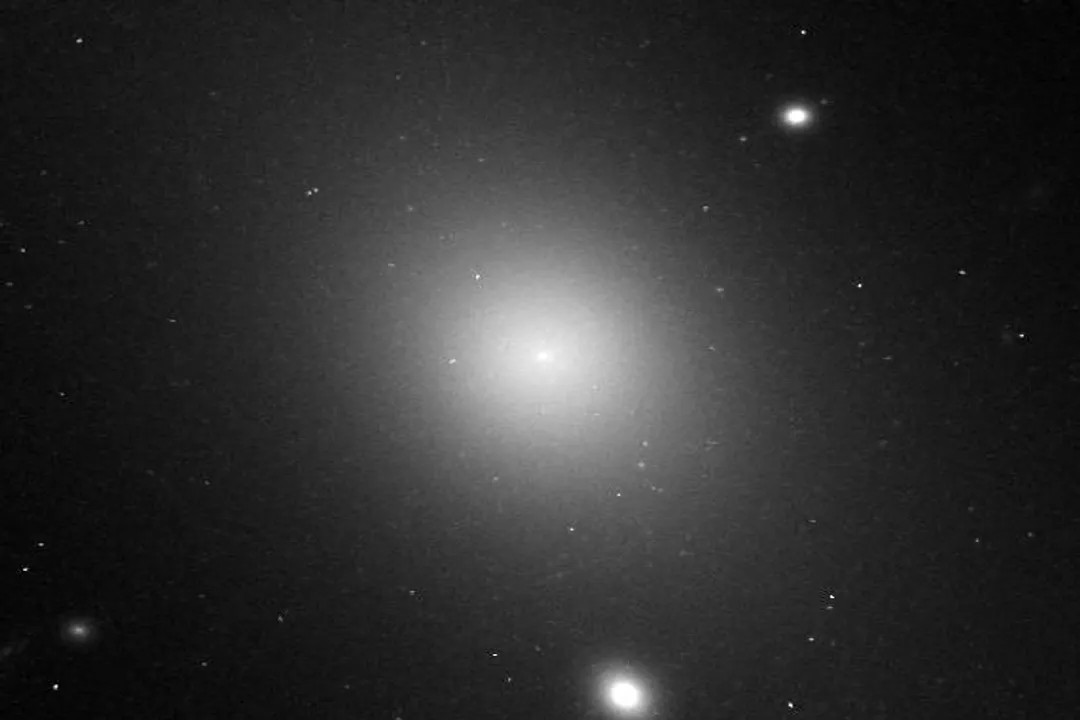
The fundamental issue with relying solely on the Hubble sequence for a "definite shape" is that it describes what we see projected onto the sky, not necessarily the galaxy's true, intrinsic three-dimensional form. The apparent elongation of an elliptical galaxy is highly dependent on our viewing angle relative to its rotational or structural axes.
Imagine an intrinsically spherical E0 galaxy. If we happen to view it perfectly edge-on, it would appear elongated, perhaps mistakenly classified as an E5 or E6, simply because its shape extends away from us in two dimensions we are observing. Conversely, a galaxy that is truly very elongated—an intrinsic E7—would appear as an E0 if our line of sight pointed directly toward its shortest axis, or "pole". This means that the observed shape index, through , describes the apparent ellipticity rather than a guaranteed physical state, undermining the idea that the shape is definitively fixed by that single number. In reality, a single E0 designation could hide anything from a true sphere to a highly flattened system seen face-on.

# The Disk Contamination
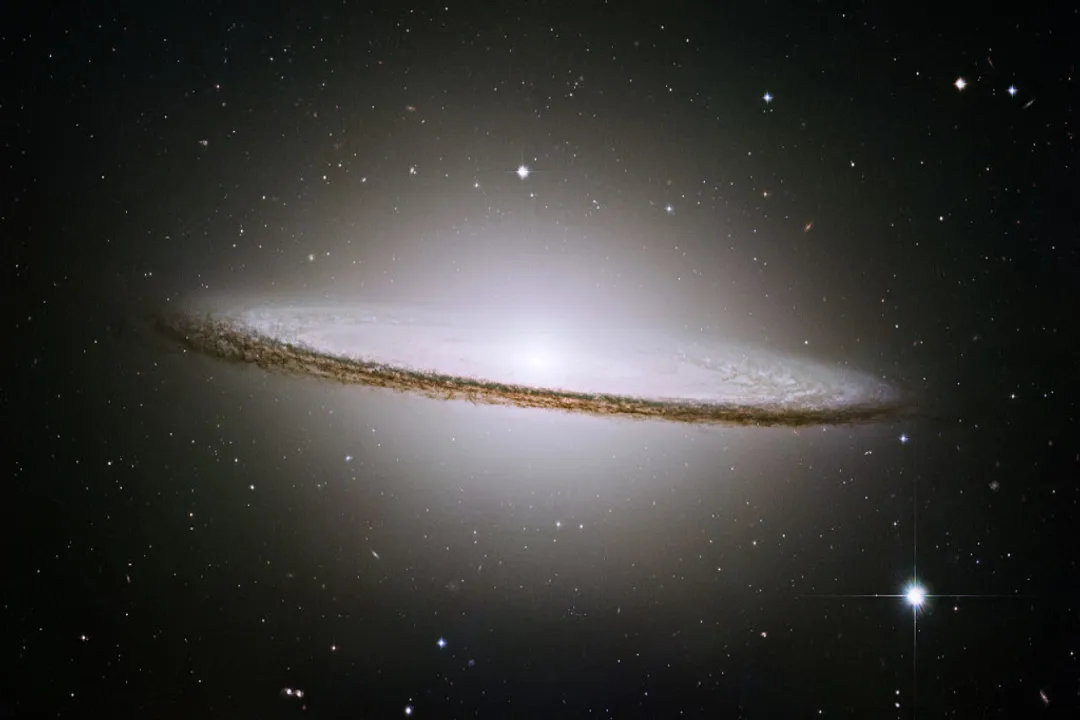
The ambiguity deepens when we examine the upper end of the Hubble scale, E4 through E7. Since 1966, astronomers have increasingly treated these highly elongated types with suspicion, viewing them as potentially misclassified lenticular galaxies (S0). Spectroscopic observations have confirmed that many of these systems show stellar disk rotation, a feature inconsistent with the classical, pressure-supported elliptical model.
If a galaxy possesses a significant, organized stellar disk—even one that is inclined so steeply that it only shows as a strong elongation rather than a clear spiral arm structure—it shares more morphological traits with spirals than with the structureless, pressure-supported core of a true elliptical. The presence of a disk introduces a preferred plane of motion, which conflicts with the more random stellar orbits associated with the classic, rounder ellipticals (E0 to perhaps E3). Therefore, in the context of modern astronomy, the "definite shape" implied by the full E0-E7 range is likely reserved only for the less-flattened E0-E3 members, which lack evidence of a dominant, inclined disk structure.
# Three Dimensions and Dynamics
To truly grasp the shape of an elliptical galaxy, we must move past the two-dimensional projection and consider its three-dimensional structure and the motions of its stars. Early theories often assumed these galaxies were oblate spheroids, flattened shapes sustained by rotation, similar to a spinning Frisbee. However, precise measurements of rotation velocities for many bright ellipticals revealed they rotate far too slowly to support their observed flattening through centrifugal force alone.
This discrepancy led to the current dominant view: most bright elliptical galaxies are triaxial ellipsoids. A triaxial object possesses three unequal principal axes, meaning it is neither perfectly spherical nor flattened along just one axis (like an oblate or prolate shape). The shape in a triaxial system is maintained by the anisotropy of stellar motions—the random velocities of stars are systematically different in various directions.
This means the "definite shape" is dictated by the spatial distribution of stellar orbits. Computer modeling shows that orbits in these potentials fall into categories like "box" orbits, which travel up and down along the longest axis, or "tube" orbits, which circulate around the axes. The coexistence and ratio of these orbit types determine the overall morphology, suggesting that the shape is less about a rigid, static form and more about the emergent structure from these complex, long-term stellar trajectories.
To quantify this complexity, astronomers often rely on surface brightness profiles, such as the de Vaucouleurs' law, which describes how light fades outward from the center. While this law fits many ellipticals well, the brightest galaxies, known as cD galaxies found at cluster centers, possess extensive, diffuse envelopes that require extra material, often thought to be tidal debris from smaller galaxies they have cannibalized. This means the shape can be patchy or extended far beyond the smooth core one initially pictures.
# Internal Deviations and Twists
Even within the smooth, ellipsoidal framework, ellipticals exhibit internal variations that challenge the idea of a single, definite geometry.
# Isophotal Twists
The contour lines of equal brightness, or isophotes, are usually elliptical, but their orientation or elongation can change as one moves outward from the core. This phenomenon, known as isophotal twisting, means the overall ellipse of the inner region might be tilted relative to the ellipse defining the outer regions. This twisting could be a direct consequence of a triaxial shape viewed from a non-symmetrical angle, where the nested ellipsoids have differing axis ratios. Alternatively, these twists could be intrinsic, caused by ongoing, albeit subtle, tidal interactions with neighboring galaxies. If the shape is constantly subject to external gravitational nudges, its overall form remains in a state of dynamic equilibrium, never achieving a perfectly fixed, definite shape.
# Core Complexity
Furthermore, the very center of an elliptical galaxy can defy the overall shape description. While the de Vaucouleurs' law predicts brightness should continuously increase toward the center, most ellipticals show a central core region where the surface brightness flattens out to a near-constant value. In the most massive ellipticals, like M87, observations of steeply rising stellar velocities toward the center strongly suggest the presence of a supermassive black hole, or a dense concentration of stellar remnants, whose gravity dictates local orbits.
In some cases, particularly in the cores of about a quarter to a half of observed ellipticals, rapid rotation is detected, often around an axis different from the rest of the galaxy. This is hypothesized to be the remnant signature of a smaller dwarf galaxy that spiraled into the center without being completely tidally disrupted, creating a localized rotational feature within the larger, pressure-supported ellipsoid.
If we consider the observational constraints on determining the actual 3D shape, we encounter a practical limitation that influences our certainty about any "definite shape." Astronomers measure line-of-sight velocity dispersions and rotation velocities. Without making strong, simplifying assumptions about the stellar orbits (like assuming isotropy, where random motions are equal in all directions), the observed data is simply insufficient to uniquely constrain both the mass distribution and the exact 3D shape. Thus, the determination of a definite shape relies on models, not direct measurement, making the concept highly dependent on the adopted dynamical model.
# Ellipticals Versus Clusters
To further differentiate elliptical galaxies from other smooth, centrally concentrated objects, it is useful to compare them with globular clusters. In terms of apparent visual shape when viewed at the same angular size on the sky, a dwarf elliptical galaxy might bear a resemblance to a globular cluster, as both appear as fuzzy, non-resolved balls of light.
However, the underlying reality of the structure is profoundly different, reinforcing that "shape" alone is an insufficient descriptor. A massive globular cluster contains about $10^5$ stars, whereas even a modest elliptical galaxy contains factors of $10^4$ more stars than the most massive globular clusters. Furthermore, the physical diameters are vastly different: the dwarf ellipticals are about 100 times physically larger than the clusters, though they are much further away, leading to the comparable angular size. Crucially, the stars in an elliptical galaxy are supported by complex, three-dimensional, anisotropic orbits, whereas globular clusters possess internal dynamics vastly simpler than a galaxy-scale gravitational potential. The elliptical shape is the result of galaxy-scale mergers, whereas the cluster is a gravitationally bound sphere of ancient stars that formed together.
# Conclusion on Definite Form
So, do elliptical galaxies have a definite shape? If the question implies a single, immutable, describable form like that of a perfect cube, the answer is no. They are a class defined by the absence of spiral structure and the presence of an ellipsoidal distribution of stars.
The shape exists on a spectrum defined by the Hubble system (E0-E3 being the most robustly elliptical), but that spectrum is complicated by projection effects, the intrusion of lenticular-like disks (E4-E7), and internal dynamical forces. The intrinsic shape is likely triaxial, supported not by simple rotation but by complex, anisotropic stellar velocity fields. The structure can be further perturbed by central black holes and the accretion of material from smaller galaxies, leading to features like twisting isophotes or rapidly spinning cores. The shape is a result of violent mergers and subsequent relaxation, making it a snapshot of an ongoing evolutionary process rather than a fixed endpoint. The "shape" of an elliptical galaxy is thus a complex interplay of viewing geometry, internal dynamics, and merger history, rendering any single descriptor provisional at best.
Related Questions
#Citations
Elliptical galaxy - Wikipedia
Elliptical Galaxy | ESA/Hubble
Galaxy Types - NASA Science
Elliptical Galaxies | Space
Ellipticals - A Universe of Galaxies
Types of Galaxies | Physical Geography - Lumen Learning
Elliptical Galaxies - The XMM Newton Satellite Schoolpage
Elliptical Galaxy | Definition, Characteristics & Examples - Study.com
Essay
Do elliptical galaxies look similar to globular clusters?