Why is the Io more volcanically active than the moon?
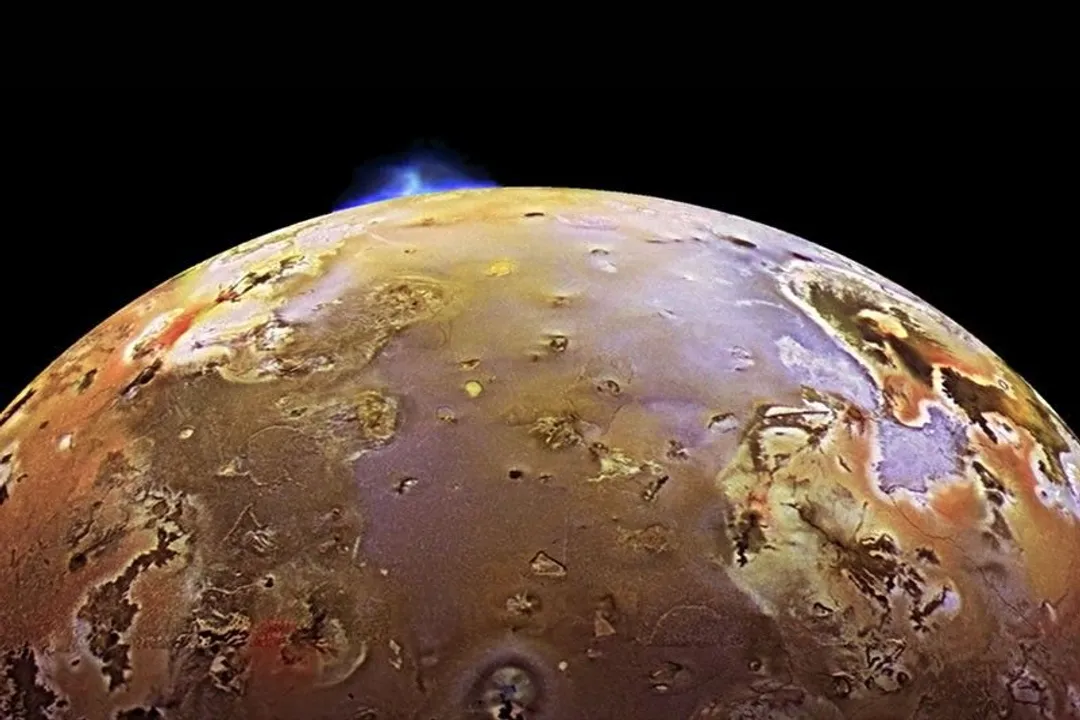
Io orbits Jupiter, a world of perpetual, furious geological turmoil, making it the most volcanically active body known in the entire solar system. [3][2] When we look at our own Moon, a familiar, quiet, cratered sphere, the contrast with Io is staggering. The Moon is largely geologically dead, having cooled down significantly over its history. [7] The fundamental reason for this dramatic divergence lies not in raw size or proximity to the Sun, but in the overwhelming gravitational forces exerted by Jupiter and its other large moons, a situation our own Moon has never experienced in the same measure.
# Tidal Engine
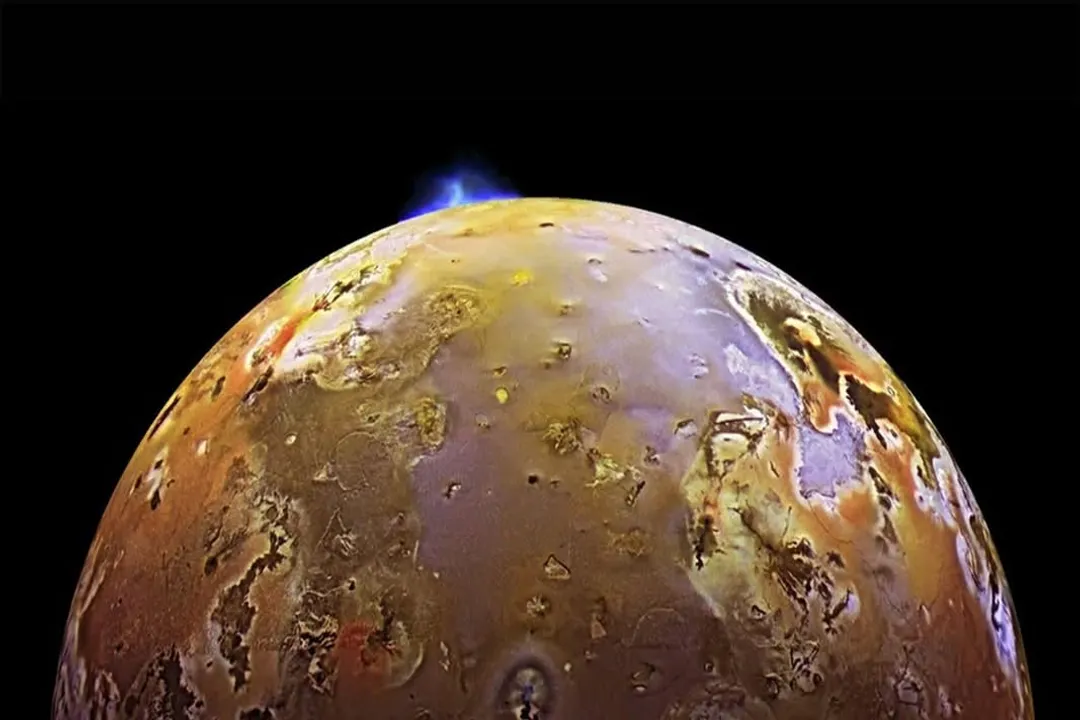
The powerhouse driving Io's relentless eruptions is an incredibly intense process known as tidal heating. [4][2] Io is locked in a complex gravitational dance, an orbital resonance, with two of Jupiter's other massive satellites, Europa and Ganymede. [4] This constant gravitational tug-of-war effectively stretches and squeezes the icy moon as it orbits Jupiter. [4]
Imagine squeezing a sponge repeatedly with enormous force; the friction generated within the material creates heat. Io experiences a similar effect on a colossal scale within its rocky interior. [2] Because Io orbits within Jupiter's powerful magnetic field, the tidal flexing generates tremendous internal heat. [3] This consistent internal friction is what keeps Io's interior molten and its surface covered in hundreds of active volcanoes. [2]
This heating mechanism is unique among the Galilean moons, which are all composed primarily of rock and ice. [6] While Europa and Ganymede also experience tidal heating, the specific geometry and orbital spacing involving Io make its heating the most extreme. [3] This continuous energy input prevents the moon from cooling down like the Earth’s Moon, ensuring a state of sustained, vigorous geological activity. [4] The heat source is so powerful it dwarfs the radiogenic heating that powers terrestrial volcanism today. [2]
# Lunar Contrast
Our Moon presents a stark counterpoint to Io's fiery existence. [6] It is a world that settled into quiet dormancy long ago. The Moon lacks the intense, sustained gravitational kneading that Io endures. [7] Without this persistent, powerful tidal engine, any early internal heat from accretion or differentiation was allowed to dissipate into space over the eons. [7]
The geological record on the Moon is preserved in ancient, heavily impacted craters, indicating a period where the intense bombardment phase ended, and internal activity ceased. [7] In fact, some geological reconstructions suggest that the Moon might have experienced a period in its deep past that bore some resemblance to Io's current state, perhaps with more active volcanism when it was younger, but that activity waned as its internal heat was lost. [7] This hypothesized early phase on the Moon, however, was likely not as intense or as chemically diverse as what Io exhibits today, simply because the driving force on the Moon was never as strong as Jupiter's current grip on Io. [7] The Moon's eventual fate was cooling; Io's fate, as long as its orbital parameters remain stable, is continued heating. [4]
# Volcanic Activity
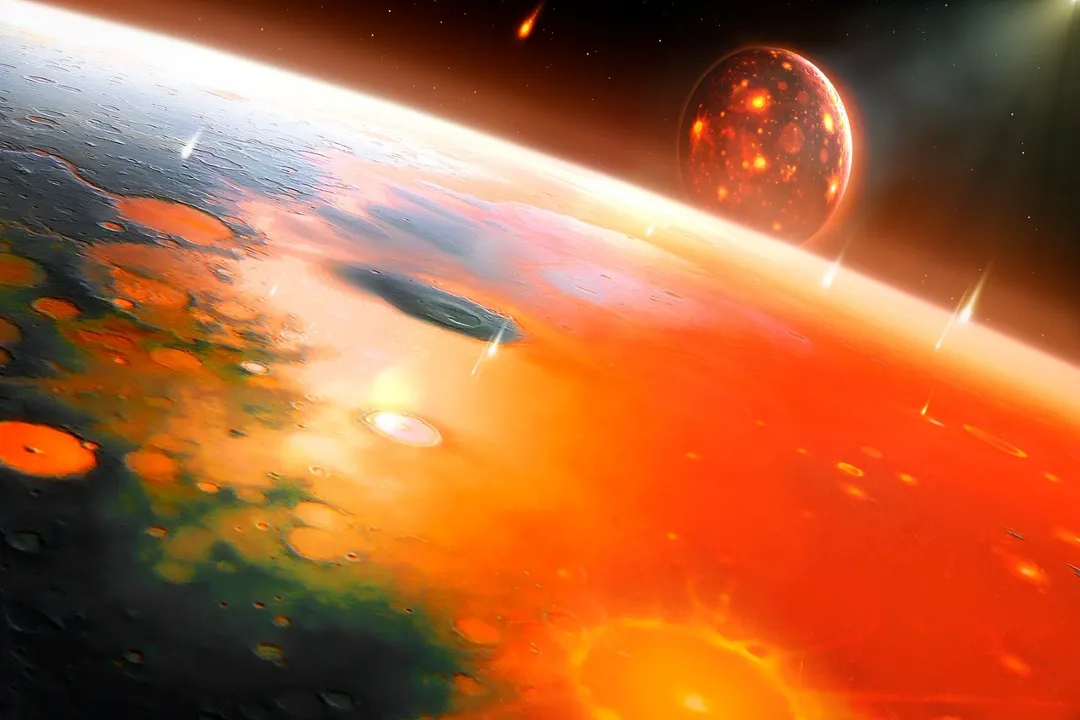
Io's constant churning results in an astounding level of activity, easily surpassing anything else in the solar system. [2] The surface is continuously being repaved; scientists estimate that Io’s surface material is completely recycled in about one million years. [2] This rapid turnover means that very few surface features survive for long periods, making it difficult to study its long-term history compared to the Moon, where ancient features are preserved almost perfectly. [7]
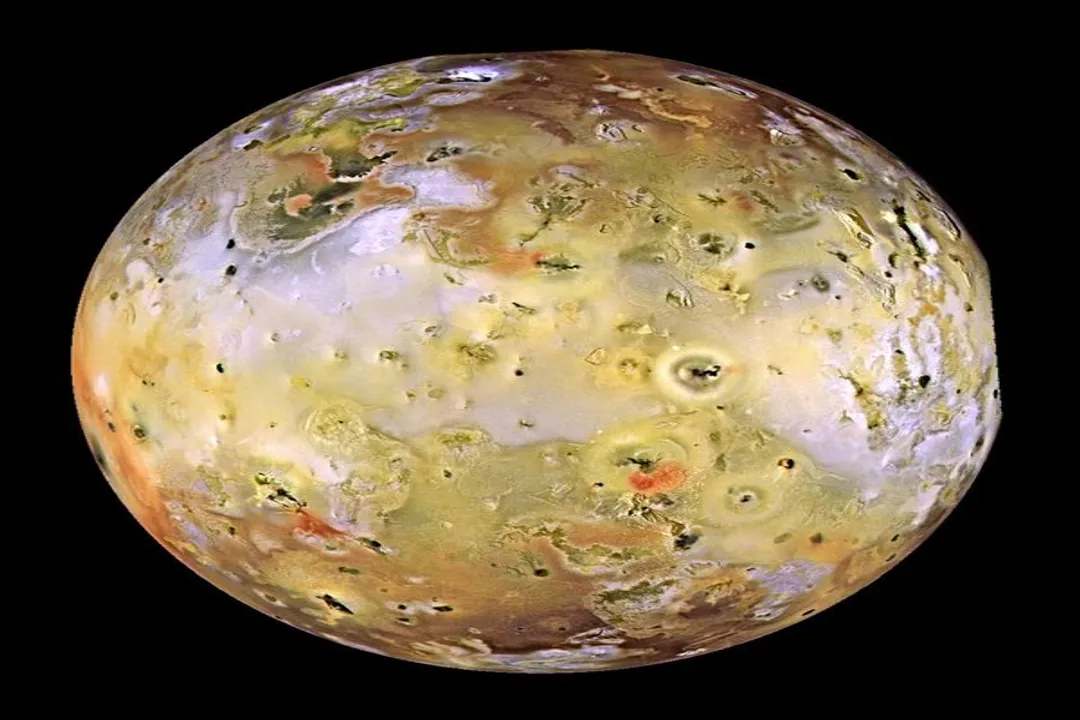
The visible results of this heating are dramatic. Io hosts hundreds of known volcanic centers. [2] These volcanoes generate towering eruption plumes that can shoot material hundreds of kilometers high into space. [3] The eruptions deposit fresh material, often sulfur and sulfur compounds, which are responsible for Io's vibrant, multicolored surface featuring bright yellows, reds, and dark black deposits. [5][6] These colors starkly contrast with the gray, dusty surface of the Moon.
When lava does flow on Io, the temperatures involved are often extreme. While Earth's basaltic lavas generally peak around 1,200 degrees Celsius, flows observed on Io have been measured at temperatures approaching 1,600 K (about 1,327 degrees Celsius). [5] This indicates a very hot, highly fluid magma, capable of spreading rapidly across the surface and contributing to the quick resurfacing rate. [5]
Consider the sheer energetic demand of maintaining this global state. If we estimate the energy output required to constantly melt and erupt material across hundreds of vents for billions of years—a process supported by evidence suggesting this activity has persisted for a very long time [8]—it implies that the tidal flexing provides an almost inexhaustible supply of energy, channeled by Jupiter’s overwhelming mass and distance. [4] This sustained energy budget is simply unavailable to a body like the Moon, which relies on slower, finite radioactive decay for any residual internal heat. [7]
# Chemical Makeup
A key differentiator between Io and terrestrial bodies like Earth and the Moon is the chemistry of the magma. Io's volcanism is distinctively sulfurous. [5] The primary eruptive materials are not silicates, which dominate Earth's volcanism, but rather elemental sulfur and sulfur dioxide. [5][6]
This chemical difference dictates the visual and physical manifestation of the eruptions. [5] Earth's volcanoes produce silicate rock, which solidifies into familiar dark basalts and andesites. Io’s eruptions, fueled by volatile sulfur compounds, create the bright, colorful surface deposits seen in images. [6] Even when Io does erupt silicate material, it is mixed with and often overwhelmed by these sulfur compounds. [5]
When comparing Io's chemistry to the Moon, the divergence is clear. The Moon's recorded volcanic past, inferred from solidified mare basalts, was silicate-based, similar to early Earth processes. [7] The Moon's internal structure and low bulk density suggest a composition dominated by silicates, allowing for a predictable cooling curve once the initial heat dissipated. [7] Io, by contrast, functions almost like a giant lava lamp powered by gravity, with its heat source constantly stirring and venting materials with very low melting points, like sulfur, alongside the hotter silicate components. [5]
# Billion Year Heat
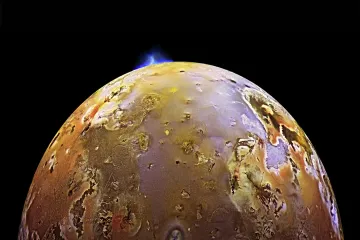
The tidal heating mechanism is not a recent phenomenon for Io; evidence suggests that this intense volcanism has been ongoing for an astonishingly long time. [8] Scientists believe Io has been volcanically active for at least three billion years. [8] This longevity is a direct consequence of the stability of the Jupiter-Europa-Ganymede orbital resonance, which has persisted across vast stretches of solar system history. [4]
For a planetary body to sustain this level of geological activity for three billion years, the energy input must be reliably constant. This stability in the driving force—the gravitational perturbations—is what sets Io apart. Our Moon, being much smaller and farther from such a massive gravitational structure, simply did not retain enough internal heat, even if it experienced an early, more active phase. [7] The sheer persistence of Io's volcanism over geological time scales emphasizes that tidal forces, when balanced correctly by a massive central planet and neighboring moons, can act as an almost eternal heat source, fundamentally altering the geology of a world. [4][8]
# Comparative Measures
To truly appreciate the difference, visualizing the two worlds side-by-side reveals how essential location and neighbors are in planetary science.
| Feature | Io | The Moon |
|---|---|---|
| Primary Heat Source | Intense Tidal Heating from Jupiter/Moons | Primordial Heat / Radioactive Decay (mostly depleted) |
| Current Activity Level | Most volcanically active body in the Solar System | Geologically inert |
| Dominant Eruptive Material | Sulfur and Sulfur Dioxide compounds | Silicate Basalts (in past) |
| Surface Resurfacing Rate | Complete cycle every ~1 million years | Negligible (preserved for billions of years) |
| Plume Height Potential | Hundreds of kilometers high | None |
While the Moon gives us a look back into the early, hotter stages of rocky body evolution—a stage Io may have passed through before its tidal furnace ignited—Io shows us what happens when a massive external energy source locks a body into perpetual geological adolescence. [7] It is a constant reminder that the quiet, cold stability we observe in our immediate celestial neighborhood is not the only possible outcome for a body orbiting a gas giant. [6] The mechanism that keeps Io molten is a pure product of dynamics; change Jupiter's orbit slightly, and Io's fiery existence could rapidly diminish, returning it toward a fate more familiar to our own satellite. [4]
Related Questions
#Citations
Does volcanism on Io and other volcanically active planets/moons ...
Volcanism on Io - Wikipedia
Io - NASA Science
NASA solves 44-year-old mystery of why Jupiter's Io ... - Live Science
Why is Io's volcanism chemically so different from Earth's?
Why is Io so different compared to other Jovian moons? - Quora
Our moon may have once been as hellish as Jupiter's super ... - Space
Jupiter's Moon Io has been Volcanically Active for Billions of Years
Io moon has many active volcanoes - Facebook