Which specific geographical features were the landing sites for Spirit and Opportunity, respectively?
Answer
Gusev Crater and Meridiani Planum
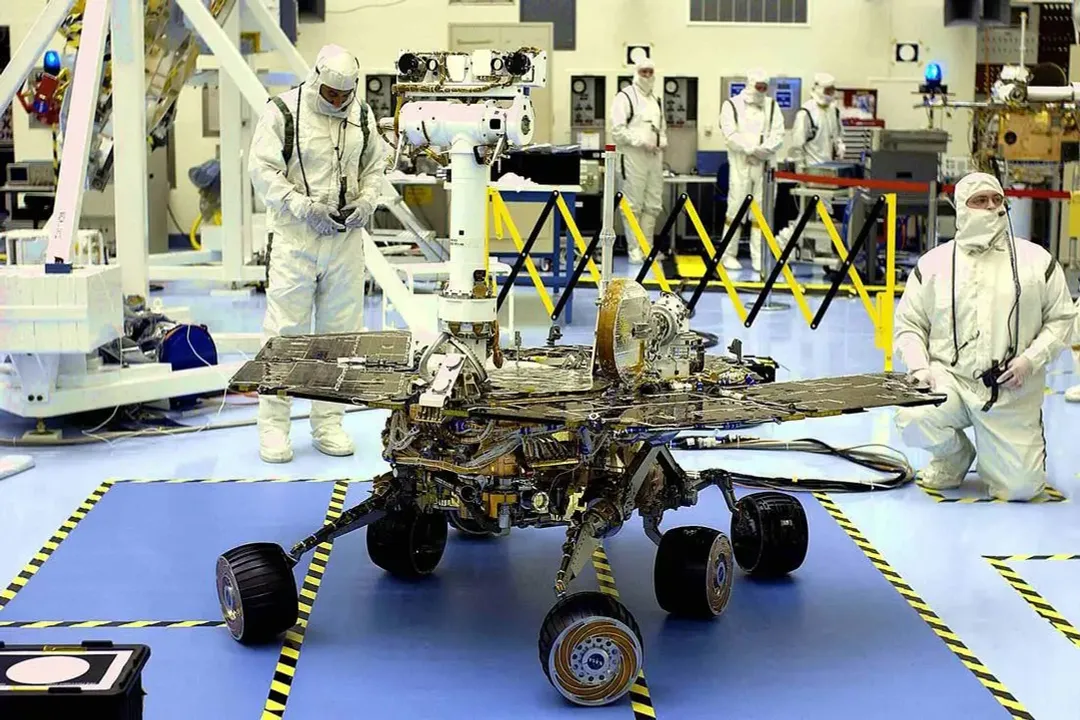
The Mars Exploration Rovers were strategically placed on two geologically distinct areas to maximize the potential for comparative study regarding ancient Martian water. Spirit landed inside Gusev Crater, a large impact basin that held the scientific hypothesis of potentially having once contained a lake environment. In contrast, Opportunity touched down much farther west on Meridiani Planum, a region characterized as a relatively flat plain situated near the Martian equator. This deliberate placement ensured that the subsequent data collected would showcase the diverse nature of past aqueous environments across the planet, providing two different narratives of Martian hydration history.
Related Questions
What was the approximate life extension factor for Opportunity compared to its 90-sol initial mission budget?Which specific mineral deposit did Spirit find abundantly near the Home Plate plateau in Gusev Crater?What nickname was given to the small, spherical iron oxide concretions Opportunity first encountered on Meridiani Planum?What mineral signature found by Opportunity indicated the past presence of highly acidic and sulfate-rich water?Which specific geographical features were the landing sites for Spirit and Opportunity, respectively?What type of water interaction did Spirit's discovery of opaline silica suggest for the Gusev Crater environment?What feature did Opportunity examine at Endurance Crater walls that strongly indicated deposition by flowing water?Which major milestone in distance did Opportunity achieve, which relates to a recognized terrestrial measurement?What concept did the foundational findings of Spirit and Opportunity set the stage for subsequent missions like Curiosity to investigate?What physical circumstance led to the permanent cessation of communication with the Spirit rover in 2011?Which mineral indicates an earlier, milder aqueous epoch on Mars, contrasting with the highly acidic water signatures?