What is another name for supernova?
The event that marks the catastrophic, final life stage of certain massive stars is one of the most violent and luminous occurrences in the cosmos. When astronomers or writers seek a substitute for the term supernova, they often find the well-established scientific name is remarkably persistent, overshadowing potential alternatives. While the universe rarely offers perfect linguistic equivalents for such extreme phenomena, various descriptive phrases and related terms circulate, offering different shades of meaning to convey the sheer scale of a dying star's final act. [1][2][4]
# Direct Substitutes
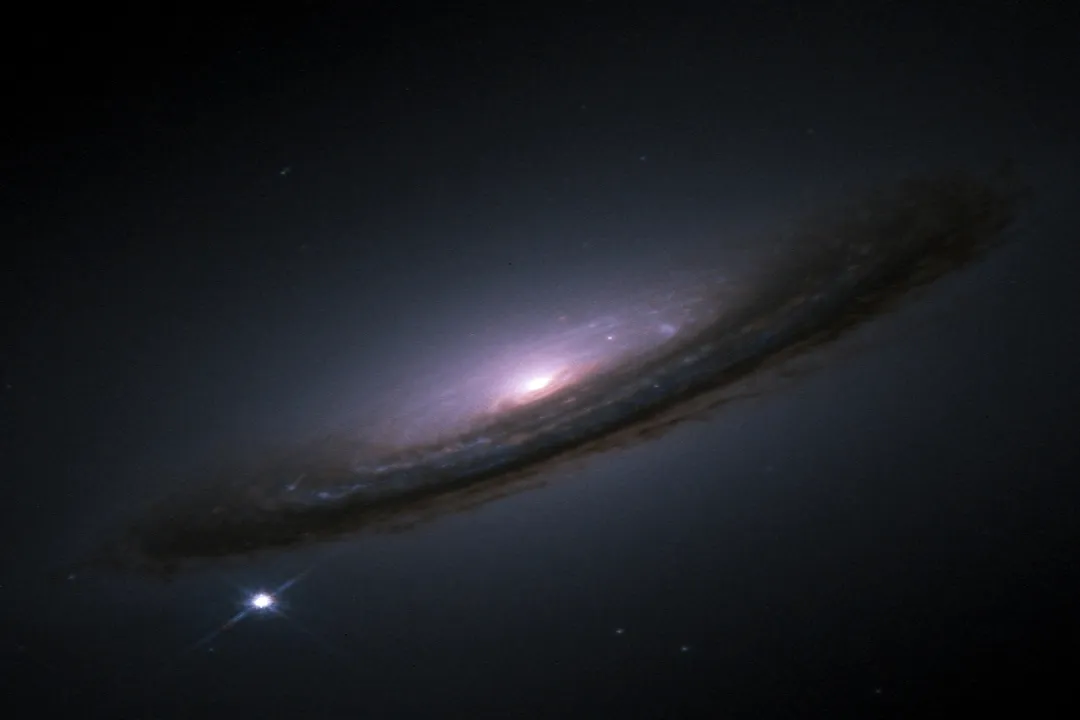
In the search for another name, the most straightforward approach involves looking for phrases that capture the essence of what a supernova is: the death of a star involving a massive explosion. [6] Thesauruses provide a few close matches, though they often lack the scientific punch of the original term. A very direct, though less frequently used, substitute is simply stellar explosion. [2][4] This accurately describes the process—the sudden, energetic release of energy when a star reaches the end of its life—but it lacks the specificity that supernova carries, as other, less extreme stellar flares might also be loosely termed explosions. [8]
Another common grouping of synonyms centers on the word exploding star. [1][4] This phrasing is highly accessible and immediately understandable to a general audience. It effectively communicates the visual drama of the event. Similarly, one might encounter the term stellar outburst, which implies a powerful, short-lived event, though outburst can sometimes suggest a less terminal event than a true supernova. [7]
The scientific literature itself offers a plural form, supernovas, [9] which, while technically just the grammatical variation, serves as an alternative way to refer to the class of events when discussing multiple instances. [9] However, linguistically, it does not offer a different name for the phenomenon itself.
# The Nova Distinction
To truly appreciate the alternatives, or the lack thereof, it is essential to distinguish supernova from its near-homophone: nova. [8] This comparison is perhaps the most significant linguistic clarification required when discussing stellar explosions, as the two terms describe vastly different scales of astronomical violence. [5]
A nova (Latin for "new") is a transient astronomical event where a star suddenly appears much brighter in the sky, only to fade back to its original luminosity over a period of weeks or months. [8] This happens when a white dwarf star in a binary system accretes enough hydrogen from its companion star to trigger a thermonuclear explosion on its surface. [8] The white dwarf survives the event, ready to repeat the process later. [8]
In contrast, a supernova represents the actual, terminal death of a star. [3] This explosion is orders of magnitude more powerful than a nova. [8]
To illustrate the difference in magnitude, consider this comparison based on energy release:
| Event Type | Typical Energy Released (Approximate) | Stellar Fate |
|---|---|---|
| Nova | Joules | White dwarf survives |
| Supernova | Joules (or more) | Star is destroyed or collapses |
The term supernova literally implies "super-nova," signifying an event far surpassing the brightness and energy of a regular nova. [8] Therefore, while nova is an alternative name for a stellar explosion, it is fundamentally the name for a different class of explosion, one that is far less energetic and non-terminal for the core object. [5] Using nova in place of supernova would be a significant scientific misnomer, akin to calling a tidal wave a ripple.
# Descriptive Naming Approaches
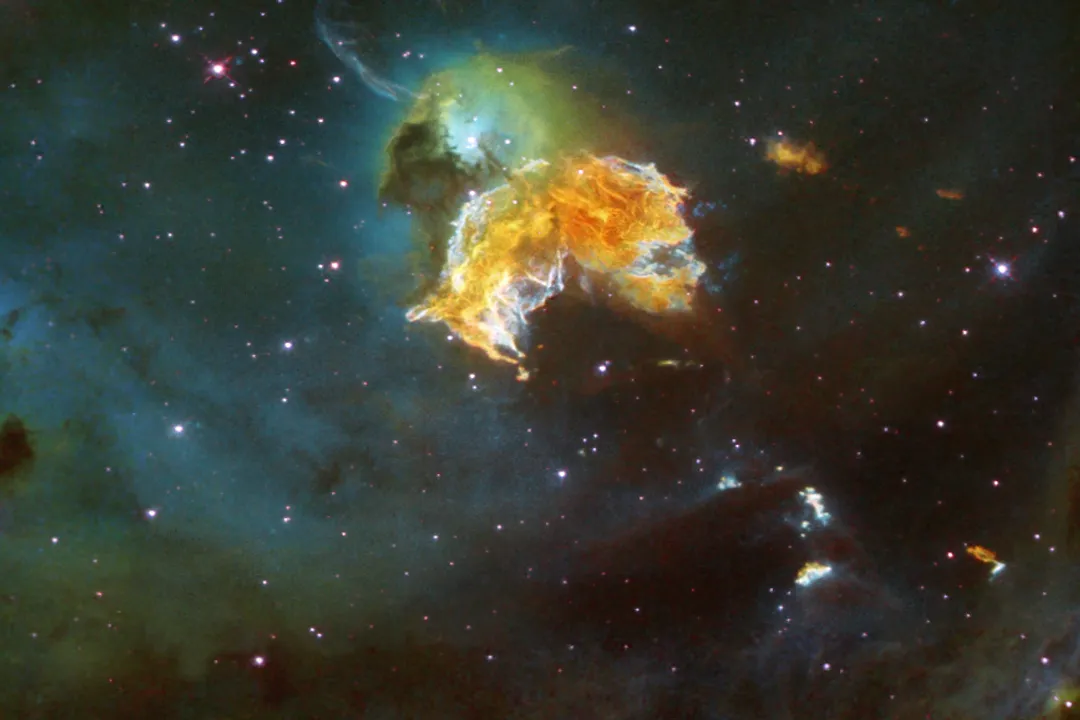
Because supernova is so precise, other attempts to name the phenomenon often become descriptive labels focusing on the aftermath or the process itself, rather than a single, catchy noun.
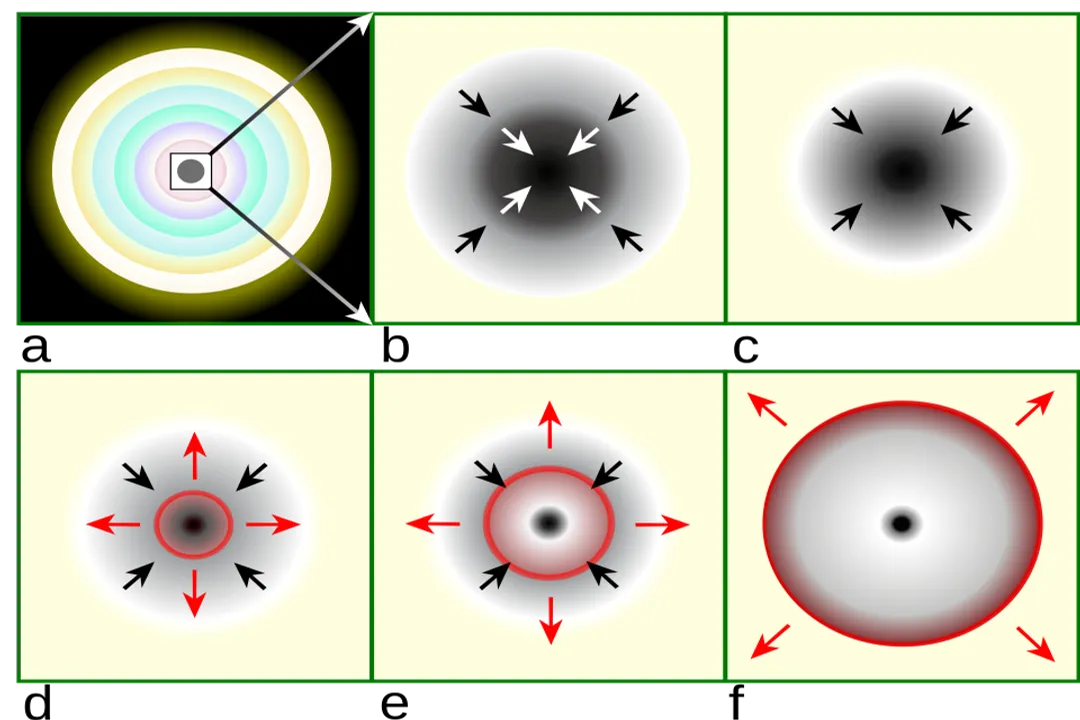
One could describe it as a collapsing star explosion, which accurately points to the mechanism behind Type II supernovae, where the core of a massive star collapses under gravity, leading to the rebound explosion. [3] This is a mechanism-based description, offering more detail than just stellar explosion. [3]
Another descriptive avenue focuses on the transient nature and incredible brightness. Terms like transient stellar event or gigantic stellar flare might appear in less formal astronomical writing, emphasizing the sudden appearance and immense light output. [7] The key insight here is that the scientific community adopted supernova because it neatly encapsulates both the explosive nature (nova) and the scale (super) in a single, concise unit. Any descriptive alternative tends to be longer and less evocative. [6]
# The Endurance of Scientific Terminology
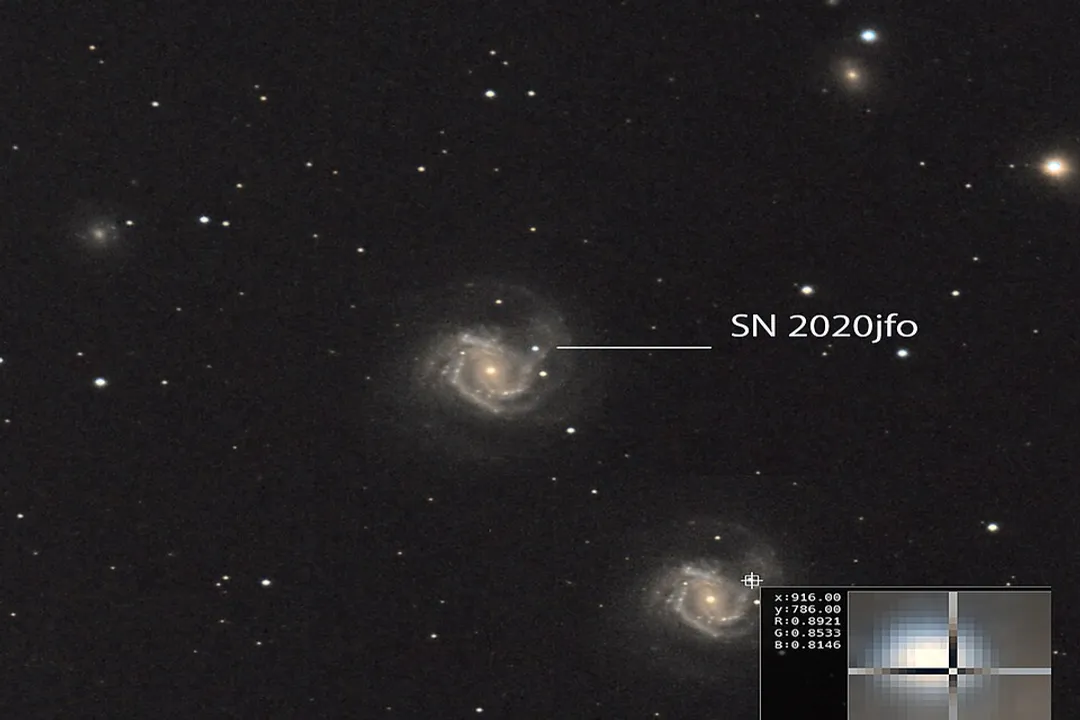
It is fascinating that despite having several descriptive synonyms, supernova has become the nearly exclusive term used in both professional and popular science communication. [1][2] This enduring dominance speaks to the power of established nomenclature in science.
When a phenomenon is as well-studied and categorized as supernovae—which are divided into distinct types like Type Ia, Type Ib, Type II, etc., each with unique origins and implications for nucleosynthesis—a simple, single-word identifier becomes invaluable for clarity. [3] Imagine trying to discuss the comparison between a Type Ia supernova (triggered by a white dwarf exceeding the Chandrasekhar limit) and a core-collapse Type II event using only the phrase exploding star; the precision is instantly lost. [3]
This preference for precision over poetic language is a characteristic seen across astrophysics. For instance, while one might describe a quasar as an incredibly bright, distant object, its specific name remains the standard because it points to a specific physical model involving an active galactic nucleus powered by a supermassive black hole. [5] Supernova functions similarly within stellar evolution. The very act of searching for synonyms often reveals that the original term is superior precisely because it is not a synonym; it is a classification. [6]
If we were to track how often these terms appear in scientific literature versus general news reports, we would likely see a sharp divergence. News media might occasionally lean on exploding star for dramatic effect or simplicity, [4] but any serious scientific paper demands supernova. [3]
# Constructing Contextual Clarity
For writers attempting to maintain a conversational tone while adhering to factual accuracy, a strategy that avoids direct synonym replacement and instead contextualizes the event is often superior. Instead of asking, "What is another name for a supernova?" a more productive question becomes, "How can I describe the characteristics of a supernova using varied language?"
For example, instead of writing: "The star became a supernova," one might write: "The massive star reached its critical point, resulting in a cataclysmic stellar explosion that briefly outshone its entire host galaxy". [2] This technique uses descriptive language while leaning on the accepted term, ensuring the reader understands the scale.
Furthermore, when discussing the creation of heavy elements—the cosmic recycling process where elements heavier than iron are forged—the term supernova is intrinsically linked to the source of these materials. [3] It is impossible to discuss the origin of gold or uranium in the universe without invoking the context of the supernova event itself. Therefore, any replacement name must carry that implicit weight of extreme energy and element creation, a burden that simple synonyms like flare or burst cannot possibly carry. [1][7]
This leads to an interesting observational point: the most effective "other name" for a supernova is often a short sequence of words that includes supernova itself, such as "a core-collapse supernova" or "a Type Ia event". [3] These are not true synonyms but are specific names within the larger umbrella term, serving to refine, rather than replace, the original concept. This demonstrates that the most valuable linguistic alternatives are those that add specificity, not those that merely generalize the event.
# Conclusion on Equivalent Terms
Ultimately, while one can find descriptive phrases like collapsing star explosion or exploding star in various lexicons, [1][2][4] the term supernova remains unmatched in its concise power and scientific specificity. [6] The core linguistic takeaway is that for an astronomical event of such monumental importance—one that defines the end state of massive stars and seeds the universe with heavy elements—a single, standardized term is necessary. [3] Attempting to substitute it often results in either a scientifically inaccurate term (nova) or a cumbersome description (gigantic stellar flare). The most appropriate way to vary the language is not to swap the noun, but to adjust the adjectives describing the unique ways a star can meet its explosive end. [8]
Related Questions
#Citations
SUPERNOVA Synonyms: 44 Similar and Opposite Words
Supernova Synonyms and Antonyms | YourDictionary.com
Supernova - Wikipedia
SUPERNOVA Synonyms & Antonyms - 5 words | Thesaurus.com
What is the difference between a supernova and a hypernova?
Supernova - Definition, Meaning & Synonyms - Vocabulary.com
SUPERNOVA in Thesaurus: All Synonyms & Antonyms
Novas Vs. Supernovas: What's The Difference? - Adler Planetarium