What is another name for a cosmic cloud?
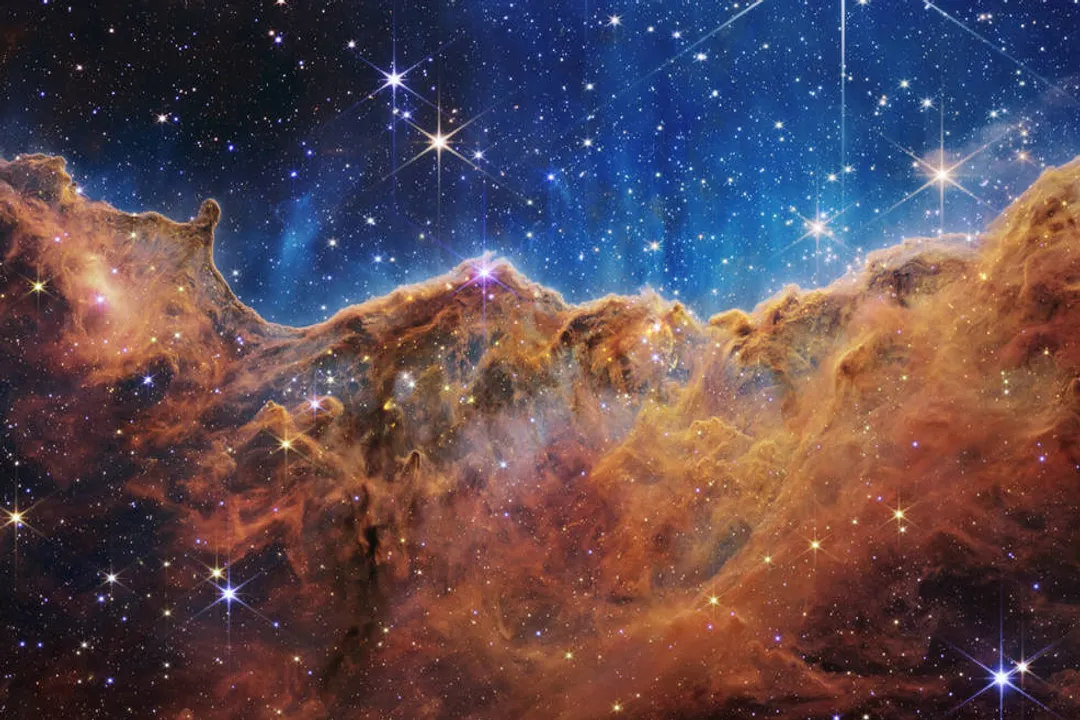
The term you are looking for, the primary and scientifically accepted alternative name for a cosmic cloud, is nebula. [1][4] While you might encounter synonyms like interstellar cloud, stellar nursery, or space cloud in various contexts, including crossword puzzles, [2][3] nebula is the proper designation used by astronomers to describe these vast structures floating in space. [1] The word itself carries a sense of mystery, deriving from the Latin word for 'little mists'.
This association with mist or fog isn't accidental. Historically, when early astronomers first glimpsed these deep-sky objects through smaller telescopes, they appeared as faint, fuzzy patches against the blackness, leading them to be lumped together with galaxies as simply "nebulae". Modern equipment has allowed us to differentiate these clouds from galaxies, revealing that a nebula is fundamentally a giant cloud composed of dust and gas. [1]
# Cosmic Composition
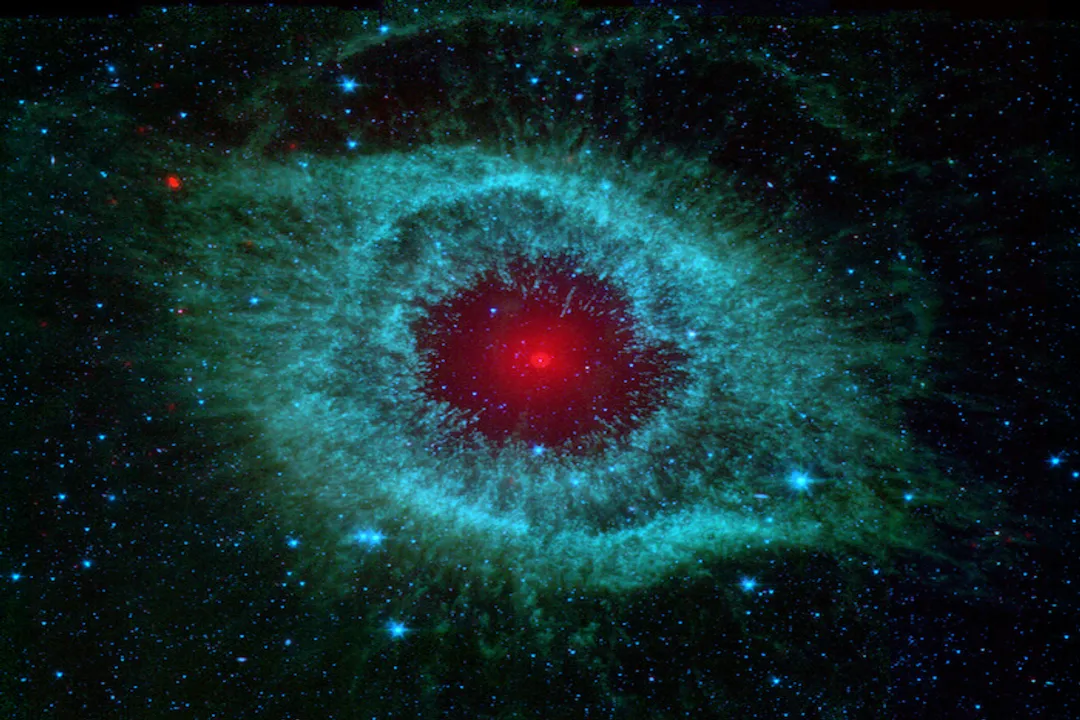
These clouds are not simply diffuse smoke; they are fundamentally built from the raw materials of the universe. The gas component is overwhelmingly composed of hydrogen and helium. [1] Yet, despite their immense appearance—some nebulae can stretch across light-years—they are extremely spread out. To illustrate this remarkable lack of density, consider this: if you could gather a nebula the size of our entire Earth, its total mass would weigh only a few kilograms.
This low density means the material within these clouds is subject to the gentle but persistent forces of the galaxy. They are constantly being blown about by the interstellar winds that sweep through the space between the stars, often giving them weird and wonderful shapes. A nebula is essentially a concentrated portion of the interstellar medium—the sparse gas and dust that fills the void—that has begun to clump together under the influence of gravity. [1]
# Stellar Life Cycle
The significance of nebulae in the cosmos stems from their dual role in the stellar life cycle: they are both graveyards and cradles.
# Death Remains
When a star similar in mass to our Sun reaches the end of its life, it becomes unstable and sheds its outer layers, puffing off its gaseous atmosphere to form a cloud around itself. These remnants are known as planetary nebulae, even though they have nothing to do with planets. They earned this misleading name because, viewed through a telescope, they often resemble a faint, small, fuzzy disc. An example of this type is the Ring Nebula (M57). Stars much more massive than the Sun end their lives more violently, exploding as a supernova, leaving behind a spectacular cloud remnant. [1] The famous Crab Nebula (M1) is one such remnant, the product of a cataclysmic explosion witnessed on Earth in the year $1054$.
# Birthplaces
Conversely, nebulae are also the sites of creation, earning the nickname "star nurseries". [1] For a star to form, the gas and dust within a nebula must slowly coalesce, pulled together by gravity. [1] As these clumps grow, their gravity strengthens, causing the center of the mass to contract and heat up. [1] Once the core becomes dense enough, a new star ignites. Regions intensely active in this process, like the famous Pillars of Creation within the Eagle Nebula, contain all the necessary ingredients for new stars to be born. [1]
# Nebula Types
While all nebulae share the common base of dust and gas, astronomers classify them based on how they interact with light, leading to distinct visual characteristics.
# Luminous Clouds
- Emission Nebulae: These clouds generate their own light, appearing luminous because stars either within them or nearby are ionizing the gas. Ionized hydrogen atoms often cause these regions to glow with a characteristic red hue. The Orion Nebula (M42), the brightest nebula visible, is a prime example.
- Reflection Nebulae: Unlike emission nebulae, these do not glow on their own. Instead, they shine because light from nearby stars reflects off the dust particles within them, much like how the Sun illuminates an earthly cloud against a blue sky. These often exhibit striking blue colors.
# Obscuring Clouds
Dark Nebulae are the opposite—they do not emit or reflect light because they are so dense that they absorb it entirely. We see these as dark silhouettes, such as the striking Horsehead Nebula, which appears black against the bright background of a star field or another luminous nebula behind it.
If we step back and consider the sheer scale involved, the process of star formation is a slow dance against cosmic dissipation. When you look at a nebula, you are seeing a vast, thin cloud that is only beginning the gravitational collapse that might take hundreds of millions of years to produce a star, all while its edges are being eroded by galactic winds. This delicate balance between self-gravity pulling inward and external pressures pushing outward is what dictates a nebula's final form and whether it will successfully seed a new stellar generation.
# Observation Versus Image
One of the most common surprises for newcomers to astronomy involves the difference between photographs of nebulae and what they see through an eyepiece. The spectacular, vivid images frequently shared by organizations like NASA, often taken by instruments such as the Hubble Space Telescope or the James Webb Space Telescope, are the result of long exposure times, sometimes many minutes, soaking up every possible photon, combined with the use of specialized filters to enhance subtle chemical signatures.
When an amateur observer points a personal telescope at, say, the Orion Nebula, the visual experience is quite different. Visually, the light is too faint to register with the eye's color-detecting cones, causing the nebula to appear in shades of grey. While professional images assign colors like red, green, or blue to specific spectral lines captured through different filters, the naked eye simply perceives a dim smudge. This difference highlights the technical expertise involved in astronomy; the photograph shows where specific elements reside based on their unique spectral light, which our eyes cannot process in real-time under dim conditions.
# Naming Conventions
The universe is cataloged, but it retains its popular flair. Most nebulae have several identifiers. Astronomers rely on established catalogs, the most frequently used being the Messier Catalogue (M), the NGC (New General Catalogue of Nebulae and Clusters of Stars), and the IC (Index Catalogue). For example, the Orion Nebula is cataloged as M42.
Beyond these technical designations, there are also the popular names, which are often evocative and based on the object's appearance—like the Witch's Head Nebula—or its location, such as the Orion Nebula. This dichotomy between formal cataloging and popular naming reflects the duality of astronomy itself: rigorous scientific methodology paired with the human desire to find recognizable shapes, a phenomenon known as pareidolia, in the cosmos.
While nebula is the most accurate replacement for cosmic cloud, the synonyms found in word lists suggest the context in which the term might be used. For instance, a molecular cloud implies a colder, denser region where molecules can exist and star formation is imminent, whereas a stellar cloud might simply refer to any diffuse grouping of stars and gas within the galaxy. Ultimately, whether you call it a nebula, a stellar nursery, or a ghostly remnant of a star’s final moments, you are referring to the magnificent, dusty, gaseous structures that paint the interstellar medium. [1]
Related Questions
#Citations
COSMIC CLOUD Synonyms: 29 Similar Words & Phrases
cosmic cloud Crossword Clue - Wordplays.com
Cosmic cloud Crossword Clue: 1 Answer with 6 Letters
What Is a Nebula? | NASA Space Place – NASA Science for Kids