What large-scale structure is a nebula considered a concentrated portion of, clumping together under gravity?
Answer
Interstellar medium
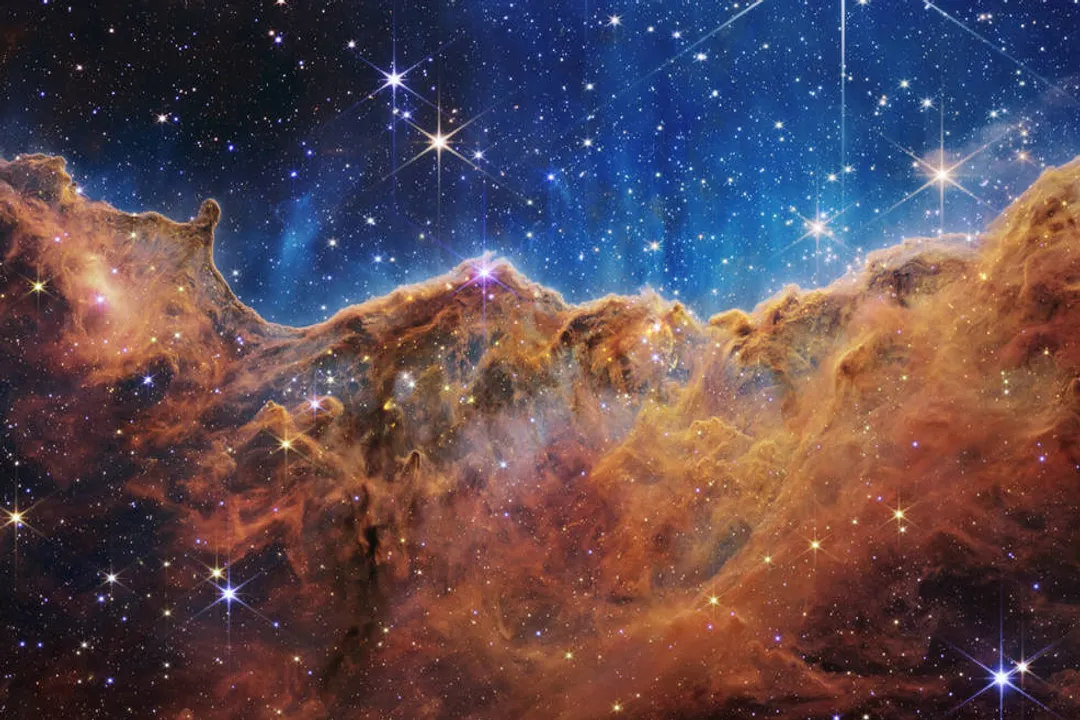
A nebula represents a localized accumulation of matter within the broader expanse of space. This expanse, which is filled with sparse gas and dust floating between the stars, is scientifically defined as the interstellar medium (ISM). Nebulae form when regions within this ISM begin to contract, driven by the mutual attraction of gravity. Therefore, a nebula is fundamentally a denser, concentrated pocket of the ISM that has started the initial clumping process necessary for future stellar evolution or as the lingering remnants of past stellar activity. The continued action of interstellar winds often shapes these clumps as they attempt to condense.
Related Questions
What is the Latin origin for the term nebula, meaning 'little mists'?What is the mass comparison for a nebula the size of our entire Earth?Why are stellar remnants called Planetary Nebulae despite having nothing to do with planets?Which spectacular supernova remnant is the product of an explosion witnessed in the year 1054?Why does the Orion Nebula (M42) appear in shades of grey to an amateur observer?What causes Emission Nebulae, like the Orion Nebula (M42), to typically glow with a characteristic red hue?What large-scale structure is a nebula considered a concentrated portion of, clumping together under gravity?What combination of techniques do instruments like the James Webb Space Telescope use to create vivid nebula photographs?How does the Horsehead Nebula, an example of a Dark Nebula, become visible?Which established catalog, frequently used by astronomers alongside the NGC and IC, uses the designation (M) for objects like M42?