Which planetary synonyms emphasize the near-spherical shape of massive objects?
Answer
Orb or Sphere
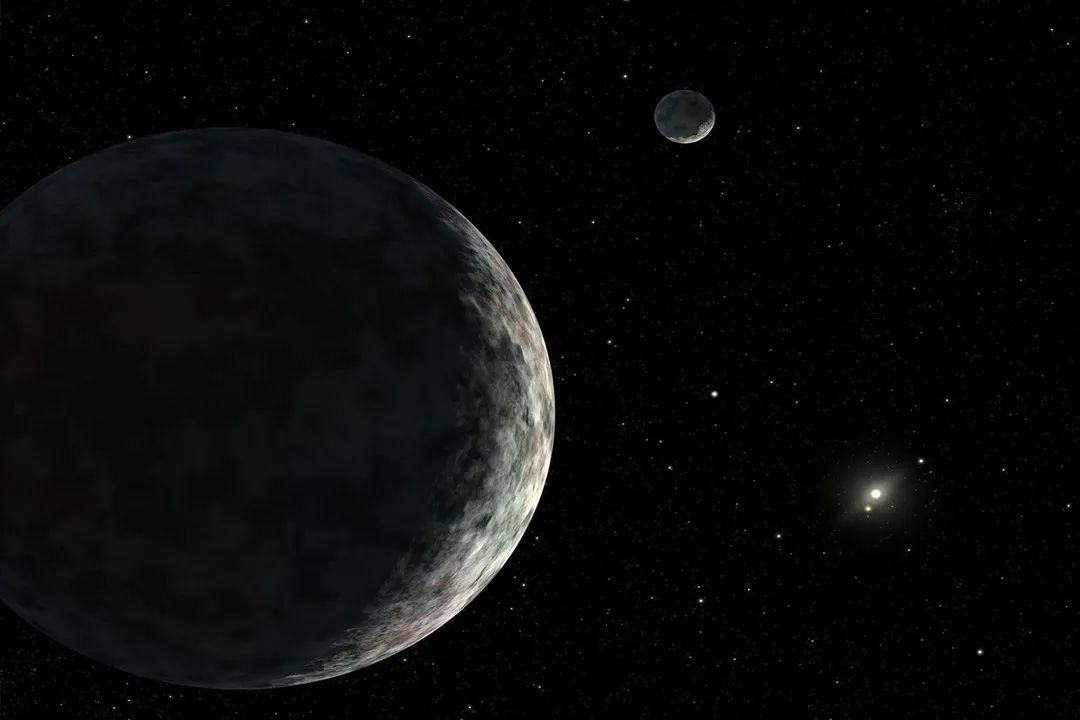
When discussing planetary synonyms, 'Orb' and 'Sphere' are explicitly described as terms that focus purely on the observable, near-spherical physical shape of these massive celestial objects. These words highlight the geometric characteristics resulting from self-gravity, as confirmed by the IAU's hydrostatic equilibrium criterion. In contrast, 'World' implies habitability or scope, and 'Celestial Body' is a general scientific descriptor for any natural object in space. 'Orb' and 'Sphere' are the terms that most directly relate to the visual, physical geometry of the planet.
Related Questions
What is the most common synonym for "planet" bridging general understanding and astronomical reality?The specific nomenclature for Earth stems from which linguistic family, unlike the classical roots of other major planets?What concept did the ancient observers contrast Earth with, unlike Mars and Jupiter, which were seen as distant wanderers?Which term, the Roman equivalent of Earth, is sometimes employed in geology or planetary science to distinguish surface characteristics?According to the IAU definition, what must a celestial body possess concerning its mass and self-gravity?What simple meanings were associated with the Old English word *eorþe*?Which planetary synonyms emphasize the near-spherical shape of massive objects?Besides Earth, which Roman deity derivative is used in some languages like Spanish and Italian for our planet?Mercury, Venus, and Mars derive their names primarily from which ancient naming tradition?What is the third requirement, involving orbital dominance, that a body must meet to qualify as a planet under the IAU definition?Jupiter, the largest planet, received its name based on which mythological figure?