Which planet is not named after a Greek god?
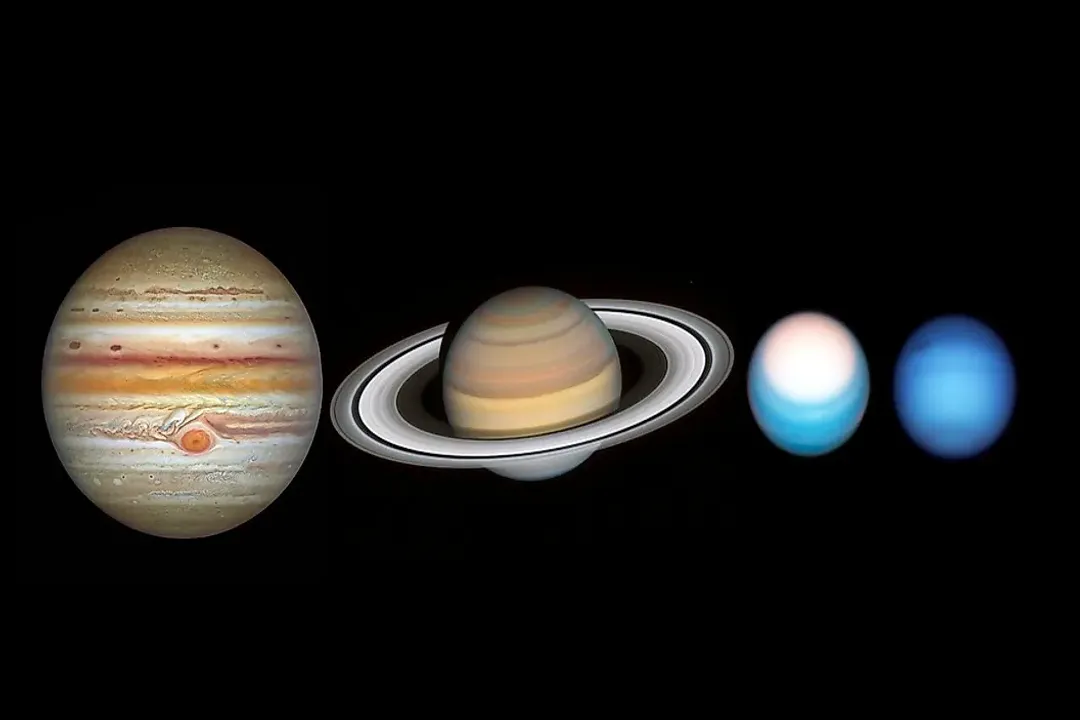
The celestial bodies orbiting our Sun—the planets—carry names rich with mythological heritage, drawing primarily from the great pantheons of ancient Greece and Rome. For centuries, these wandering lights in the night sky were associated with powerful deities, each name reflecting the planet's appearance or perceived influence. [4][9] Yet, nestled among these god-named worlds, one planet sits apart: our own home, Earth. It remains the solitary exception in our solar system, having bypassed the tradition of divine nomenclature that marks every other major body from Mercury out to Neptune. [2][6][8]
# Roman Heritage
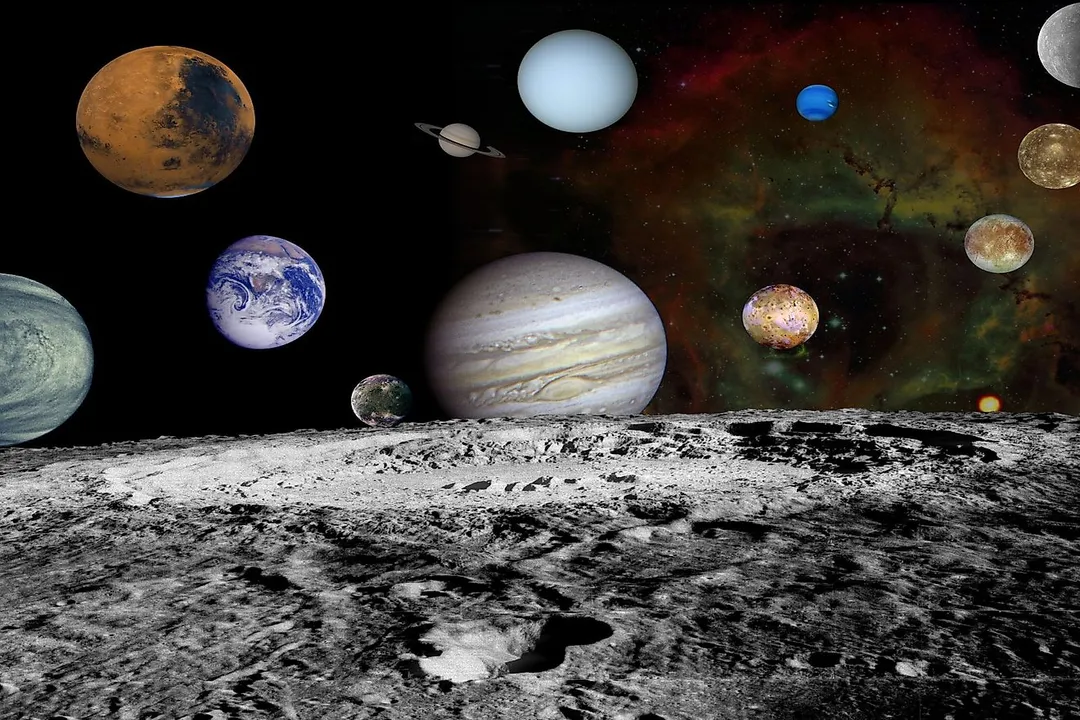
When we list the eight recognized planets—Mercury, Venus, Mars, Jupiter, Saturn, Uranus, and Neptune—the connection to Roman mythology is immediate and strong. [4] This practice solidified over time, largely due to the influence of Roman culture and the standardization that occurred as astronomy moved into the modern era. [9]
Consider the inner solar system: Mercury, the swift messenger, named for the Roman god known for his speed, a fitting title for the fastest-moving planet relative to the Sun. [4] Venus, the morning and evening star, takes its name from the goddess of love and beauty. [4] Mars, the red planet, is named for the god of war, a clear nod to its ruddy hue. [4][10] Then there is Jupiter, the king of the gods, bestowed upon the largest planet in the system, and Saturn, named for Jupiter's father, the god of agriculture and time. [4]
The two ice giants, discovered much later, followed the established pattern. Neptune, with its deep blue appearance, was named for the Roman god of the sea. [4] Even Pluto, though now classified as a dwarf planet, continues the tradition, named for the Roman god of the underworld. [4] These names provide a consistent thread connecting our modern astronomical understanding to the ancient observations of those celestial wanderers. [9]
# Greek Nuance
While the planet names are predominantly Roman, the underlying basis for this tradition is shared with Greek mythology, as the Roman gods largely correspond to their Greek counterparts (e.g., Jupiter is Zeus, Mars is Ares, Venus is Aphrodite). [1][4] This blending of cultural naming conventions presents an interesting subtlety when examining the seventh planet, Uranus. [1]
Uranus is the only recognized planet explicitly named after a Greek deity rather than a Roman one. [1] It honors Ouranos, the primordial Greek god representing the personification of the sky. [3] This distinction is important. When Sir William Herschel discovered the planet in 1781, there was initial debate over its naming. While some initially proposed calling it Georgium Sidus (George's Star) after King George III, the scientific community eventually settled on Uranus to maintain the mythological continuity established by the earlier planets. [3] This choice broke the strict Roman naming streak, grounding the outermost known planet in the earlier stratum of Greek cosmology, that of the primordial deities before the Olympian rulers. [1]
# Earth Stands Alone
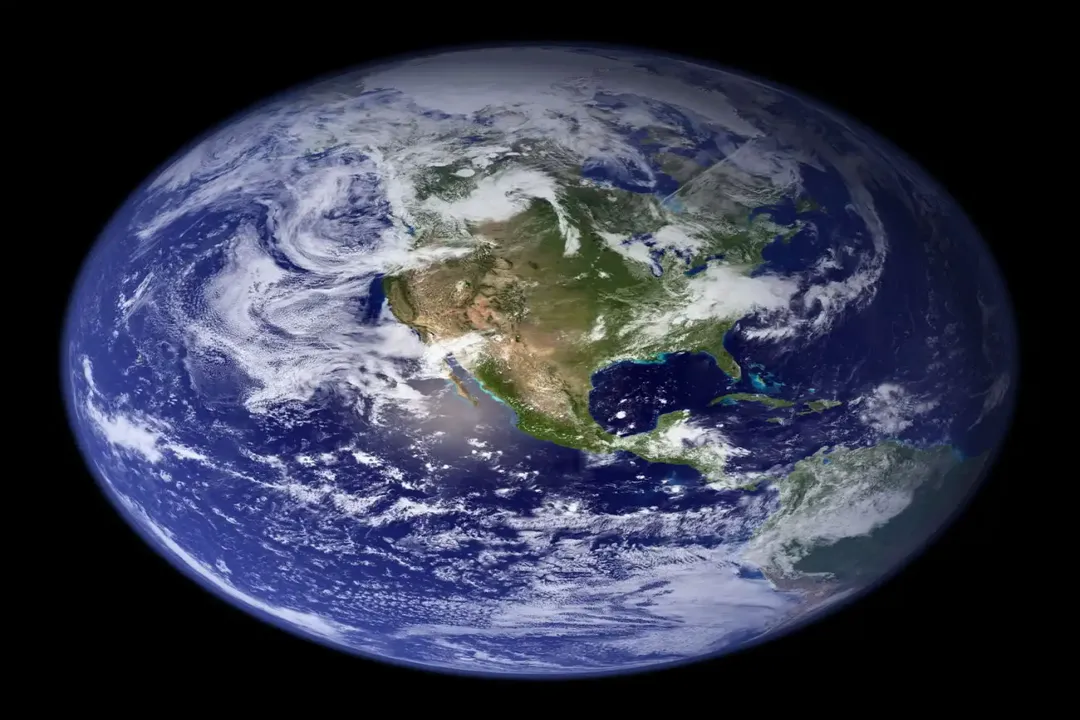
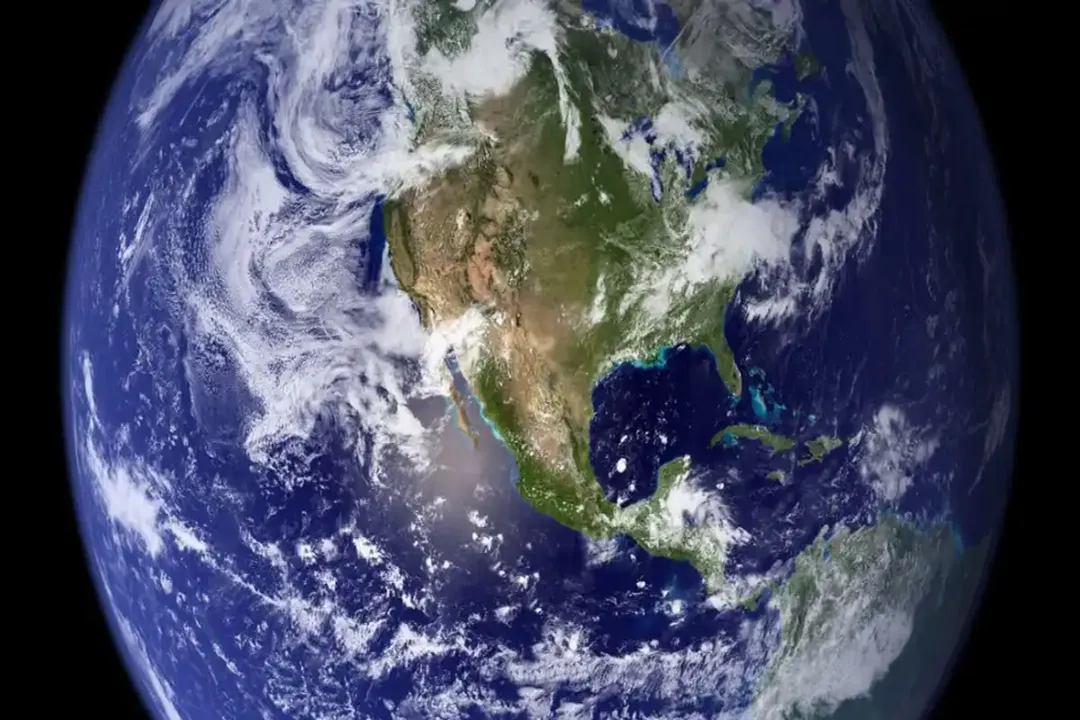
The most significant divergence from this pattern, however, is Earth. It is universally recognized as the only major planet not named after a Greek or Roman god or goddess. [2][6][8]
The reason for Earth’s exemption lies not in an oversight, but in perspective. The other planets were wanderers—celestial objects moving against the fixed background of stars, visible only as points of light. Ancient observers looked up at these moving lights and naturally assigned them characteristics related to the powerful gods they believed governed the heavens. [9]
Earth, conversely, was the fixed center of that observation—the ground beneath their feet, the stage upon which the heavenly drama unfolded. [2] It was the known entity, requiring no celestial appellation. [6] Its name evolved organically within the Germanic languages of early Northern European cultures, rather than being imposed via classical Latin or Greek translation. [8] The word "Earth" comes from the Old English eorþe and the Germanic ertha. [8] These terms simply mean "ground" or "soil," relating to the terrestrial realm itself, not a divine being. [8] In essence, Earth was so fundamental and present that it didn't need to be personified as a distant god; it was the world. [2]
An interesting comparative point arises when looking at these two non-Roman-named bodies: Uranus and Earth. Uranus was named after a god (Ouranos/Sky) to fit the celestial naming system. Earth was named for the concept of the ground itself, deliberately excluding the system because it was not perceived as a celestial object but as the observer's environment. One was integrated into the mythology, the other remained outside it entirely. [1][8]
# Historical Naming Convergence
The standardization of these names was a gradual process heavily influenced by the invention of the telescope. For millennia, only the five visible "classical" planets (Mercury through Saturn) were known, and their names were deeply ingrained in Roman tradition. [4]
When Uranus was discovered in the late 18th century, the search for a name that respected tradition while acknowledging a new discovery was crucial. [3] The eventual acceptance of Uranus demonstrated a desire within the nascent international astronomical community to create a shared, mythologically grounded nomenclature. [1]
The discovery of Neptune in 1846 happened in an era where this convention was firmly established, leading to a more straightforward application of Roman sea deity naming. [4] Even the reclassification of Pluto in 2006, while changing its status, did not alter its name, preserving its place within the mythological sequence established by previous generations of astronomers. [4]
# The Linguistic Divide
It is revealing to look at the structure of the names themselves. The names of the other planets are direct Latin borrowings or slight modifications:
- Mars Mars (God of War)
- Venus Venus (Goddess of Love)
- Jupiter Juppiter (Chief Roman God)
- Saturn Saturnus (God of Agriculture)
- Mercury Mercurius (Messenger God)
- Neptune Neptunus (God of the Sea)
These names are foreign imports into the English language, tied explicitly to the classical Mediterranean world. [4]
Earth's name, conversely, has traveled a different path, rooted in Germanic linguistic evolution:
| Planet Name | Root Language | Primary Meaning | Deity Association |
|---|---|---|---|
| Mercury | Latin | Roman God | Yes [4] |
| Venus | Latin | Roman Goddess | Yes [4] |
| Earth | Germanic/Old English | Ground, Soil | No [8] |
| Uranus | Greek | Sky Personified | Yes [3] |
This linguistic separation between Earth and the other planets acts as a subtle marker of our own self-perception throughout history. While we looked outwards and categorized the wandering lights with divine attributes, our immediate environment retained a name derived purely from its physical, tangible nature. [8] This suggests a natural human tendency to deify the distant and mysterious, while simply naming the familiar based on its material properties. [2]
The tradition of naming celestial bodies after deities is a powerful testament to humanity’s long-standing fascination with the sky and the need to impose narrative structure onto the cosmos. [9] While seven of the solar system's major bodies fit neatly into the Greco-Roman framework, Earth’s name serves as a constant, tangible reminder of our terrestrial origins and the linguistic history that predates—or perhaps simply sidestepped—the grand mythology of the heavens.
Related Questions
#Citations
but one of the planets are named after Roman gods, why is Uranus ...
Why is Earth the only planet in the solar system that has not been ...
Uranus - Wikipedia
Where Do The Planets Get Their Names? - World Atlas
All planets except Earth are named after Greek and Roman gods ...
How do planets and their moons get their names? - StarChild
Interesting Fact #11 – Earth Is the Only Planet Not Named After a...
How did the planets get their names? - Cool Cosmos
The 9 Planets Named After Gods | KickassFacts