Which of the following describes the transit method?
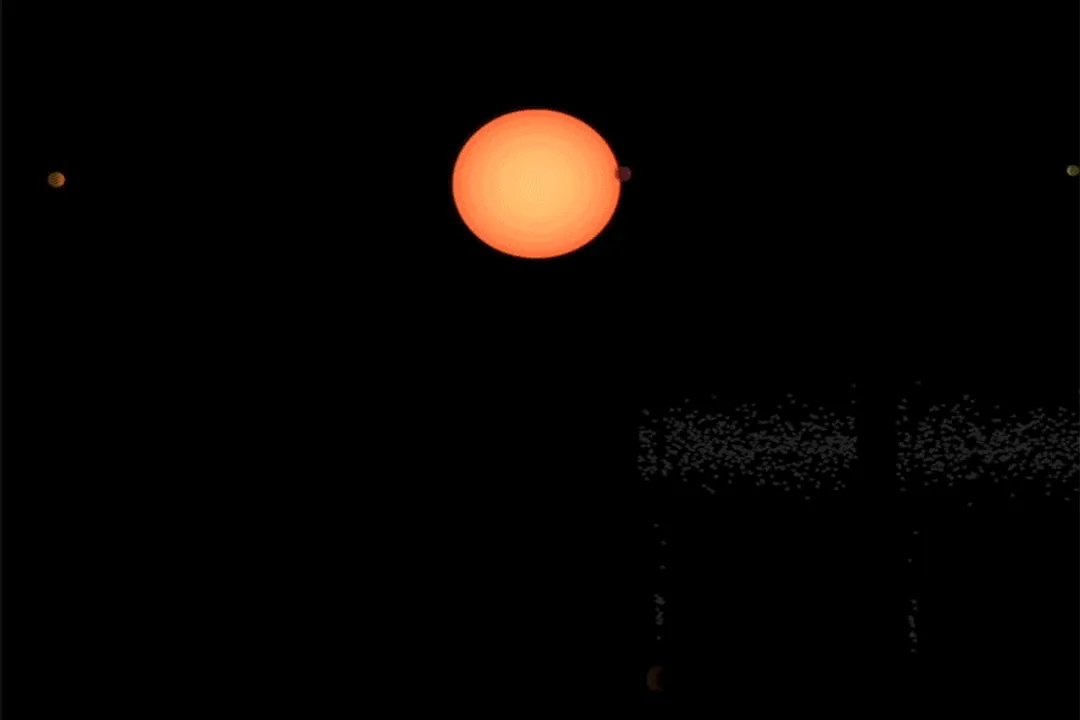
The transit method for exoplanet detection is fundamentally an exercise in observing incredibly slight, yet perfectly regular, changes in the light coming from a distant star. When an orbiting planet passes directly between that star and our telescope here on Earth, it temporarily blocks a tiny fraction of the star's light from reaching us. This passage is called a transit.
# Signal Detection
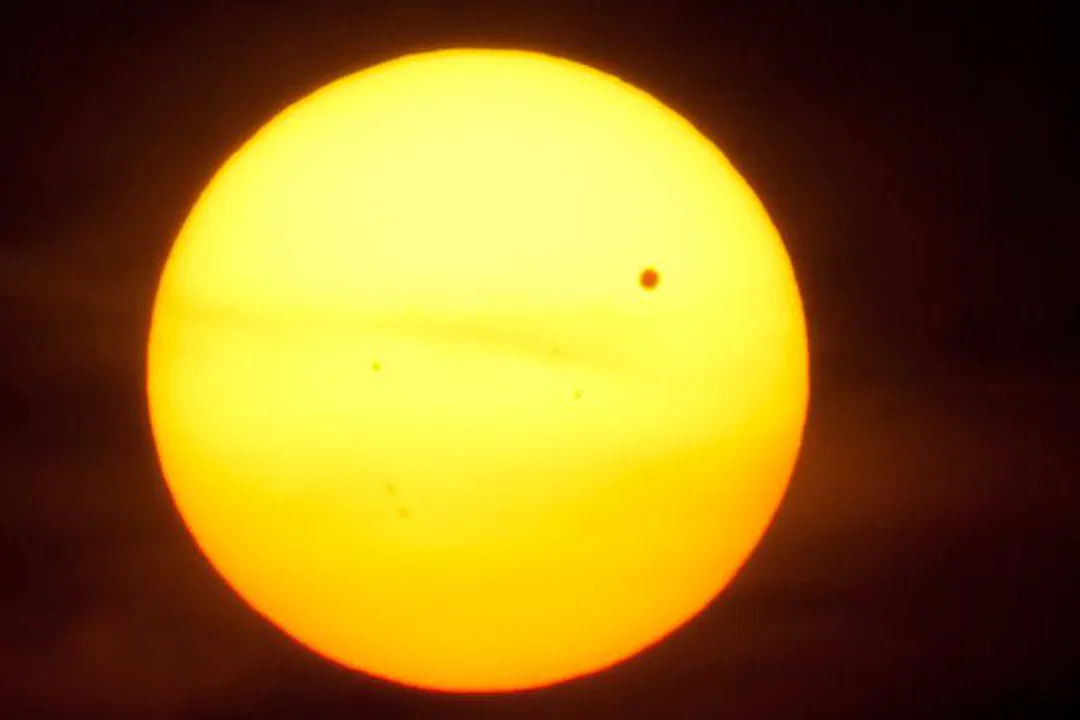
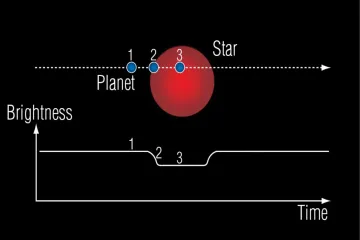
What astronomers look for is a very specific pattern: a dip in brightness that recurs with precise timing. This dimming is not a dramatic event; in fact, it is exceptionally subtle, often amounting to a decrease of less than one percent of the star's normal output. For context, if we were viewing the Sun this way, detecting the transit of a planet even as large as Jupiter would require instruments capable of measuring changes in luminosity at a level of precision that was unimaginable just a few decades ago. The resulting plot of brightness over time is called a light curve, and during a transit, this curve shows a characteristic, brief dip as the planetary body moves across the stellar disk.
The periodicity of these dips is key to identifying a true planetary signal rather than random stellar flicker or instrument noise. If a dip occurs, and then another identical dip occurs exactly days later, and then again days after that, it strongly suggests an orbiting object with a fixed orbital period of days.
# Derived Properties
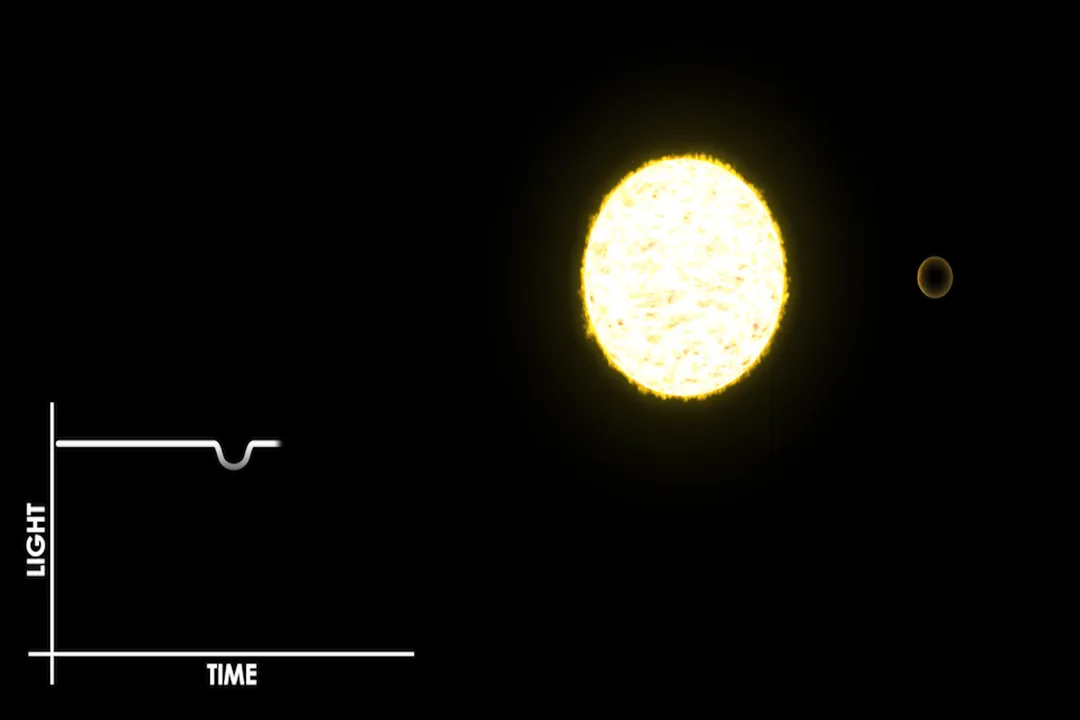
The beauty of the transit method lies in how much information can be extracted from these minuscule changes in light. The depth, or how far the light drops during the transit, is directly related to the relative sizes of the objects involved. Specifically, the depth of the light dimming allows scientists to calculate the radius of the transiting planet, provided they already have an accurate measurement of the star's radius. A bigger planet will block more light, causing a deeper signal in the light curve.
Simultaneously, the time interval between successive transits provides a direct measurement of the planet's orbital period. Knowing the orbital period is the first step in determining the planet's orbit size, as Kepler's laws connect the period to the semi-major axis of the orbit.
While the transit method excels at determining size and orbit, it does not, by itself, reveal the planet's mass. However, when astronomers combine the radius measurement derived from the transit data with a mass measurement obtained using a different technique, such as the radial velocity method, a far more complete picture emerges. By calculating the ratio of mass to volume, they can determine the planet’s average density. Density is a crucial factor in assessing composition; for instance, a very low density suggests a gaseous world, while a high density points toward a predominantly rocky composition.
# Observational Bias
It is important to recognize that the transit method is inherently biased toward certain types of planetary systems. This is purely a matter of geometry. For a transit to be observed, the planet's orbital plane must be perfectly aligned, or nearly perfectly aligned, with our line of sight from Earth. If a planet orbits its star on a plane tilted even slightly away from our view, we will never see it cross the stellar face, and the transit method will fail to detect it, regardless of the planet's size or proximity to its star. This geometrical constraint means that the transit method only samples a fraction of all existing exoplanetary systems, specifically those systems whose orbital planes happen to intersect our observational window.
Furthermore, certain system characteristics make the method much more successful. The transit signal is most easily detectable when the planet orbits very close to its parent star, leading to a short orbital period. Moreover, the method is significantly more sensitive to detecting planets around smaller, cooler stars, such as M-dwarfs, than around large, bright stars like our Sun. This is because a planet represents a much larger fraction of the light output of a small star compared to a massive one, making the resulting dip in brightness proportionally deeper and easier to measure against the background noise.
# Data Presentation
To visualize the information gathered, astronomers rely on plotting the recorded flux over time. The structure of this plot allows for categorization of the findings, as shown below, which summarizes the primary data points gleaned from a successful transit observation compared to the characteristics of the system itself.
| Characteristic Measured | Transit Signal Feature | Information Gained |
|---|---|---|
| Orbital Period | Time between successive dips | Planet's orbital frequency |
| Planet Radius | Depth of the brightness dip | Size of the planet |
| Orbital Inclination | Successful observation itself | System must be edge-on relative to Earth |
| Combined Data | Density calculation (with RV data) | Planetary composition (rock vs. gas) |
Considering the extreme instrumental precision required, the fact that we can reliably detect these sub-percent dips across light-years of distance speaks volumes about the engineering advancements in modern astronomical equipment. Even slight imperfections in the star's own variability or atmospheric disturbances must be accounted for meticulously to confirm that the measured dimming is genuinely due to a planet and not some other stellar activity. The requirement for this high-precision measurement underscores the expertise needed to interpret the resulting light curves, ensuring that spurious signals—perhaps from stellar spots or flares—are correctly filtered out from the true periodic signatures of orbiting worlds.
# Comparative Detection
While the transit method is incredibly productive, it is often discussed alongside the radial velocity method, which is another primary technique for exoplanet discovery. Radial velocity measures the slight wobble in a star caused by the gravitational tug of an orbiting planet, yielding the planet's mass. The transit method, conversely, provides the planet's size. The two methods are complementary, and discovering a planet via both techniques provides the most complete characterization possible with current technology, allowing for density calculations. A system where both methods yield positive results offers astronomers a powerful, nearly definitive constraint on what that distant world is made of.
In summary, the transit method describes the detection of an exoplanet by observing the resulting slight, regular decrease in the light output of its host star as the planet passes in front of it from our vantage point. This single measurement unlocks vital information about the planet’s size and its orbital rhythm, paving the way for deeper compositional analysis when paired with complementary observations.
Related Questions
#Citations
Exosolar Planets Flashcards - Quizlet
Transit Method - Las Cumbres Observatory
Solved: of 25 hich of the following describes the transit method for ...
Solved Which best describes the transit method? a. observing - Chegg
What's a transit? - NASA Science
The Transit Method of Detecting Exoplanets | PBS LearningMedia
The Transit Method of Exoplanet Detection - LabXchange
Transit Method Definition - Intro to Astronomy Key Term | Fiveable