What crucial factor for assessing planetary composition (rock vs. gas) requires combining transit data with radial velocity data?
The planet’s average density
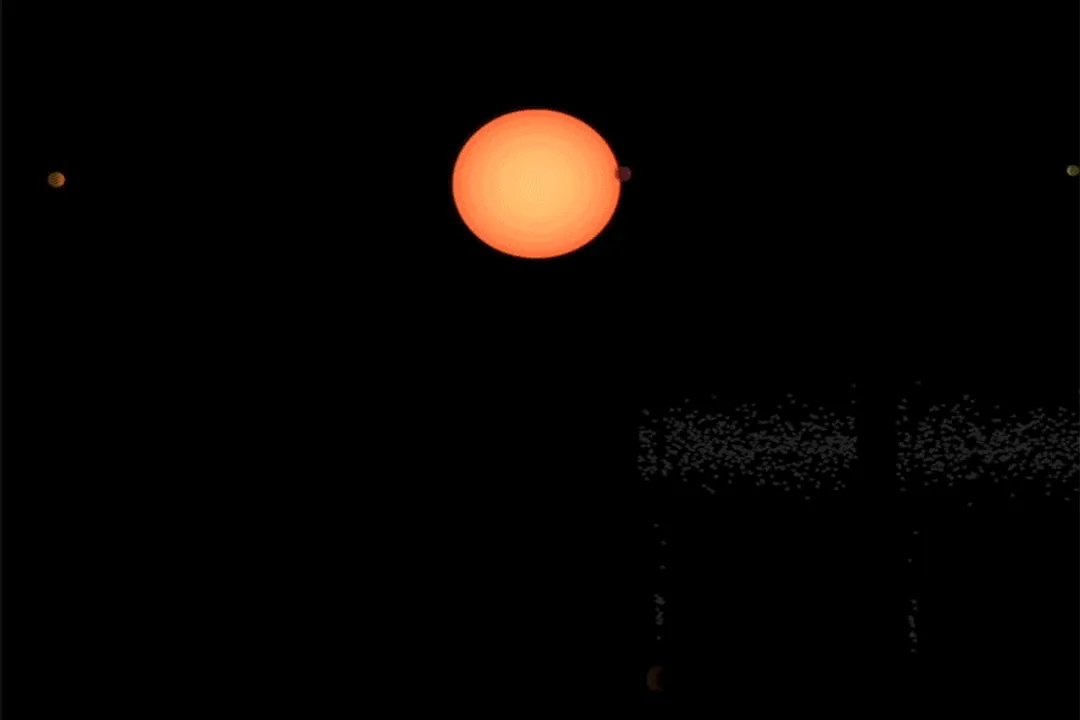
The transit method excels at determining the radius or size of the exoplanet based on the depth of the light dimming, provided the star's radius is known. However, this measurement alone does not reveal the planet's mass. To gain a comprehensive understanding of composition—distinguishing between worlds that are predominantly gaseous versus those that are primarily rocky—astronomers must integrate the radius data from transit observations with a mass measurement obtained from a separate technique, such as the radial velocity method. The resulting calculation, which involves determining the ratio of mass to volume (density), is the critical indicator. A very low density suggests a gaseous world, whereas a high density suggests a rocky composition.