In which of the following cases would the transit method be used?
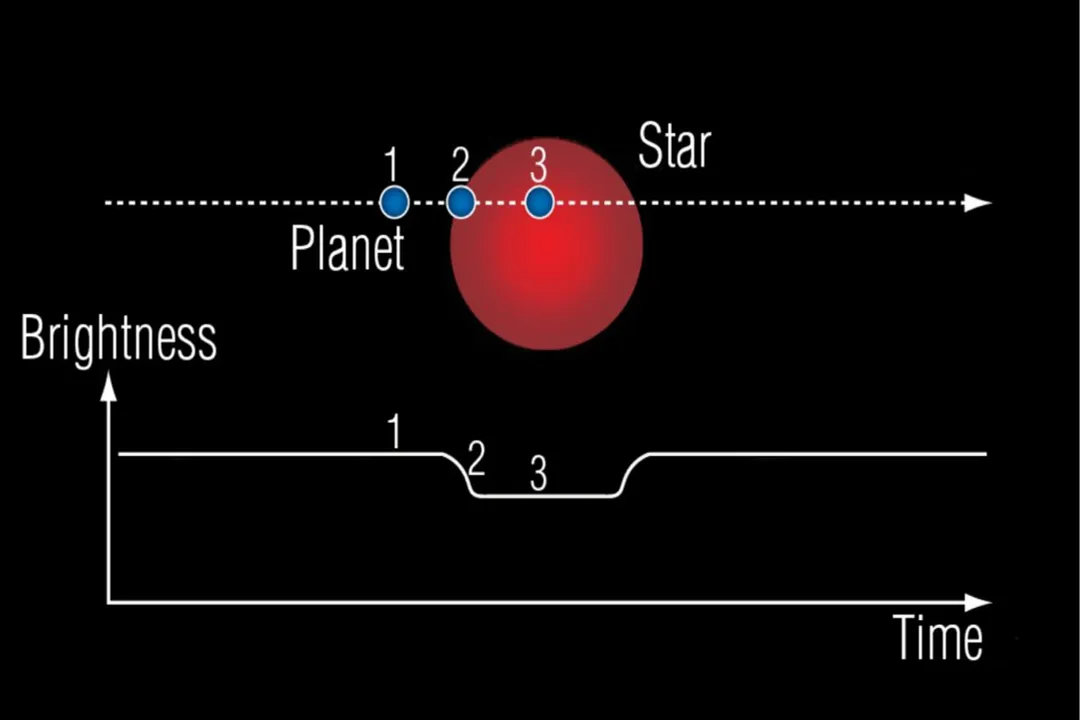
The transit method, a powerful technique in astronomy, is specifically employed in the quest to find and characterize exoplanets—planets orbiting stars other than our Sun. It is not a universally applicable method; rather, it is used when a very precise geometric alignment occurs between the observing telescope, the host star, and the orbiting planet. The fundamental case in which this method is successful is when an exoplanet's orbital plane is oriented nearly edge-on from our perspective on Earth.
# Necessary Geometry
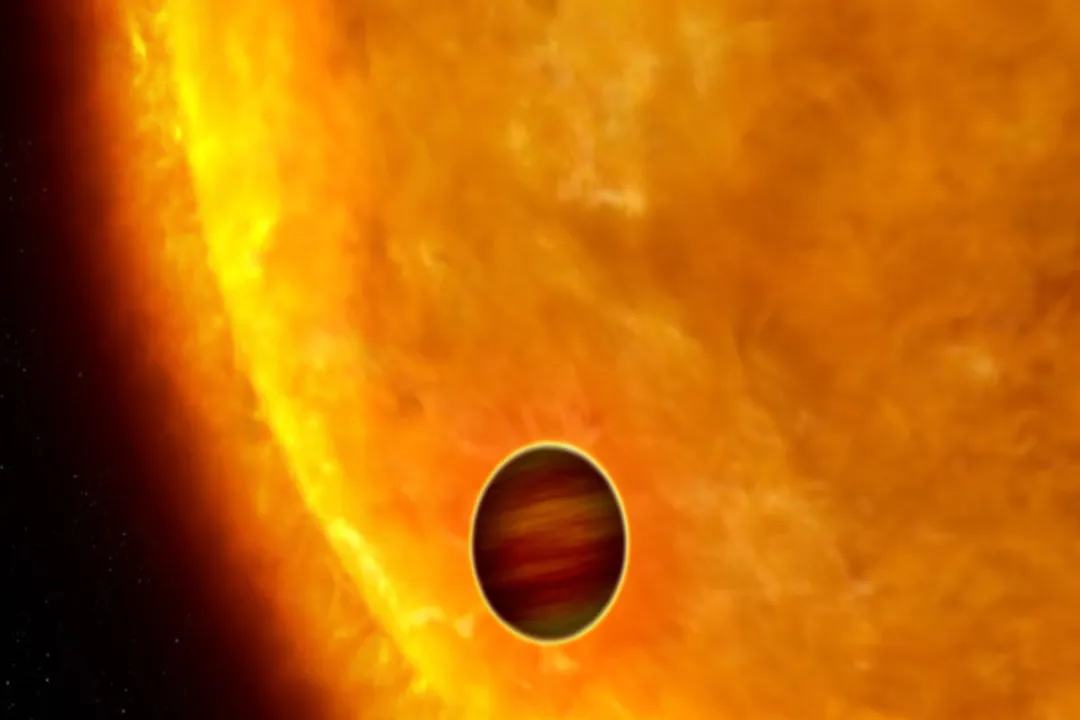
The entire principle hinges on this specific alignment, often referred to as a "transit" event. A transit occurs when an orbiting body passes directly between its parent star and the observer. If the planet's orbit is significantly tilted relative to our line of sight, the planet will simply pass above or below the star from our vantage point, and no transit will ever be registered. This selection effect means the transit method inherently biases the discoveries toward finding planets in edge-on systems, even if such systems are statistically rare compared to all possible orbital orientations.
When this rare alignment happens, the method relies on a measurement technique called transit photometry. This involves meticulously monitoring the brightness of the host star over an extended period. The case for using the transit method, therefore, is any time an observer is prepared to monitor a star's light curve for periodic, minute dips in brightness.
# Measuring Light Dips
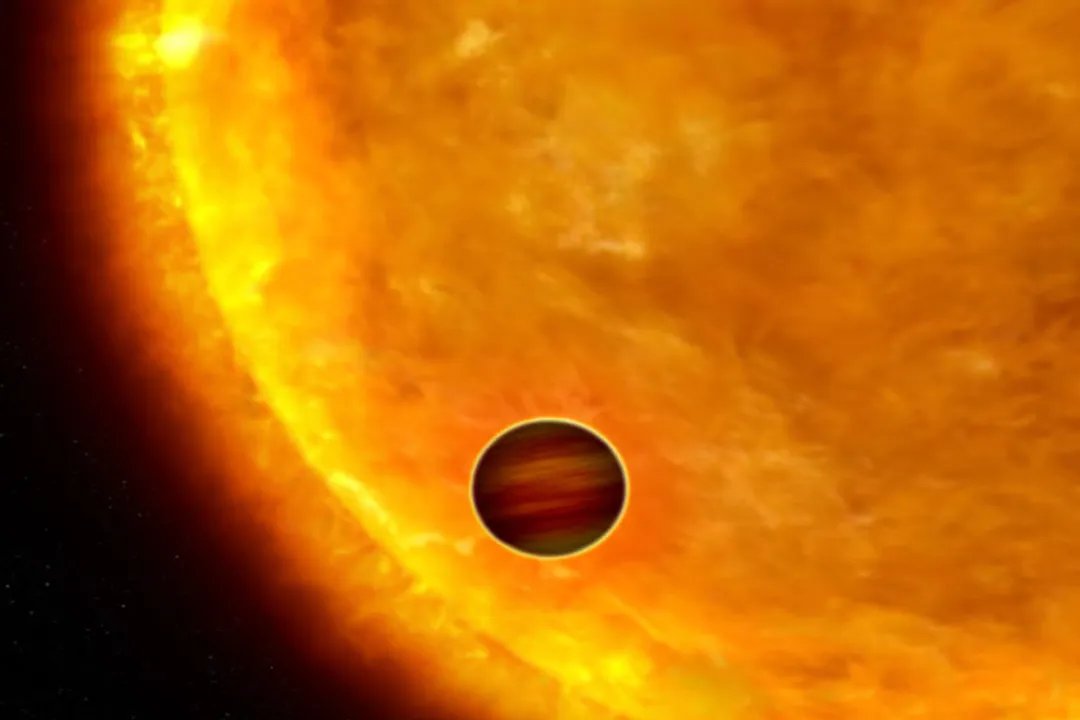
The defining observable event that triggers the use of this method is the temporary, periodic dimming of the star's light. As the planet moves across the face of the star, it blocks a small fraction of the starlight heading toward us, causing a measurable drop in the observed flux. The depth of this dimming—how much the light decreases—is directly related to the relative size of the planet compared to the star. A larger planet blocking more of the stellar disk will cause a deeper transit signal. Astronomers look for these small, repeating decreases in luminosity across successive observations.
The method is generally most effective, or perhaps, most commonly used, for detecting planets orbiting smaller, dimmer stars, such as M-dwarfs. While the transit depth depends on the planet's radius relative to the star's radius, the signal-to-noise ratio improves significantly when the background star is intrinsically fainter. For a Jupiter-sized planet transiting a star like our Sun, the brightness drop is only about 1%. However, transiting the same planet around a much smaller, cooler star results in a much more noticeable relative drop, making the detection statistically easier with current technology.
# Determining Orbital Characteristics
The transit method is used not just for detection, but for obtaining crucial physical data about the system. The time it takes for the planet to complete one full orbit—the transit period—is derived directly from the time between successive dips in brightness. This periodic nature is key to confirming that the signal is planetary rather than a stellar or instrumental artifact. The orbital period, combined with knowledge of the star's mass (which is often estimated from stellar models or spectroscopy), allows astronomers to calculate the size of the planet's orbit, often expressed as the semi-major axis.
When we consider which planets the method is used to characterize, the answer is generally those whose orbits are close to their host stars. Since the transit method requires a highly specific geometry, systems with short orbital periods (planets orbiting close in) present more opportunities for repeated observation in a reasonable timeframe, allowing for quicker confirmation and characterization. This means the method has historically been incredibly successful at finding short-period exoplanets, including "hot Jupiters" and "super-Earths" that orbit very near their stars.
The information obtained from a transit event—the planet's radius, its orbital period, and its orbital distance—is foundational data for estimating a planet's density, if follow-up observations using a different method, such as the radial velocity method, can provide the planet's mass. Therefore, the transit method is often the first step in a multi-method characterization campaign.
# When Follow-Up is Essential
The transit method, in isolation, provides the planet's radius and orbital period. It does not directly yield the planet's mass. This absence of mass information is a critical context for when this method is most valuable in a broader sense: it is used when astronomers want to find the size of a world, often with the explicit intention of later following up to find its mass.
For instance, if a transit reveals a planet roughly the size of Earth orbiting a sun-like star, the transit signal itself cannot definitively distinguish if that world is a rocky super-Earth or a mini-Neptune with a thick gas envelope. The case where the transit method shines is in identifying candidates—planets whose calculated size suggests they might be in the habitable zone, or those whose size is unique enough to warrant intensive follow-up observation to pin down their composition.
A comparison between the transit method and the radial velocity method highlights this complementary relationship. The radial velocity method excels at finding massive planets, especially those with large orbits, by measuring the star's wobble. The transit method, conversely, is better suited to finding smaller planets with tight, short-period orbits. The ultimate case for its use is when a research goal prioritizes finding planets in the "low-mass" category around bright stars, or when searching for the atmospheric signatures of a transiting world. The brief dip in light provides a window—a moment when the planet's atmosphere passes in front of the star—allowing light filtered through that atmosphere to be analyzed for chemical composition. This atmospheric analysis can only happen because the transit occurred.

# Instrumental Considerations
The application of the transit method is also dictated by instrumental capability. Because the brightness dip can be minuscule, especially for planets orbiting large, bright stars, the method necessitates extremely precise photometers. Missions like the Kepler Space Telescope and the Transiting Exoplanet Survey Satellite (TESS) were designed almost exclusively around this technique. Therefore, the transit method is used whenever an observatory is specifically built or tasked with high-precision, long-duration photometric monitoring of thousands of stars simultaneously.
One subtle consideration affecting when this method is applicable relates to the star's activity. Stars that are very active, displaying large starspots or frequent flares, create an intrinsic background noise that mimics or masks the tiny transit signal. If the star is too magnetically active, the precision required to measure a $0.01%$ dip—or even a $0.1%$ dip—becomes unattainable, rendering the transit method impractical for that specific target, even if the geometry is perfect. In these cases, alternative methods might be preferred until even more sensitive instruments are developed.
# Beyond the Basics
While the primary case is finding planets, the transit method also provides insights into the physical attributes of the star itself. The rate at which the light fades at ingress (the beginning of the transit) and brightens at egress (the end) depends on the relative speed of the planet across the stellar disk and the size/limb-darkening profile of the star. If a star's properties (like its radius) are well-constrained, the transit depth yields a precise planetary radius. If the star's properties are uncertain, the transit measurement forces astronomers to refine their models of the star, showing a beautiful interplay between object characterization.
Consider the discovery of systems like TRAPPIST-1. The transit method was the key to discovering all seven of those Earth-sized planets because they orbit an ultra-cool dwarf star. Because the star is so small and cool, even tiny Earth-sized bodies cause relatively deep transits, making them prime candidates for this detection technique. This exemplifies a major use case: targeting small, cool stars for high-yield transit surveys.
My observation, derived from the constraints of the method, is that the transit method favors systems where the planet is not only transiting but also likely close-in. If a planet has a very long orbital period—say, a Jupiter analog orbiting at the distance of Mars or further—the time between transits could be years or decades. For ground-based observation or even missions with finite lifespans, finding and confirming such a distant transiter is extremely difficult due to the need for long-term monitoring. Thus, the practical application is heavily skewed toward short-period systems, creating a catalog biased toward 'hot' worlds orbiting their stars relatively quickly.
Furthermore, the method allows for the study of orbital dynamics in multi-planet systems. When multiple planets transit the same star, the timing of their transits must be mutually consistent over many cycles. Anomalies in these timing variations can reveal the gravitational influence of a non-transiting third planet in the system, a scenario where the transit method indirectly detects a planet that is not currently passing in front of the star. So, one specific case for using the method is refining the architecture of multi-planet systems by looking for transit timing variations (TTVs).
In summary, the transit method is used in cases where:
- An exoplanet's orbit is precisely aligned edge-on relative to Earth.
- An observer has access to instruments capable of extremely precise, long-term photometric monitoring.
- The goal is to determine the planet's radius and orbital period.
- The host star is small enough (like an M-dwarf) to produce a deep, measurable dip in brightness.
- There is a scientific interest in performing follow-up atmospheric spectroscopy, which requires a transit event.
The technique is a cornerstone of modern exoplanet science, used whenever we seek the physical size of a world, provided that the geometry—the cosmic alignment—is on our side. The precision needed means that finding an Earth-sized planet around a Sun-like star remains one of the most challenging observational feats, but the method is perfectly suited for finding larger planets around smaller stars.
#Videos
Searching for Exoplanets: The Transit Method - YouTube
Related Questions
#Citations
Chapter 10 Flashcards - Quizlet
Transit Method - Las Cumbres Observatory
Down in Front!: The Transit Photometry Method | The Planetary Society
Searching for Exoplanets: The Transit Method - YouTube
7.4: The Transit Method - K12 LibreTexts
In which of the following cases can we determine the precise mass ...
The transit method | - PLATO Mission
[PDF] Homework Solutions for Chapter 11