Are most galaxies red or blue-shifted?
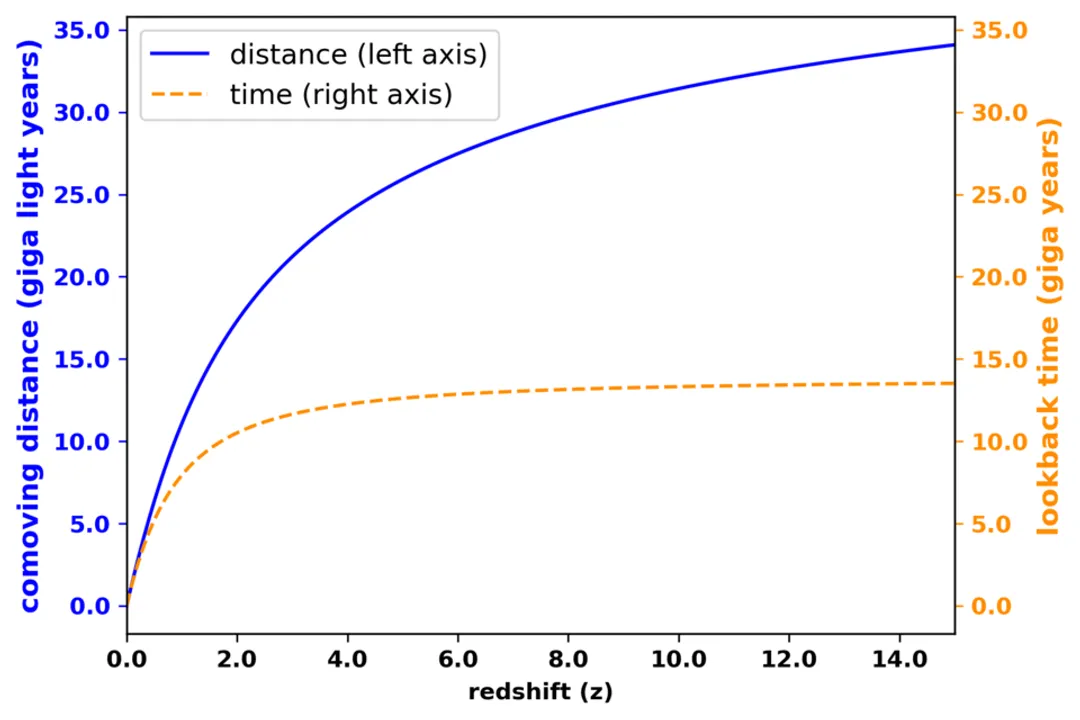
The shift in the light emanating from distant cosmic objects tells a profound story about the structure and motion of the universe itself. When astronomers examine the spectrum of light received from stars and galaxies, they are looking for a tell-tale sign: whether that light has been stretched toward the red end of the spectrum or compressed toward the blue end. [9] This phenomenon is closely related to the classical Doppler effect we experience with sound waves, like an ambulance siren changing pitch as it passes by. [9] If a light source is moving away from us, the light waves are stretched, making them appear redder—this is redshift. [6][9] Conversely, if the source is moving toward us, the waves are compressed, resulting in a blueshift. [6][9]
# Light Shift
In practical terms, observing this shift involves comparing the wavelengths of light we detect against what we know they should be if the source were stationary relative to us. [6] Certain spectral lines—unique signatures created by specific elements like hydrogen or oxygen—act as cosmic rulers. [7] If the entire pattern of these lines is shifted toward longer (redder) wavelengths, the object is receding. [6][9] If the pattern shifts toward shorter (bluer) wavelengths, the object is approaching. [8] While the Doppler effect describes motion through space, the expansion of the universe introduces a separate, equally important mechanism when dealing with very distant galaxies. [7]
# Cosmic Expansion
When we look out across vast intergalactic distances, the overwhelming observation is that galaxies are redshifted. [1] This is the fundamental evidence supporting the idea that the universe is expanding. [7] For the most distant objects, this redshift isn't primarily caused by the galaxy physically flying away from us through space, like a rocket; rather, it is cosmological redshift. [7] As the space between the distant galaxy and us stretches over billions of years, the light traveling through that space gets stretched along with it, resulting in the observed shift toward longer wavelengths. [7] This effect is quantifiable through Hubble’s Law, which generally states that the farther away a galaxy is, the faster it appears to be moving away from us, evidenced by a greater redshift value. [7]
If you consider the entire observable universe, the proportion of galaxies exhibiting a significant redshift dwarfs those exhibiting a blueshift. [1] This makes sense in the context of a uniformly expanding cosmos—if space is stretching everywhere, the net effect on nearly everything outside our immediate gravitational neighborhood will be recession, thus causing redshift. [1] This cosmological expansion dominates the local movements of most galaxies across billions of light-years. [2]
# Nearby Motion
However, the story isn't entirely one-sided, particularly when we look locally. [2] The universe is not a perfectly uniform, smooth entity on smaller scales; gravity still dictates local relationships. [8] Galaxies are bound together into groups and clusters, like our own Local Group. [2] Within this local environment, the gravitational pull between major bodies can overcome the general expansion of space. [8]
The most famous example of this local dominance is our nearest large galactic neighbor, the Andromeda Galaxy (M31). [2][5] Andromeda is heading toward the Milky Way, and consequently, its light shows a measurable blueshift. [2][8] In fact, many galaxies in our Local Group are gravitationally bound to the Milky Way and are approaching us, exhibiting blueshifts. [5] If you were looking only at galaxies within a relatively small radius—say, within about 10 to 20 million light-years—you would find a much more even mix of redshifts and blueshifts, with the blueshifts becoming significant indicators of gravitational attraction rather than cosmic recession. [8]
The critical distinction, therefore, lies in scale. When observing galaxies in the distant reaches of the universe, the expansion of the fabric of space is the primary driver of their observed velocity, leading almost universally to redshift. [2] For objects close by, local dynamics and gravity are the primary drivers, leading to blueshifts for gravitationally bound neighbors. [8]
When we think about the velocities involved, it helps to put the numbers in context. The speed at which Andromeda is approaching us is about 110 kilometers per second (km/s). [2] Compare this to the recessional velocity of a very distant galaxy, perhaps one billions of light-years away. Its apparent speed due to expansion can easily be thousands or tens of thousands of km/s. [7] Given that the Hubble constant suggests a recession velocity related to distance, the sheer volume of space involved ensures that distant, redshifted galaxies vastly outnumber the few local, blueshifted ones that are fighting against the Hubble flow due to gravity. [1] Imagine a river flowing outward from a central point (cosmic expansion). Near the banks (our Local Group), small eddies and currents (gravity) might cause water molecules to move backward against the main flow, but the vast majority of the water in the main channel is moving away from the center. [3]
# Observational Facts
The scientific community has gathered extensive data confirming this distribution. When deep-field surveys are conducted, mapping out the positions and velocities of tens of thousands of galaxies, the resulting plot confirms a strong correlation between distance and redshift. [7] While local voids or clumps can create unusual velocity patterns, the overall trend in deep space is one of accelerating expansion, represented by positive redshift values (). [4][6]
There is a common area of confusion that arises when discussing this topic, often reflected in online discussions: people sometimes wonder if the existence of blueshifts somehow invalidates the expansion model. [2][4] The answer is a definitive no. The cosmological model accounts for these local exceptions perfectly. [2] The expansion describes the metric expansion of space on large scales, while gravity still governs the dynamics on smaller, bound scales. [8] The few nearby blueshifted galaxies are simply gravitationally bound systems whose mutual attraction is stronger than the rate at which the space between them is stretching. [4] For example, a galaxy located just outside the immediate sphere of influence of the Local Group might still be observed moving toward us due to some peculiar motion, but as we look farther out, that peculiar motion is drowned out by the expansion of the universe. [8]
Furthermore, there is a technical aspect to how we define "most." If you took a census of every galaxy in the observable universe, the vast majority would be receding due to expansion, meaning most are redshifted. [1] If you only sampled galaxies within a relatively tight sphere around the Milky Way (say, within 50 million light-years), the percentage of blueshifts would be much higher, perhaps even approaching 50% depending on the precise boundary chosen, because gravitational binding would be the dominant factor over cosmic expansion. [2][5] However, when astronomers speak generally about the universe being redshifted, they are referring to the dominant, large-scale phenomenon observed in the deep cosmos. [7]

# Analyzing Velocity Influences
To further appreciate the dominance of redshift, consider a hypothetical comparison of forces. The gravitational attraction between two galaxies separated by a large cosmological distance () is relatively weak compared to the cumulative effect of space stretching between them over billions of years. [7] The recession velocity caused by the expansion scales with distance (), where is the Hubble constant. For a galaxy 100 million light-years away, the expansion velocity might be around (using a simplified estimate). [7] The peculiar velocities (random motions caused by local gravity) of galaxies are typically only a few hundred km/s. [8] Therefore, even a galaxy relatively close by, if it isn't gravitationally locked with us, will likely show a small net redshift because (expansion) beats out a few hundred km/s (local motion).
This creates a natural boundary: the Hubble sphere. Outside this boundary, the rate of recession due to expansion exceeds the speed of light (which is permissible because it's space itself expanding, not motion through space). [7] Inside this boundary, local gravitational structures can still generate blueshifts. [8] Since the observable universe extends far beyond this local zone, the catalog of observed objects is naturally dominated by those exhibiting recessional redshift. [6]
# Mapping the Cosmos
The ability to precisely measure these shifts is crucial for mapping the cosmos. Redshift measurements are not just about motion; they are fundamentally tied to distance, which allows astronomers to create 3D maps of the universe. [7] The famous Hubble Deep Field images, for instance, reveal galaxies whose light has been traveling for almost the entire age of the universe, and virtually every single one of those faint specks registers a significant redshift. [7] The further back in time we look, the more pronounced the redshift becomes because the universe was smaller and denser then, meaning the light had more distance to travel while space expanded around it. [7]
This reliance on redshift for distance measurement means that when we select a sample of very distant galaxies, we are inherently selecting for objects that are moving away from us rapidly enough that their recessional velocity outweighs any local gravitational tugs or peculiar movements that might cause blueshifting. [1] A blueshifted galaxy that far away would imply an incredibly strong, persistent gravitational influence pulling it toward us across vast swathes of expanding space—a scenario that current cosmological models do not predict for the majority of distant galaxies. [4]
Therefore, the simple, direct answer is that most galaxies are redshifted. [1] The blueshifts we observe are a fascinating, important local feature—a gravitational hiccup in the grand, outward expansion—but they represent a small fraction of the total galactic population that we are capable of observing across the entirety of cosmic history. [2][5] If we were to conduct a pure, unbiased census of all galaxies, the overwhelming majority would show light waves stretched toward the red end of the spectrum, confirming the ongoing expansion of our universe. [7]
Related Questions
#Citations
Are most stars redshifted or blueshifted? - Quora
Do blueshifted galaxies contradict the expansion of the universe?
Might be a dumb doubt but I just read about red and blue shifts ...
Why are there so many seemingly blue-shifted galaxies in deep space
Why are distant galaxies in the deep field image not all red shifted?
Redshift - Wikipedia
Hubble Cosmological Redshift - NASA Science
We say Light is Red-Shifted or Blue-shifted from faraway stars and ...
Redshift and blueshift: What do they mean? - Space