Do red galaxies exist?
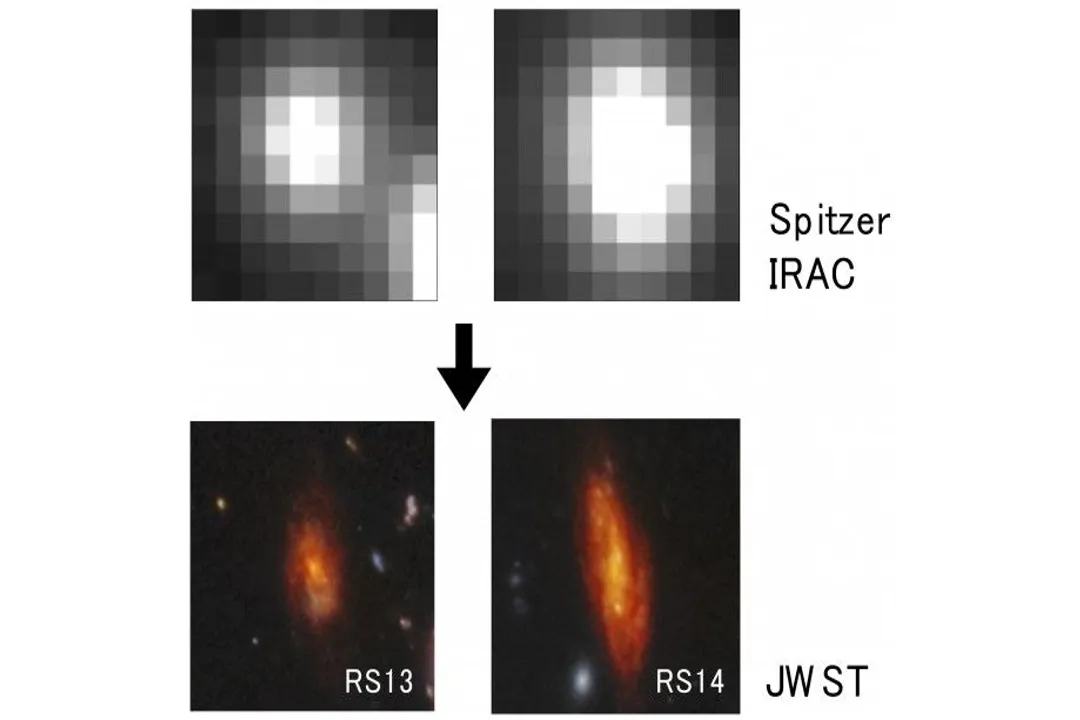
The simple confirmation is that yes, red galaxies absolutely exist, and they have captivated astronomers for decades, leading to rich debates about what their color actually implies about their life cycle. When astronomers speak of them, they often use evocative terms like "red and dead" galaxies, or their smaller, more ancient cousins, the "red nuggets". [1][2] These objects represent galaxies that have largely ceased forming new stars, their stellar populations being dominated by older, cooler, redder stars, in contrast to the vibrant blue of actively star-forming systems. [7]
# Color Meaning
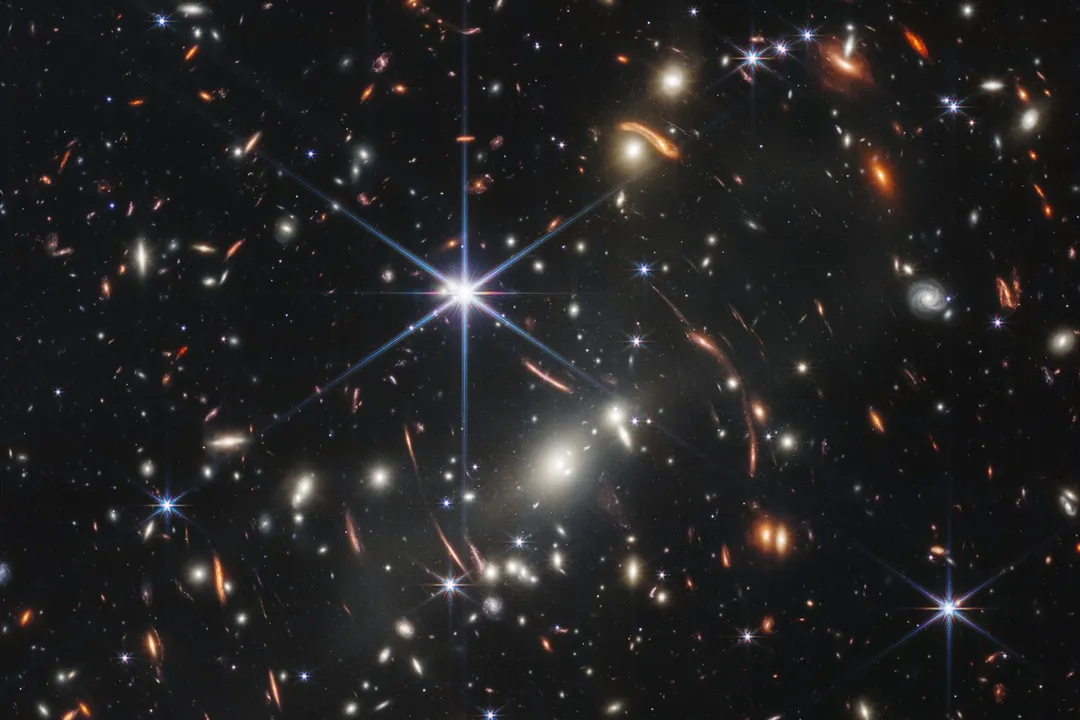
The color of a galaxy is a direct indicator of its stellar population's age, which is a fundamental concept in astrophysics. Blue light comes from massive, hot, young stars, while older, less massive stars emit light shifted toward the red end of the spectrum. [7] When a massive galaxy exhausts its supply of cool, dense molecular gas—the fuel for star formation—it essentially stops producing these blue stars. Over cosmic time, the existing blue stars die off, leaving behind a population dominated by red giant and red dwarf stars, causing the entire galaxy to appear distinctly red. [2]
The label "red and dead" suggests a definitive end state for star formation. These galaxies are often found to be massive and have quenched their star-forming activity relatively early in the universe’s history. [2] They represent a major evolutionary path where a galaxy uses up or expels its star-forming material rapidly, entering a quiescent phase where little to no new star birth occurs. [3]
# Nugget Galaxies
A particularly interesting subclass of these aging systems is the "red nugget" galaxy. [1] These objects are defined not just by their color but also by their physical structure: they are remarkably massive yet surprisingly compact. [1][4] The existence of these nuggets implies an incredibly efficient, high-intensity burst of star formation very early in the history of the universe. [4][6]
These nuggets were, in essence, big red monsters of the early universe, having undergone a massive growth spurt when the universe was young. [6] Because they achieved such high stellar mass in such a small volume, they appear to have consumed their fuel reservoirs quickly, cementing their "dead" status before many other galaxies had even begun their prime star-forming years. [4] Studies have suggested that these galaxies were often found "hiding in plain sight" within larger surveys because their small, concentrated nature made them distinct from typical large spirals or ellipticals. [4]
To better understand the physical characteristics that define these objects, we can compare their primary attributes:
| Feature | Blue/Star-Forming Galaxy | Red Nugget Galaxy |
|---|---|---|
| Stellar Population | Young, hot, massive stars | Old, cool stars |
| Color | Predominantly Blue | Predominantly Red |
| Star Formation Rate | High | Very Low (Quenched) |
| Size/Mass Relation | Typically larger for given mass | Compact/High Stellar Density [1][4] |
The very compact nature of the red nuggets suggests a high local density of stars, which points toward a rapid consumption of star-forming gas. If we consider the available gas supply, achieving such a high mass in a small volume means the star formation efficiency must have been orders of magnitude greater than in galaxies that grew more slowly over cosmic time. This rapid consumption explains why they appear "dead" so much sooner than their larger, more extended counterparts. [6]

# Quiescent Reality
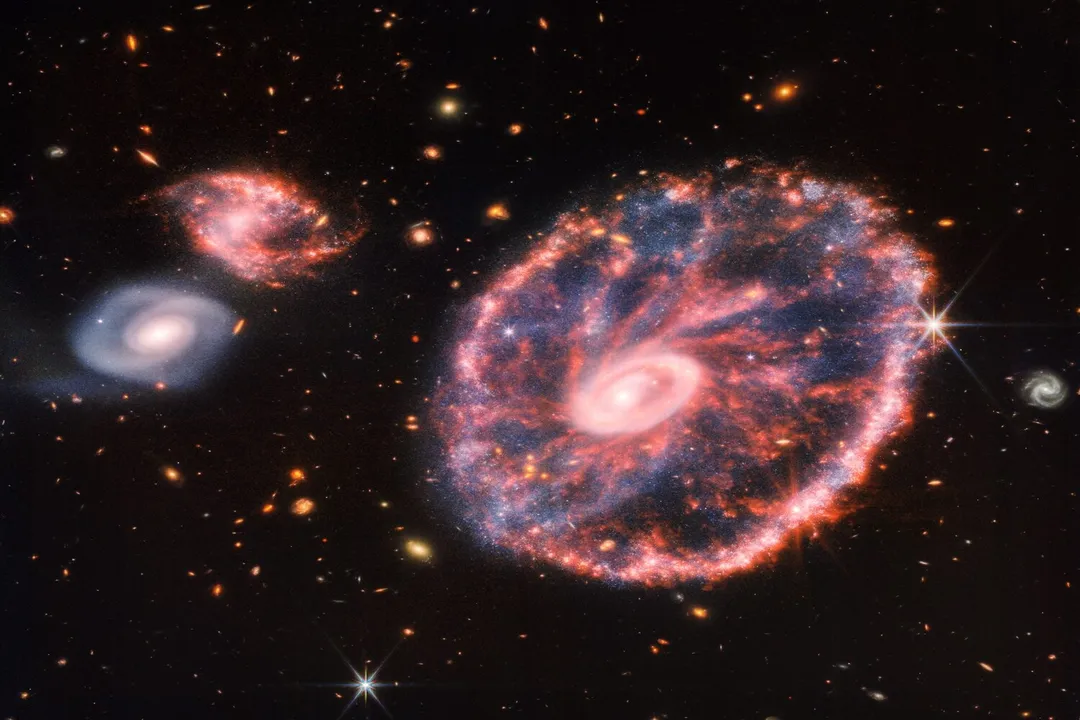
While the term "red and dead" sounds conclusive, modern astronomical observations frequently complicate this simple picture. Some galaxies that appear red might merely be quiescent—temporarily quiet—rather than permanently finished with star formation. [3] This distinction is crucial for understanding galaxy evolution, as a quiescent galaxy might eventually reignite star formation if it acquires fresh gas through mergers or accretion. [3]
The advent of the James Webb Space Telescope (JWST) has further challenged preconceived notions about the fate of galaxies. While many massive, early ellipticals are indeed red and dead, JWST has identified red spiral galaxies. [8] A spiral structure is typically associated with an organized disk where gas settles and new stars form. Finding a red spiral suggests one of two things: either the galaxy is red due to massive amounts of obscuring dust, or its star formation has been suppressed in the disk but perhaps not entirely extinguished, leading to a redder overall hue without a complete halt in birth rates. [8] This shows that the simple classification based on color alone can be misleading when applied across diverse morphologies.
Furthermore, the mechanism leading to quenching isn't always simple gas exhaustion. Observations utilizing facilities like the Chandra X-ray Observatory have helped explain that the hot, energetic gas surrounding these massive galaxies, often originating from an active galactic nucleus (AGN), can heat the cooler gas necessary for star formation, effectively blowing it away or heating it too much to condense. [2] This feedback loop can shut down star birth without the galaxy immediately running out of all its available mass.
# Observing Redness
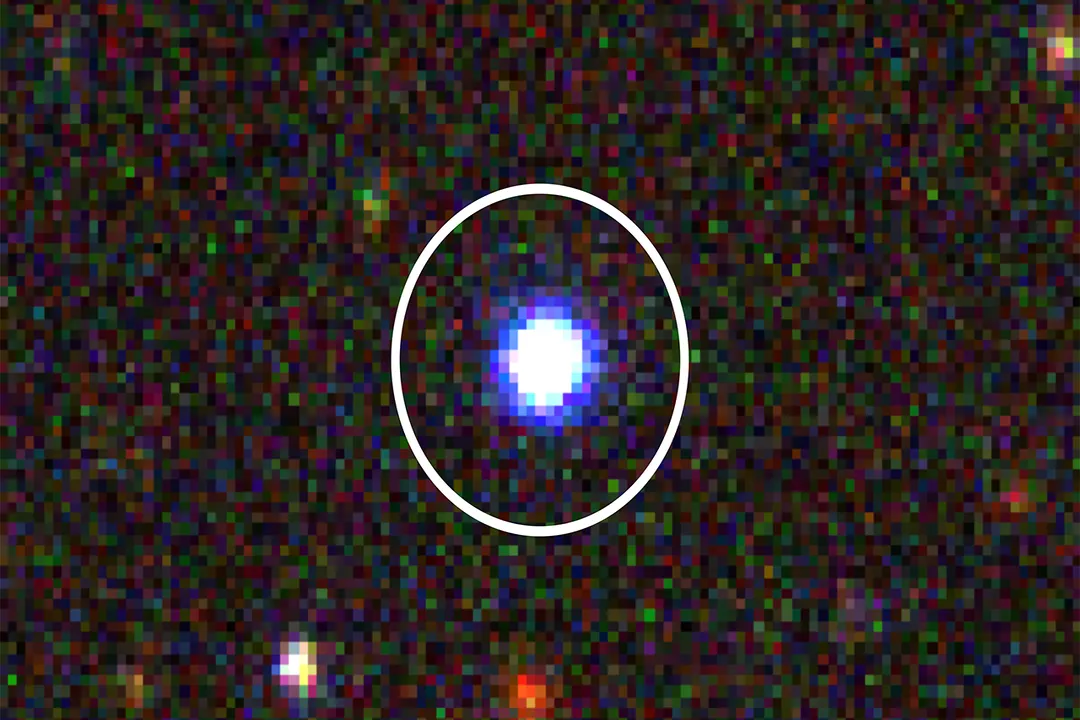
Tracing these red galaxies across cosmic time requires sophisticated instrumentation. Telescopes like Hubble have provided deep views into the universe, revealing the population of these older systems that contribute to the "dark universe" picture—those parts dominated by aging light rather than new production. [7] The observation of these faint, distant red objects often relies on looking deep into the infrared spectrum, as their light has been redshifted by the expansion of the universe. [7]
The ability to confirm the mass of these systems, often necessary to label them as "red and dead" progenitors, is where powerful X-ray observatories like Chandra become invaluable. [2] By studying the hot gas halos around these galaxies, scientists can infer the total mass locked up within them, providing context for how rapidly they formed their stars. [2] Data collected by instruments like the Subaru Telescope also contribute to mapping the distribution and properties of these galaxies across different epochs. [9]
A common investigative path involves looking at how galaxy properties correlate. For instance, a high mass combined with a low current star formation rate is the strongest evidence for the "dead" state. [2] However, the identification of the red nugget class specifically highlights a potential bias in earlier surveys that might have favored finding objects that were both massive and compact simultaneously. [4] If a galaxy has a more extended, diffuse structure, it might be classified as quiescent later in its life cycle, even if it has the same total stellar mass as a dense red nugget formed much earlier. The observational snapshot is key; what looks dead now might have been furiously active just a billion years prior. This constant refinement, driven by newer, more sensitive telescopes, means our understanding of galactic longevity is continually being updated, pushing the timeline for when galaxies stop forming stars further back into the early universe. [6]
Related Questions
#Citations
Red nugget - Wikipedia
Chandra Helps Explain “Red and Dead Galaxies” - NASA
Red Galaxies Aren't Necessarily Dead Galaxies - Universe Today
"Red Nugget" Galaxies Were Hiding in Plain Sight
r/space on Reddit: Galaxies die earlier than expected - red and dead ...
Bang! Meet the big 'Red Monsters' of the early universe | Yale News
Red Galaxies at Night, Astronomers' Delight: A Look at the “Hubble ...
JWST spots rare red spiral galaxies in the early universe | Space
New Red Galaxies Turn Out to be Already Known Blue Galaxies