Stars with initial masses greater than about 8 solar masses typically end their lives via what mechanism?
Answer
A core-collapse supernova explosion.
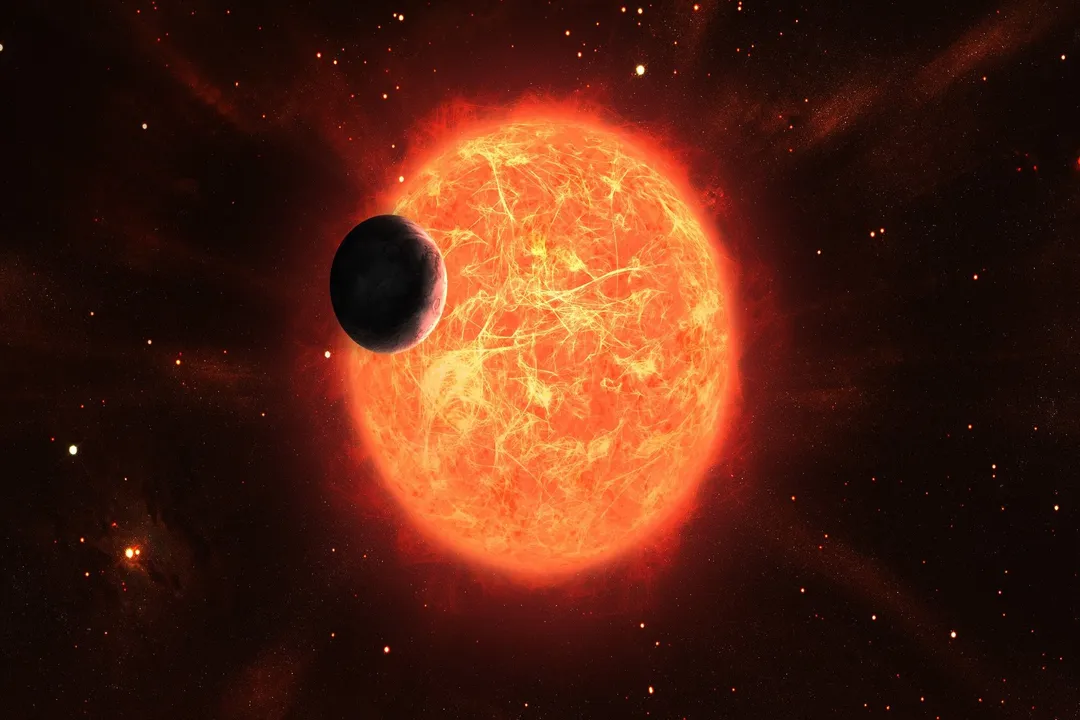
Stars significantly more massive than the Sun undergo a more accelerated path, becoming red supergiants, and ultimately end their lives in a violent core-collapse supernova explosion.
#Videos
Why Do Red Giant Stars Get Bigger? - YouTube
Related Questions
What fuel source powers a star during its main sequence phase?What term describes the balance between gravity and outward pressure in a stable, middle-aged star?What causes the cessation of core fusion in a star like the Sun?What event immediately follows the end of core hydrogen fusion?What process powers the star immediately after its core contracts significantly?How does the energy output during hydrogen shell burning compare to the main sequence?As the outer layers expand into a red giant, what happens to the surface temperature and resulting color?Despite having a cooler surface, how does a red giant's total luminosity compare to its main sequence stage?What will the Sun eventually leave behind after shedding its expanded outer layers?Stars with initial masses greater than about 8 solar masses typically end their lives via what mechanism?Approximately what temperature must the helium core reach to ignite fusion through the triple-alpha process?