What will happen to the Sun after it runs out of hydrogen in its core?
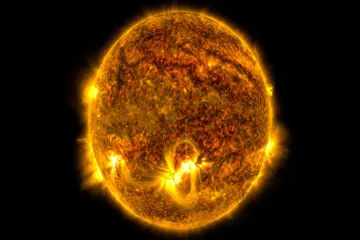
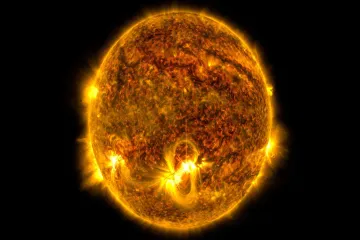
This star we see every day, the one that anchors our solar system, is currently in its prime. It is classified as a main-sequence star, happily fusing hydrogen into helium deep within its core. [10] This process, called nuclear fusion, is what generates the tremendous amount of energy that sustains life on Earth. [3] Right now, the Sun is about halfway through this stable phase, having spent roughly 4.6 billion years in this state. [6][10] It is a stable, yellow dwarf, converting about 600 million tons of hydrogen into helium every second. [3]
# Fuel Depletion
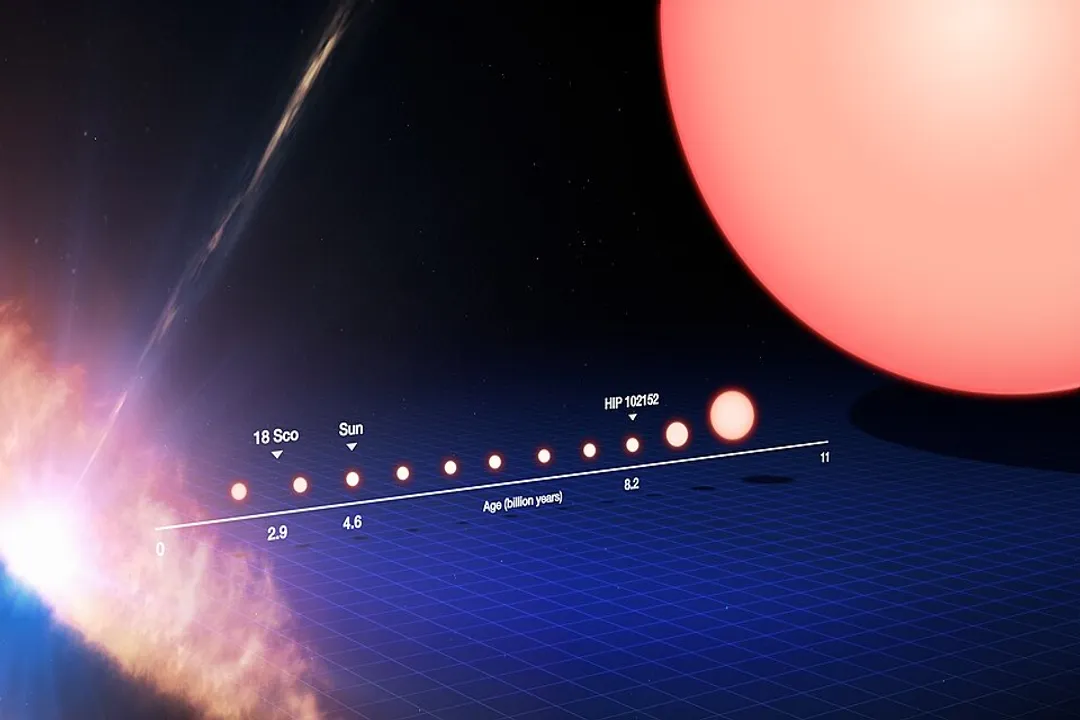
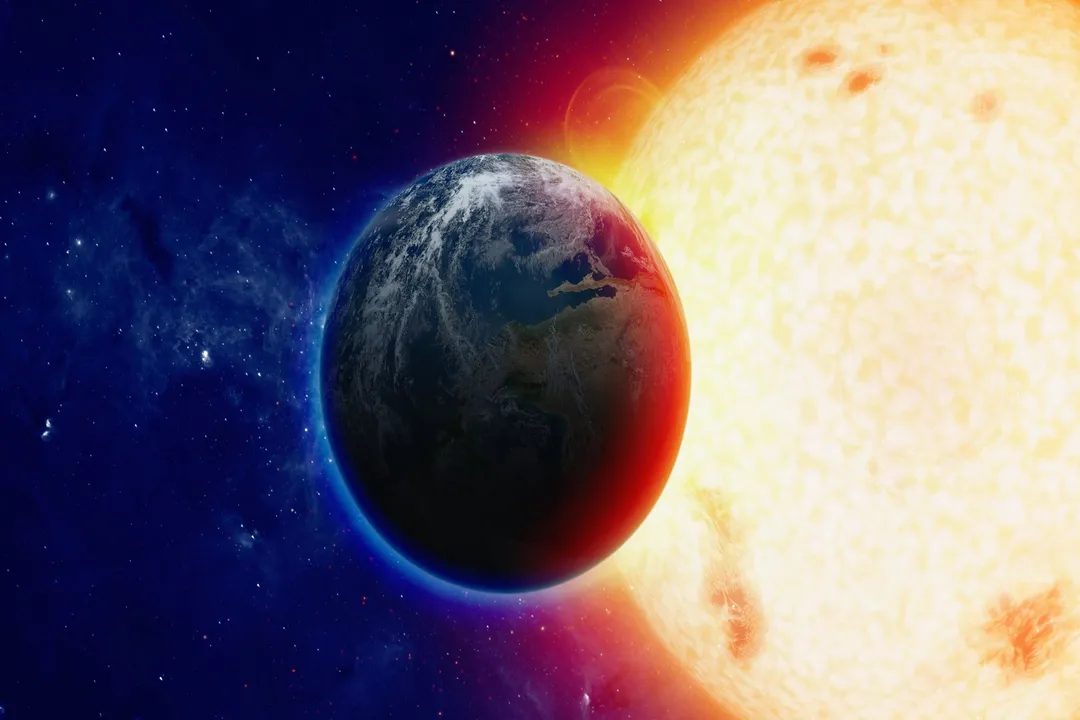
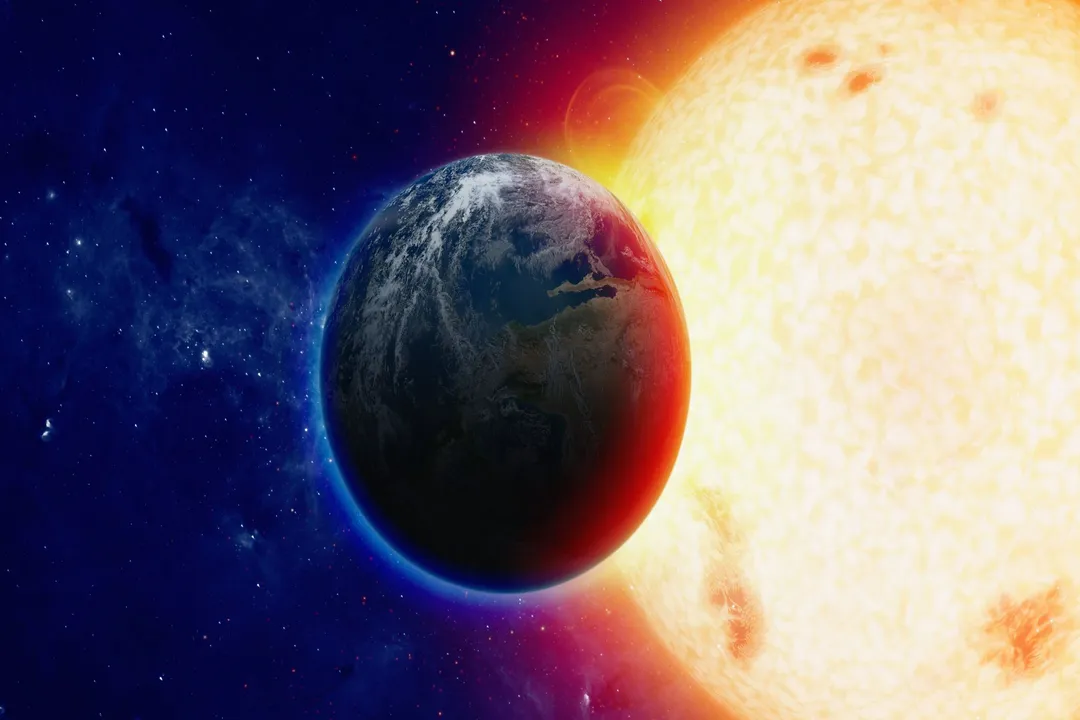
The central drama of the Sun's future begins when this core hydrogen supply is exhausted. [1] Think of it like a furnace that has burned through its primary fuel source. When the hydrogen in the Sun’s very center runs out, fusion there will cease because the core will no longer be hot enough to overcome the electrostatic repulsion between helium nuclei long enough for them to fuse. [3] This event is not an immediate catastrophe for life today, as the process is projected to take another five billion years or so. [6][8] If the hydrogen were to run out today, however, the immediate effect would be a rapid cooling of the visible surface as the primary energy source vanishes, plunging Earth into an instant, deep freeze because the constant energy input would stop. [2]
# Core Contraction
Once hydrogen fusion stops in the very center, the balance that has defined the Sun for billions of years—the outward pressure from fusion perfectly counteracting the inward crush of gravity—is broken. [4] Gravity immediately wins the initial battle, causing the inert helium core to begin contracting. [3] This gravitational collapse has an immediate consequence: as the core shrinks, it heats up dramatically. [3]
# Shell Burning
This intense, new heating around the contracting core does something fascinating. It heats up the shell of hydrogen surrounding the helium ash. [3] This surrounding layer, which is still rich in hydrogen, becomes hot and dense enough to ignite nuclear fusion in that shell. [3][4] This process is called hydrogen shell burning. [3] Interestingly, the energy output from this shell burning is actually greater than the energy produced when the core was fusing hydrogen alone. [3] This increased energy production is the mechanism that drives the next major phase of the Sun's evolution.
# Giant Swell
Because the shell burning generates more energy than the original core burning, the star's outer layers are pushed outward with immense force. [3] This outward expansion is dramatic. The Sun will balloon in size, growing perhaps 200 times its current diameter. [6] As it expands, the surface layers cool, causing the star's color to shift from yellow to orange or red, transforming it into what astronomers call a Red Giant. [1][3]
If we look at the expected change in energy output, we can gain some perspective on the coming environmental shift. The Sun’s current luminosity is designated as 1 L. As a red giant, theoretical models suggest the Sun’s peak luminosity could reach somewhere around 2,300 to 3,000 times its current level. [1] Even before the Sun physically swallows the inner planets, this extreme increase in radiant energy will fundamentally alter the habitable zone. For reference, today the habitable zone (where liquid water could exist) centers around 1 Astronomical Unit (AU). When the Sun swells, its habitable zone will likely push past the orbit of Mars, making Earth far too hot for liquid water long before the surface expansion arrives. [8] It's a gradual but inevitable sterilization driven by sheer thermal output.
# Earth's Fate
The fate of the inner planets hinges on the scale of this expansion. [1] Mercury and Venus are almost certainly doomed to be engulfed by the superheated outer atmosphere of the red giant Sun. [6] The question for Earth is whether it will be physically consumed or merely scorched beyond recognition. Current astrophysical projections suggest that Earth's orbit will expand slightly due to mass loss from the Sun, but likely not enough to save it. [6] The most commonly accepted scenario is that the expanding solar envelope will eventually reach Earth's orbital path, causing our planet to spiral inward and vaporize due to the intense heat and friction with the Sun's tenuous outer layers. [6] Even if Earth somehow avoids complete physical consumption, the oceans will boil away, the atmosphere will be stripped, and the surface will be melted into a sea of magma. [2] The time this takes, from the start of the red giant phase until its peak, is relatively swift on astronomical timescales, perhaps lasting about a billion years after core hydrogen depletion begins. [3][6]
# Helium Fusion
While the outer layers are expanding and overheating the inner system, something else is happening in the helium-rich core. As the core continues to contract under gravity, the temperature and pressure eventually become extreme enough—reaching about 100 million Kelvin—to initiate the fusion of helium into carbon and oxygen. [3][4] This is known as the triple-alpha process. [3]
This new fusion reaction provides a temporary reprieve and an energy source that stabilizes the star, causing it to shrink somewhat from its absolute largest size, though it remains much larger and brighter than it is today. [3] This helium-burning phase is far shorter than the hydrogen-burning phase, lasting only about 100 million years. [6] When the helium in the core is finally exhausted, the star will again face a crisis, as the new "ash"—carbon and oxygen—cannot fuse under the current thermal conditions because they require even higher temperatures and pressures to react. [3]
# Nebula Shells
With fusion stalling in the core again, the star will start fusing helium in a shell around the now-carbon-oxygen core, while hydrogen fusion continues in an outer shell. [3] The star becomes unstable, undergoing thermal pulses and beginning to shed its outer layers into space. [3][6] These ejected layers, rich in newly created elements like carbon and oxygen, form an expanding shell of glowing gas known as a Planetary Nebula. [1][6] This spectacular, temporary structure is not related to planets, but the name stuck from early telescopic observations. [6]
If we consider the scale of this shedding process, it represents a significant loss of stellar material. The Sun is expected to lose about 40 to 50 percent of its total mass during this late evolutionary phase. [6] This mass loss is what ultimately prevents the Sun from collapsing into a black hole, a fate reserved for much more massive stars. [5] The ejected material enriches the interstellar medium with the heavier elements forged during the star's life, which are the building blocks for future stars and planets. [3]
# Final State
After the spectacular, brief glow of the planetary nebula fades—a process that takes maybe 10,000 years—all that remains is the super-dense, extremely hot stellar core. [6] This remnant is what is left when the outer gases have completely dissipated: a White Dwarf. [1][3]
A white dwarf is an incredibly compact object, roughly the size of the Earth, but containing about half the mass the Sun originally possessed. [3][10] It shines only due to residual thermal energy; there is no fusion occurring within it anymore. [3] Over billions upon billions of years, this white dwarf will slowly radiate away its heat, eventually cooling down until it becomes a cold, dark stellar remnant known as a Black Dwarf. [1][3] The estimated time for the Sun's white dwarf to cool completely into a black dwarf is so vast—trillions of years—that it exceeds the current age of the universe. [1]
# Mass Limit
It is important to confirm why this path, ending in a white dwarf, is guaranteed for our Sun. The Sun simply does not possess enough mass to create the conditions necessary for a catastrophic gravitational collapse following helium exhaustion. [5] Stars that begin their lives with at least eight times the mass of the Sun are the ones that possess the gravitational muscle to continue fusion past carbon, leading to an iron core and culminating in a supernova explosion, which leaves behind either a neutron star or a black hole. [5] Since the Sun is an average, low-mass star, its end is quieter, culminating in the gentle, long fade of a white dwarf. [5][10] The maximum mass a white dwarf can have before collapsing under its own gravity is known as the Chandrasekhar limit, about 1.4 times the Sun's current mass, a limit our Sun will not even approach upon shedding its outer layers. [3]
#Videos
What Happens When the Sun Dies? - YouTube
Related Questions
#Citations
When will the sun die? - Space
What would happen to life on Earth if the Sun runs out of hydrogen ...
What Happens When the Sun Runs Out of Fuel? | Museum of Science
ELI5: Will the sun ever run out of gas to burn; and if so what ... - Reddit
Why the Sun Won't Become a Black Hole - NASA
This Is What Will Happen To Our Sun After It Dies - Forbes
What will happen to the sun when it runs out of hydrogen? - Facebook
Will the Sun Ever Stop Shining? | Ask An Earth And Space Scientist
What Happens When the Sun Dies? - YouTube
Sun - Wikipedia