What mechanism triggers the Sun's transition into a Red Giant phase?
Answer
Hydrogen fusion ignites in the shell surrounding the contracting helium core
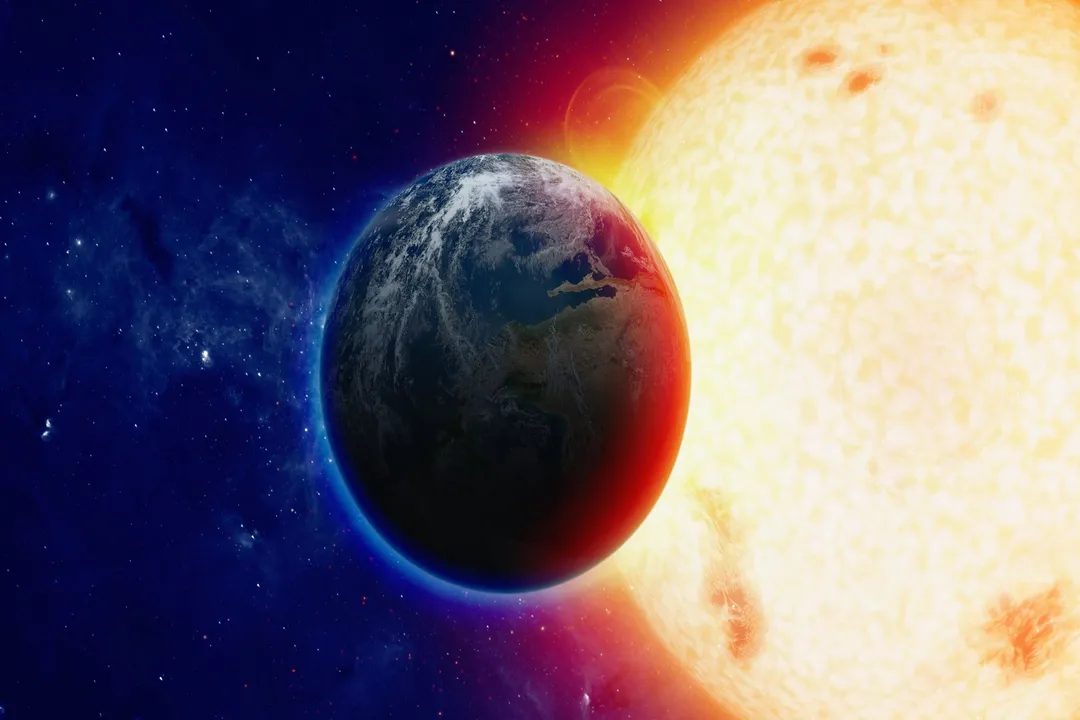
Following the contraction of the inert helium core, the intense heat generated by this gravitational collapse raises the temperature of the surrounding layer, which still contains untouched hydrogen fuel. This surrounding layer becomes hot and dense enough to initiate nuclear fusion within the shell itself. This process is termed hydrogen shell burning. Crucially, the energy output generated by this shell burning is significantly greater than the energy produced when the core was fusing hydrogen alone, providing the immense outward force necessary to expand the star dramatically.
#Videos
What Happens When the Sun Dies? - YouTube
Related Questions
What process sustains the Sun as a main-sequence star?If core hydrogen fusion stopped today, what immediate effect impacts Earth?What happens to the inert helium core after hydrogen fusion ceases centrally?What mechanism triggers the Sun's transition into a Red Giant phase?What is the projected peak luminosity of the Sun as a Red Giant compared to 1 L$_ ext{odot}$?Which inner planets are almost certainly doomed to be engulfed by the Red Giant Sun?What temperature is required to initiate helium fusion into carbon and oxygen in the core?What is the name for the helium fusion process occurring around 100 million Kelvin?What fate does the Sun avoid due to its low mass compared to massive stars?What prevents the Sun's remnant core from collapsing beyond the Chandrasekhar limit?