What fate does the Sun avoid due to its low mass compared to massive stars?
A catastrophic gravitational collapse leading to a supernova explosion
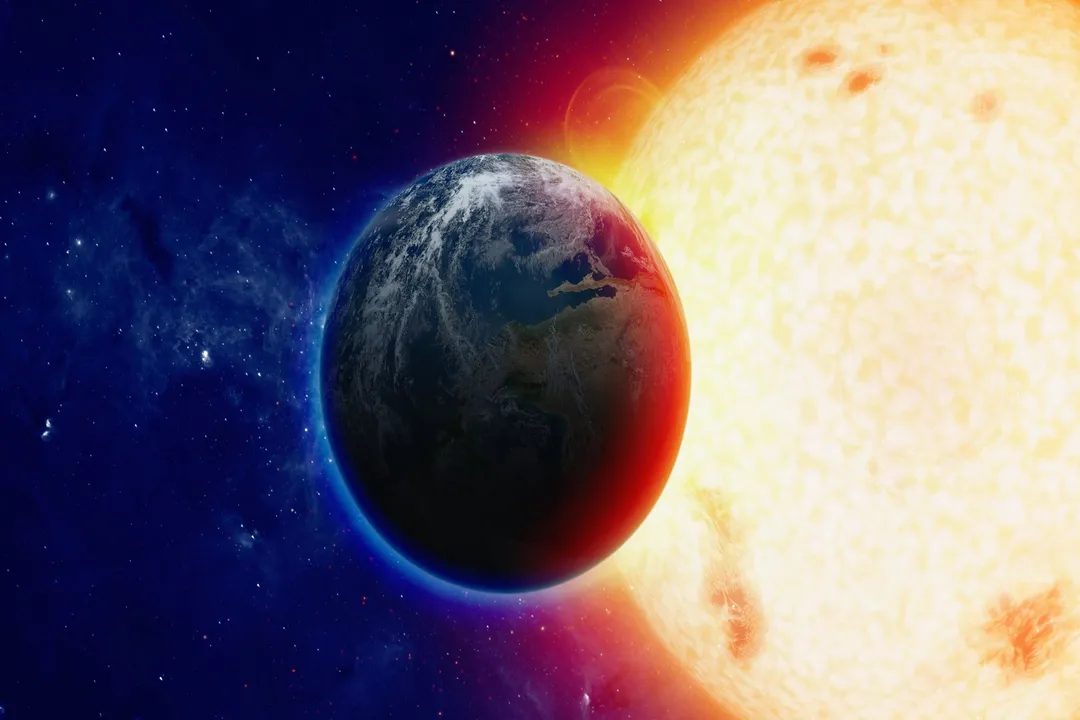
The Sun's relatively low mass dictates a quieter end-of-life sequence compared to stars beginning their lives with eight or more times the Sun's mass. Stars exceeding that mass threshold have the gravitational strength to continue fusion deep into heavier elements, eventually leading to an iron core instability. This results in a catastrophic core collapse and a massive supernova explosion, leaving behind remnants like a neutron star or a black hole. Because the Sun lacks this critical mass, its fusion chain stops earlier, preventing the conditions necessary for such a violent end, culminating instead in the gentle fade of a white dwarf.
#Videos
What Happens When the Sun Dies? - YouTube