What is a space pilot called?
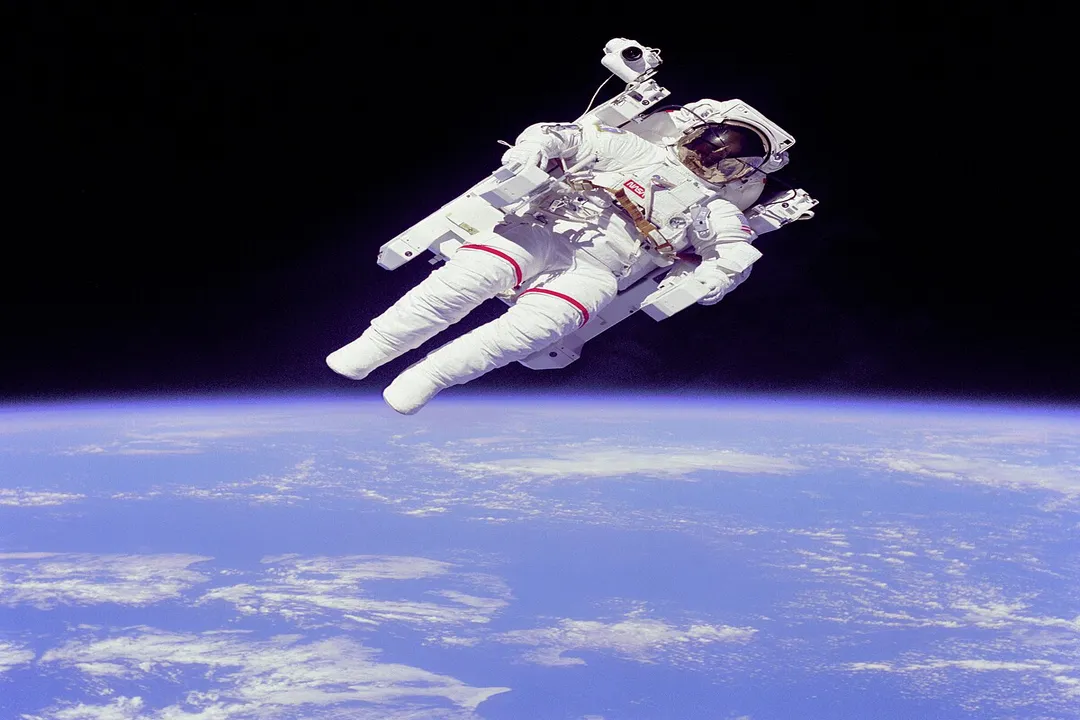
The most common and broadly accepted term for a person trained to travel in space is an astronaut. [1][2] This title generally applies to individuals selected and trained by a human spaceflight program to command, pilot, or serve as a crew member aboard a spacecraft. [2] However, asking what a space pilot is called reveals layers of nuance, depending heavily on which space agency is involved, the historical era of the flight, and the specific job description on the mission manifest. [1][9]
# Universal Titles
While "astronaut" is the preferred term for American space travelers employed by NASA, the global space community uses variations reflecting national identity and program history. [1] For instance, space travelers trained by the Russian Federal Space Agency (Roscosmos) or its predecessor, the Soviet space program, are known as cosmonauts. [1] Similarly, China's space program personnel are called taikonauts. [1] These terms are essentially direct equivalents, differentiated only by the originating country's space agency. [1]
Some general, non-official terms one might encounter in speculative or popular culture include "space explorer" or "space traveler," but these lack the formal definition associated with the credentialed roles of astronaut, cosmonaut, or taikonaut. [7]
# NASA Designations
When focusing specifically on the United States' National Aeronautics and Space Administration (NASA), the term astronaut covers all roles, but a specific rank structure exists that once prominently featured the Pilot designation. [3][6] Historically, during programs like Apollo and the Space Shuttle era, the crew roles were clearly delineated, often including dedicated pilots alongside the mission commander. [1]
NASA's astronaut corps has historically managed progression through several defined roles. [3] The journey often begins as an Astronaut Candidate (ASCAN), a trainee who has been selected but not yet fully qualified. [2][3] Once qualified, they become an Astronaut. [3] Within the active corps, positions have included:
- Commander: Responsible for the overall mission and crew. [3]
- Pilot: Historically responsible for operating the spacecraft's flight controls, navigation, and landing systems. [1][3]
- Mission Specialist: Crew members who execute scientific experiments, manage station systems, and perform spacewalks (Extravehicular Activity or EVA). [3][9]
- Payload Specialist: Individuals, often scientists or engineers from outside the traditional astronaut corps, brought aboard specifically to operate unique payloads or experiments. [9]
The role of the Pilot was particularly significant during the Space Shuttle era, where the Pilot was the second-in-command and actively flew the orbiter during launch and landing phases, separate from the Commander. [1]
# Evolution of Crew Roles
It is interesting to observe how the functional requirement for a "pilot" has evolved alongside spacecraft design. In early spaceflight, the distinction between Commander and Pilot was critical for manual vehicle control. [1] With the Space Shuttle, this formalized into two distinct ranks responsible for flying the vehicle. [1]
| Mission Era/Program | Prominent Pilot Role | Primary Function | Citation Context |
|---|---|---|---|
| Apollo Missions | Lunar Module Pilot, Command Module Pilot | Direct operation of distinct vehicle stages [1] | Historical/Procedural |
| Space Shuttle Program | Pilot | Primary responsibility for vehicle control (launch/entry) [1][3] | Defined Rank Structure |
| International Space Station (ISS) | Not always explicitly titled 'Pilot' | Often covered under Commander/Flight Engineer/Mission Specialist roles focused on station operations [9] | Modern Operational Focus |
This shift illustrates that while the title "Pilot" exists within the NASA ranks, [3] the necessity for that specific command structure has changed. On modern long-duration missions like those to the International Space Station, operational tasks are more distributed among the crew members who are often designated as Mission Specialists or Flight Engineers, requiring a broader skillset than just stick-and-rudder flying. [9]
# Functional Skill Versus Formal Rank
A key point of analysis here is the difference between an official title and the practical skills required for modern spaceflight. Even if an astronaut is officially designated a Mission Specialist on the manifest today, virtually every astronaut selected by NASA must possess the high level of operational aptitude traditionally associated with piloting. [3][9] They are deeply versed in spacecraft systems, emergency procedures, and manual control interfaces, skills that are essential regardless of their primary research assignment. [2]
This means that while the specific rank of Pilot was a formal designation within the astronaut corps, the function of piloting and system management is now a baseline competency expected of nearly all crew members. [3][9] An engineer selected as a Mission Specialist for a Mars mission, for example, would undoubtedly train extensively on the vehicle's manual modes, effectively acting as a pilot in critical contingency scenarios, even if the official role listed is different from the historical Pilot designation. [2] This blending of responsibilities suggests that in the current era, the term "space pilot" is less a formal job title and more a descriptor of a necessary, pervasive skill set among professional space travelers. [2]
# Astronaut Ranks Today
NASA currently structures its astronaut corps with distinct phases and seniority levels. [3] After selection, the Astronaut Candidate phase focuses on fundamental training in systems, spacewalking, robotics, and Russian language immersion. [2][3] Upon successful completion, they graduate to Astronaut, eligible for flight assignment. [3]
Once assigned to a specific mission, their role on that flight will be determined, such as Commander, Pilot, or Mission Specialist. [3] The organization also recognizes senior levels based on years of service and flight experience, such as Flight Crew Member. [3] It is important to remember that the term "Pilot" remains one of the core roles available for assignment within the pool of fully qualified astronauts. [3]
The path to becoming a pilot or commander at NASA generally requires an advanced degree in a STEM field, significant professional experience, and, crucially, extensive flight experience, often gained as a military test pilot. [2] This background provides the necessary expert-level experience in complex vehicle operation that underpins the specialized nature of the Pilot role, even as technology makes vehicle control systems more automated. [2]
Related Questions
#Citations
Astronaut - Wikipedia
Astronauts - NASA
What are some roles that need to be filled for a space faring Sci Fi ...
What does an astronaut do? - CareerExplorer
What is the term used for pilots at NASA? - Quora
What is another word for "space pilot"? - WordHippo
Definition of an Astronaut
Types of Astronauts - WordPress.com