How does Starliner return to Earth?
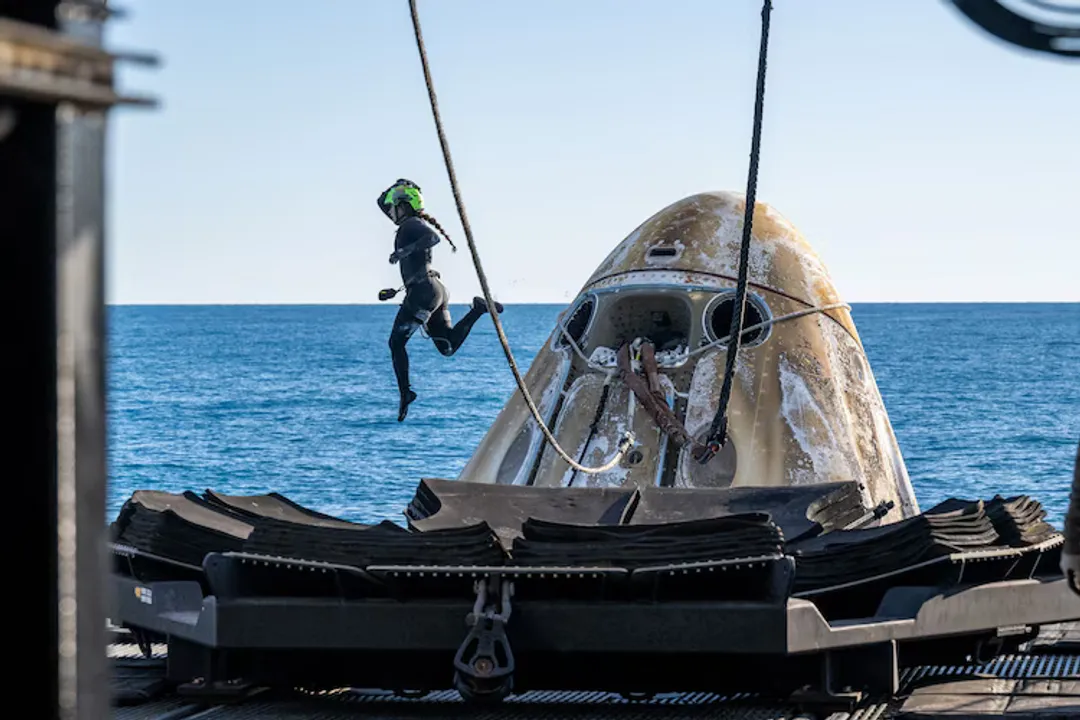
The process for bringing the Boeing Starliner spacecraft back to Earth is a precise, multi-phased operation designed to safely transition the vehicle from orbital velocity to a controlled ground landing. This sequence hinges on a series of automated events, beginning with leaving the International Space Station (ISS) and culminating in touchdown, often in the deserts of the American Southwest. The complexity of this final maneuver is significantly influenced by whether the capsule is returning with crew or as an uncrewed test article, a distinction that has been relevant in recent mission profiles.
# Departure Sequence
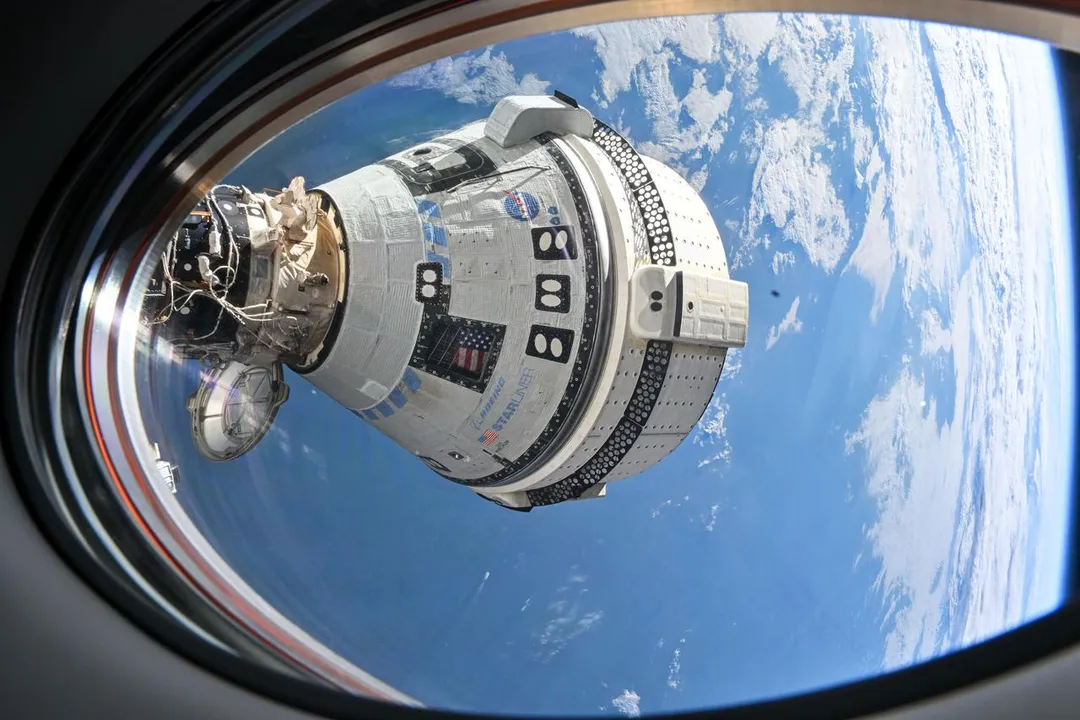
Before the actual return to the atmosphere can begin, the Starliner must undock from the ISS. This departure is initiated autonomously, following checks and commands from ground control. The capsule uses its propulsion system to gently push away from the station, establishing a safe separation distance before the critical deorbit burn sequence is set into motion. This departure phase is crucial, as it marks the point of no return for the rest of the orbital maneuvers needed for entry.
For missions involving astronauts, such as the Crew-9 assignment, the return timeline is often adjusted based on mission objectives and the vehicle's health throughout its stay in orbit. In one notable instance, NASA made the decision to bring the Starliner capsule back to Earth without the crew aboard following an anomaly identified during its initial flight test, underscoring the agency's commitment to reviewing vehicle performance before committing astronauts to the return phase. This decision itself highlights a major contingency in the return planning: ensuring the vehicle's systems are thoroughly vetted before the final descent with personnel onboard.
# Deorbit Burn

The most defining maneuver of the return sequence is the deorbit burn. This is a precisely timed firing of the capsule's engines—specifically the forward maneuvering thrusters—to slow the vehicle down just enough to lower its orbital path so that it intersects with the Earth's atmosphere at a specific point. The timing of this burn is everything; a few seconds too early or too late can shift the landing zone by hundreds of miles. The burn lasts for several minutes, reducing the vehicle’s speed from approximately 17,500 miles per hour, which is necessary to remain in orbit, to a speed where gravity can pull it down onto a designated re-entry corridor.
The Starliner’s autonomous systems manage this maneuver, but mission controllers at NASA monitor the execution closely. If an anomaly were to occur, there are protocols, but the success of this burn directly dictates the safety margin for the subsequent atmospheric interface. For instance, understanding that the deorbit burn must place the capsule on a specific trajectory to compensate for atmospheric drag and winds during descent is key. A land landing profile, as intended for White Sands, demands a tighter entry corridor than a typical oceanic splashdown might, requiring absolute precision in this initial braking maneuver.
# Atmospheric Interface

Once the deorbit burn is complete, Starliner begins its long arc back toward the planet. The vehicle separates into two primary components: the service module, which contains propulsion systems and solar arrays, and the crew or cargo module. The service module is jettisoned just before the capsule strikes the densest parts of the atmosphere because it cannot withstand the extreme heat and stress of re-entry.
The capsule then hits the upper layers of the atmosphere at hypersonic speeds, reaching temperatures that can climb above 3,000 degrees Fahrenheit. During this phase, the vehicle's heat shield does the heavy work of protecting the interior from incineration. The craft is oriented so that the heat shield faces forward, absorbing the brunt of the thermal and aerodynamic forces. The navigation and control system actively manages the spacecraft’s orientation to keep the heat shield properly positioned and to manage the aerodynamic forces, which helps steer the capsule toward the intended landing area.
# Parachute Deployment
As the Starliner slows down significantly upon encountering lower atmospheric pressures, the tension on the structure lessens, allowing for the deployment of the drag-reduction systems—the parachutes. The sequence is staggered to manage the forces exerted on the vehicle and its contents. First, two smaller pilot chutes are ejected to pull off the forward heat shield, which is necessary to expose the main parachutes.
Following the deployment of the pilot chutes, the main parachute system deploys. This typically involves three large main parachutes working together to drastically slow the capsule down for a survivable landing impact. The final stage of the descent is characterized by this slowed, controlled fall, guided by GPS and sophisticated avionics.
It is worth noting the operational differences between a land landing system like Starliner’s and the splashdown method utilized by SpaceX’s Dragon. While splashdown relies on water's drag and subsequent recovery by recovery teams from the ocean, Starliner’s land landing requires a perfectly flat, clear area, like the White Sands site, to absorb the final impact energy through its landing legs and the remaining air resistance. The necessity of preparing a terrestrial landing zone, complete with ground crews and recovery vehicles waiting at the specific coordinates, introduces a logistical dimension to the return that is absent when landing in the ocean, where recovery ships are often staged over a broader area.
# Ground Landing Finality
The culmination of the return sequence is the ground landing at the U.S. Army White Sands Missile Range in New Mexico. The Starliner's design specifies landing on firm ground, utilizing its own landing gear to absorb the final impact once the parachutes have slowed it to a velocity low enough for the structure to remain intact. This methodology means that as soon as the capsule touches down, recovery teams can physically access it much faster than if it had landed in water, offering immediate access to the vehicle and, if crewed, the astronauts.
The area chosen, White Sands Space Harbor, is a designated landing site that has been prepared for decades for various capsule returns, offering a relatively clear, dry environment ideal for this type of landing. The ability to land on land, rather than water, is a key differentiator in Starliner’s design philosophy for returning crew and cargo safely to U.S. soil, providing a different set of challenges and opportunities for post-landing operations compared to other spacecraft architectures.
# Autonomous Control Decisions
Throughout the deorbit, entry, and landing phases, the Starliner operates with a high degree of autonomy. While human oversight from the ground is constant, the decision-making regarding trajectory correction burns, atmospheric steering adjustments, and parachute deployment timing is largely managed by the spacecraft's onboard computers. This automation is vital, as the time delays in communication over vast distances or the sheer speed of the atmospheric interface preclude constant real-time human intervention for every micro-adjustment.
The situation where the Starliner returned without its crew—an event stemming from technical reviews after an earlier flight test—demonstrates that while the system is designed for crewed flight, the return sequence itself is robust enough to be commanded safely without human intervention onboard, provided ground teams clear the flight parameters. This level of independent return capability is a critical safety benchmark for any operational human-rated vehicle. An interesting analytical point is that an uncrewed return, while necessitated by anomaly review in one instance, potentially allows engineers to gather data during the high-stress entry phase that might otherwise be compromised by crew G-load or life support monitoring priorities. This trade-off—data gathering versus immediate astronaut extraction—is a subtle but important aspect of mission planning when the vehicle's performance is under scrutiny.
# Crew Transfer Context
The return journey is deeply linked to the ongoing human spaceflight operations, particularly concerning astronaut rotation schedules. For example, the Crew-9 mission involved a novel plan where the astronauts were slated to return to Earth on the Starliner after spending time on the ISS, while another crew was scheduled to launch to the ISS on the SpaceX Crew Dragon. In the end, NASA decided to bring the Starliner capsule back without the crew, which meant the astronauts stayed on the ISS longer and awaited a different ride home. This context shows that the return of the vehicle is often decoupled from the return of the crew, based on mission safety decisions made well in advance of the planned date. The timeline for the initial June launch, and subsequent adjustments, clearly illustrates that the return schedule is fluid until the deorbit burn is executed.
The process, therefore, is less a single fixed procedure and more a flexible sequence that accommodates both nominal crewed returns and necessary uncrewed contingency returns, all while adhering to the physical limitations and capabilities designed into the capsule for atmospheric deceleration and ground impact. This built-in adaptability, whether it’s the ability to handle a land landing or the authorization for an unmanned descent, speaks to the engineering philosophy underpinning the Starliner program.
#Videos
Boeing Starliner returns to earth without astronauts | BBC News
A Closer Look At Starliner's Return To Earth - YouTube
Related Questions
#Citations
NASA Decides to Bring Starliner Spacecraft Back to Earth Without ...
The Boeing Starliner Has Returned To Earth Without Its Crew
Starliner astronauts return to Earth after being stuck in space for 286 ...
Boeing Starliner returns to earth without astronauts | BBC News
Starliner astronauts' return to Earth finally near as replacement crew ...
How did Boeing's Starliner autonomously return to Earth, and why ...
Starliner astronauts head back to Earth with SpaceX Crew-9 duo to ...
Timeline of Boeing's Starliner mission that left NASA astronauts ...