Has SpaceX successfully landed a Starship?
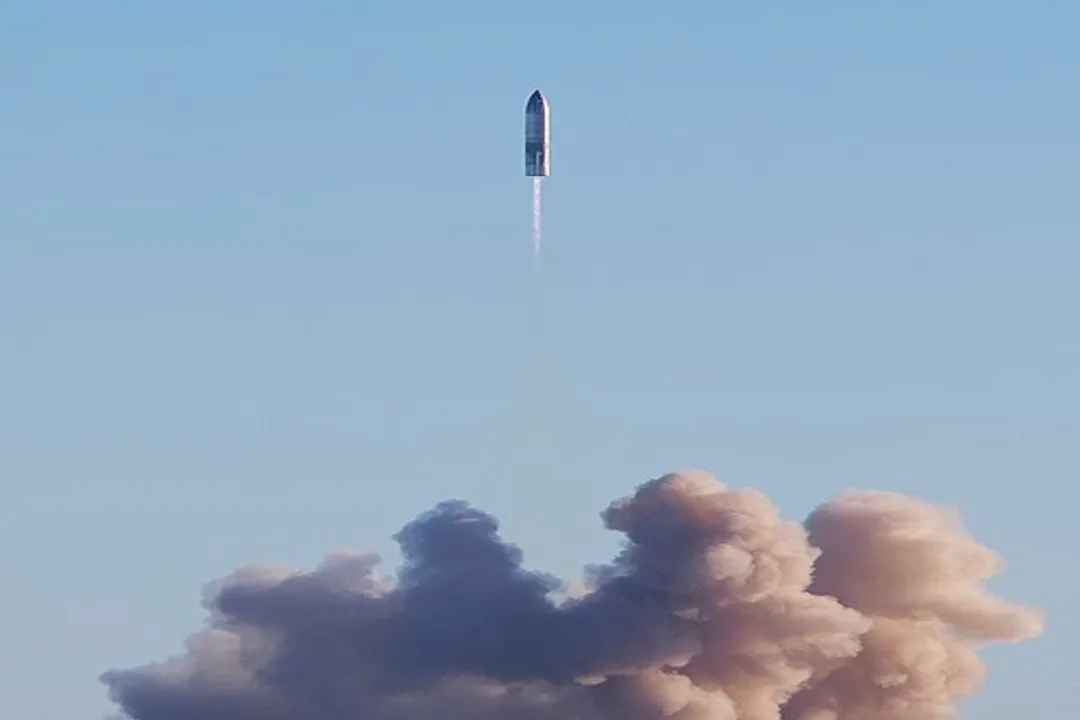
The most immediate answer to whether SpaceX has successfully landed a Starship is that the term needs careful definition, as the full vehicle comprises two distinct parts, both with their own landing challenges: the Super Heavy booster and the Starship upper stage. As of the eleventh integrated flight test on October 13, 2025, SpaceX has demonstrated extraordinary success with the lower stage but has yet to secure an intact, controlled, powered landing of the upper stage spacecraft. [1][2]
# Booster Recovery
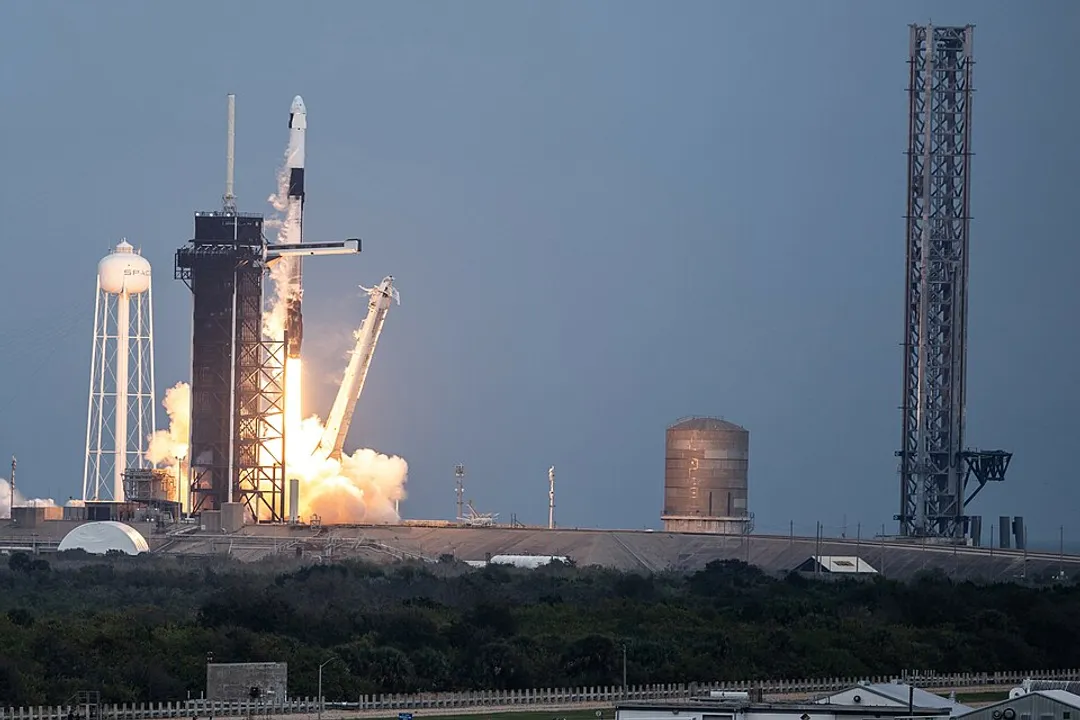
The Super Heavy first stage has arguably achieved its core recovery goal, though not always in the most aesthetically pleasing way. The primary ambition for the booster has been a return to the launch tower to be caught by its massive mechanical "chopsticks," which allows for the fastest potential turnaround. [1]
This mid-air capture was successfully demonstrated for the first time on Flight 5 in October 2024, when Booster 12 was safely caught after its mission. [1] This was a monumental step, removing the need for landing legs and saving significant mass. [1] However, subsequent flights have shown variation in the landing objective. For instance, Booster 14 was caught on Flight 7, marking the second successful catch, though the Ship was lost on ascent. [1] On Flight 10 in August 2025, Booster 16 executed a controlled splashdown offshore in the Gulf of Mexico, deliberately simulating an engine failure during its descent to test the system's compensation capabilities. [3] The following flight, Flight 11, saw Booster 15-2 also perform a splashdown after a single engine failure during the boostback burn which later relit for the landing burn. [2] These water landings confirm the booster's ability to return and decelerate to a near-hover state over the water, as Flight 11's booster "hovered above the water before shutting down its engines and splashing down". [2] This means the Super Heavy booster has been successfully recovered via both controlled water landing and tower catch, making it the only orbital-class booster to have achieved this level of reusability testing. [1][3]
# Ship Resilience
The upper stage, the Starship spacecraft itself, carries the heavier burden of entering the atmosphere and performing a complex powered landing maneuver. The objective for the Ship is a vertical landing, requiring the famous "belly-flop" maneuver to slow down, followed by a final landing flip and engine burn. [1]
Progress toward this has been measured in surviving the ascent and reentry environment. Flight 4 in June 2024 was a significant turning point, as the Ship survived peak heating during reentry and achieved a controlled splashdown in the Indian Ocean. [1] While this was an ocean landing, it proved the heat shield and control surfaces could survive the atmospheric transit. [1] Flight 5 achieved a soft splashdown in the Indian Ocean, though the vehicle was lost after that point. [1]
The subsequent Block 2 ships faced persistent challenges in the final descent phase. Flight 11, the final flight of the Block 2 configuration, saw Ship 38 successfully complete its landing flip and landing burn, achieving a soft splashdown in the Indian Ocean. [2] However, this success was immediately followed by the vehicle tipping over and exploding, a recurring failure mode when the flip or final engine control is not perfectly executed just prior to or immediately post-touchdown. [1][2]
# Landing Sequence Details
The final seconds of the Ship's flight profile are where the most valuable, yet costly, data is being gathered. The final maneuver involves relighting the sea-level engines, performing the flip, and executing the landing burn using fuel from the header tanks. [1] On Flight 11, the ship managed to relight one engine in space and later relit its three sea-level engines for the landing burn, flipped vertical, and softly splashed down before the tip-over. [2] This demonstrates an incredible mastery of engine restart in a vacuum and control during the final powered descent, even if the vehicle's stability was lost at the very end. [2]
It is noteworthy that the iterative development means the ship is currently solving challenges that the booster had already overcome years earlier. While the Falcon 9 booster achieved reuse relatively quickly, the Starship system has to prove reusability for both stages, with the Ship stage being inherently more complex due to its atmospheric reentry requirements. [3] The fact that the Ship has reached engine cutoff and survived reentry multiple times, despite increasing complexity in design (Block 2 vs. Block 1), shows that the core challenge has shifted from reaching space to controlling the return. [1][2]
# Strategic Value of Failures
The community recognizes that the development style prioritizes rapid iteration over avoiding early failures, especially when the vehicle is a test article and not carrying customer payloads. [3] The data gleaned from these terminal events is crucial for the next design block. For example, Flight 11 was designed to intentionally stress the heat shield by having missing tiles, yet the reentry was largely undamaged compared to previous attempts, confirming significant learning in the thermal protection system despite the final loss of vehicle control. [2] This focus on gathering reentry data, even at the expense of a perfect landing, suggests a strategic choice: mastering the heat shield is a harder prerequisite for returning from deep space than mastering the final engine flip, which can be refined on subsequent, more heat-shield-verified flights. [2]
The contrast with the Super Heavy booster is telling. While the booster has managed successful controlled water landings, even simulating engine outages during the return, [3] the Ship is still perfecting the last few seconds of its controlled aerodynamic and propulsive maneuvers. This differentiation highlights that the Ship's ability to manage its attitude control during the final hover—using the Raptor engines' gimbaling capability—remains the final, most difficult hurdle for a successful landing. [1]
# Next Iteration
With Flight 11 marking the last flight of the Block 2 configuration, the focus is now on Block 3 vehicles, which incorporate hardware for in-orbit refueling—a technology essential for any lunar or Mars mission. [1] Future success hinges on integrating these new systems while retaining the increasingly robust performance of the reentry and landing sequence, even if the final touchdown remains elusive. The path forward involves testing Block 3 ships, which may feature Raptor 3 engines and different tile designs, aiming for the first true orbital flight and the ultimate goal of a catch or intact landing on land or sea. [1] The successful demonstration of water-landing compensation for the booster, coupled with the detailed reentry data from the last several Ships, suggests that the next phase will likely see these capabilities combined, pushing the vehicle past the soft splashdown and into a true vertical landing.
Related Questions
#Citations
Starship's Eleventh Flight Test - SpaceX
SpaceX Starship - Wikipedia
SpaceX successfully launches Super Heavy-Starship on critical test ...
SpaceX has now developed, landed, and successfully reflown two ...