Why did Starship explode in the water?
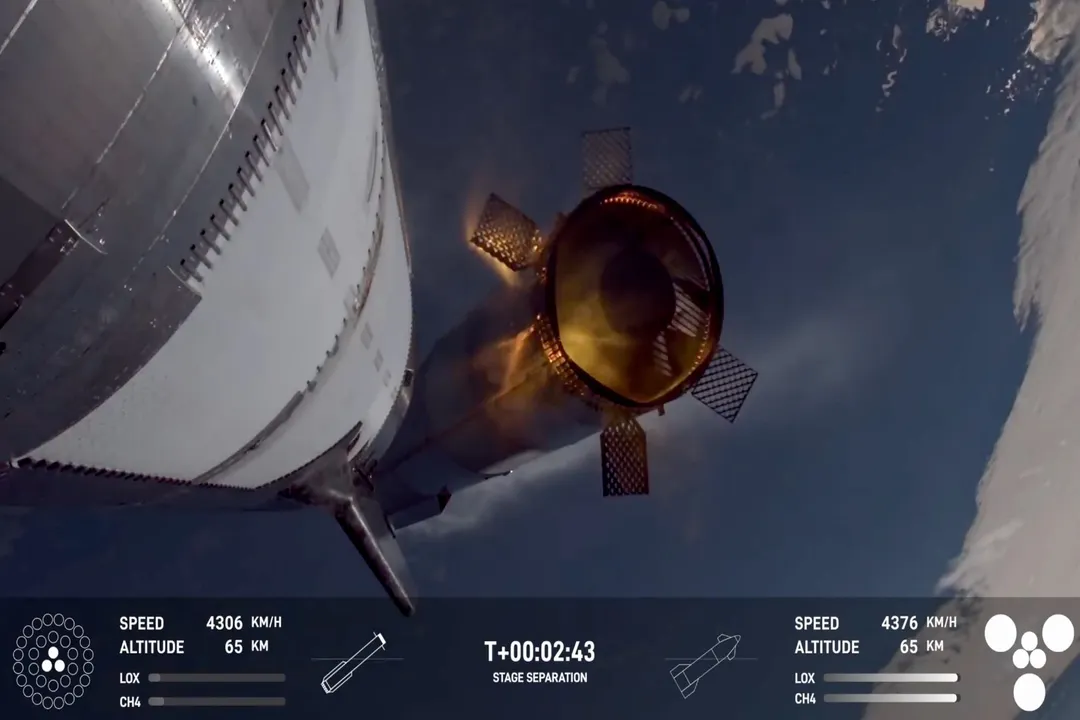
The spectacle of a massive rocket exploding, whether high in the atmosphere or upon reaching its designated splashdown zone, inevitably captures public attention, prompting questions about the nature of the failure. When discussing SpaceX’s Starship, these dramatic end-of-test events have occurred during various stages of its Integrated Flight Tests (IFTs), leading many viewers to ask precisely why the vehicle fails to survive the concluding phase of its mission profile. The answer is not singular, but rather a combination of the extreme complexity of testing hardware at this scale, the inherent risks associated with the propellants used, and a fundamental aspect of SpaceX’s iterative development philosophy.
For general readers unfamiliar with rocketry development, the expectation is often that a successful flight culminates in a gentle landing or splashdown. However, for Starship prototypes, survival through the initial tests was secondary to data acquisition, meaning that an explosive end was often an expected, albeit undesirable, outcome of certain test objectives. The sheer scale of the Starship vehicle and its Super Heavy booster introduces variables that are nearly impossible to fully model on the ground, necessitating real-world stress testing.
# Iterative Design
The process SpaceX employs for developing Starship is fundamentally different from traditional, slower-paced government programs, relying instead on rapid iteration where failure provides crucial feedback. This is not a criticism but an acknowledgment of their stated methodology: build, fly, fail, fix, repeat quickly. Each test flight, whether it ends early due to engine failure or successfully completes its atmospheric phase only to fail during descent or impact, is scrutinized to understand the breaking points of the system.
When a Starship prototype is lost, whether mid-flight or upon reaching the water, the primary objective shifts from mission success to data capture. Engineers are looking for telemetry data indicating the precise moment and nature of the failure—was it structural? Was it a control issue? Were the engines performing as expected up to that point? This necessity for data often means that pushing the vehicle to its operational limits, or slightly past them, is the entire point of the exercise.
The testing schedule has been characterized by significant vehicle losses. For instance, one test flight resulted in the loss of the vehicle, with the mission being classified as a failure by traditional metrics, though it provided valuable flight data nonetheless. This rapid succession of tests, often months apart, demonstrates an attempt to compress years of traditional development time into a matter of months, accepting the risk of losing expensive hardware to accelerate learning.
# Splashdown Event Triggers
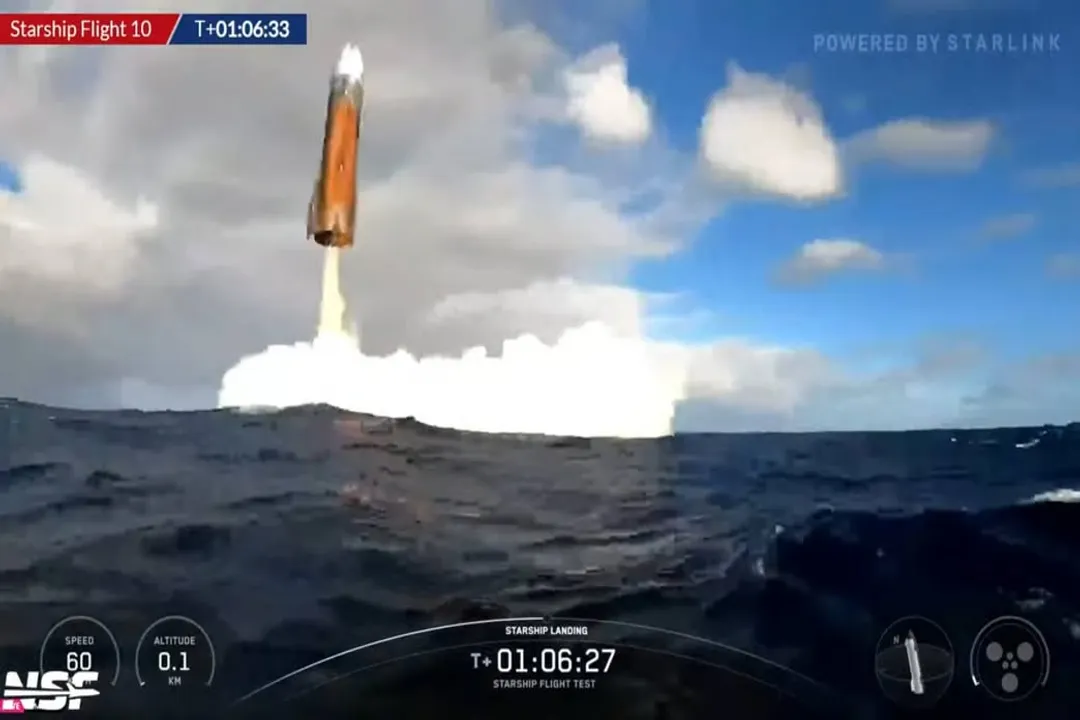
Focusing specifically on incidents where the vehicle reached the intended splashdown area, such as the Starship 10 (S10) test, the outcome was a fiery explosion shortly after contact with the water. While the vehicle managed to successfully perform its descent and engine cutoff maneuvers, the final moments proved fatal to the prototype. On closer inspection of specific post-landing incidents, industry analysis points toward a critical interaction between the vehicle's internal state and the environment of the ocean surface.
Elon Musk indicated that for one particular post-splashdown event, the explosion was likely triggered by a propellant leak. This is a key piece of information that distinguishes a landing failure from a mid-flight breakup. During a controlled landing or splashdown sequence, the goal is typically to shut down all engines and vent or secure the remaining propellants—in this case, cryogenic liquid methane (fuel) and liquid oxygen (oxidizer)—before impact.
If a leak occurs in the plumbing or tanks before or during the final moments of impact, the volatile mixture of fuel and oxidizer can escape into the atmosphere or mix directly with the seawater.
The immediate danger post-splashdown often stems from the difference between the vehicle's primary propellant combination and what is normally considered 'fuel' on Earth. Methane/LOX is highly energetic, and an uncontrolled release in proximity to an ignition source—perhaps even static electricity or residual heat from the landing burn—creates the potential for a massive fireball, as witnessed in that specific landing attempt.
This highlights a significant engineering challenge. Landing a massive, complex vehicle softly is one difficult task; landing it and ensuring every valve, seal, and tank integrity holds up under the immense, unpredictable shock loading of water impact, while simultaneously managing cryogenic boil-off, is another level of complexity entirely. A minor seal failure that might be inconsequential during a standard ground test can become catastrophic when combined with the G-forces and dynamic pressures of a high-velocity water impact.

# Engineering Failures Versus Test Objectives
It is important to differentiate between a genuine engineering failure that stalls progress and a failure that occurs while achieving a specific, ambitious test objective. In the case of Starship IFTs, many of the spectacular in-flight breakups were not simply random explosions; they were often the result of losing primary control systems or multiple engines, leading to aerodynamic breakup or aerodynamic instability caused by an unplanned thrust imbalance.
For example, if a test is specifically designed to push the vehicle's aerodynamic envelope beyond what was previously flown, and the structure fails due to aerodynamic loads, the test was arguably successful in gathering the necessary load data, even though the hardware was destroyed.
Contrast this with the post-splashdown fire. If the propellant leak was the cause, this points to a specific failure in the shutdown and securing phase of the test profile. This type of failure is crucial because it dictates design changes for the final operational vehicles, suggesting that the tanks and propellant management system need more redundancy or better sealing mechanisms for the final moments of flight when ground crew cannot intervene.
Here is a comparison of potential failure modes observed during testing, focusing on where the system exceeded its design limits:
| Failure Mode | Typical Location | Implication for Design |
|---|---|---|
| Engine Out/Standoff | Ascent/Mid-flight | Thrust vector control, engine redundancy, sequencing logic |
| Aerodynamic Breakup | High dynamic pressure (Max Q) | Structural strength, thermal protection system integrity |
| Propellant Leak/Fire | Post-landing/Splashdown | Cryogenic sealing, environmental hazard mitigation |
| Guidance Loss | Descent Phase | Control authority margins, atmospheric density modeling |
When considering the data from these various failures, one must appreciate the trade-offs involved in testing a vehicle intended for Mars missions. A too gentle landing profile might mean the test didn't adequately replicate the stresses of rapid deceleration or high-impact contingency scenarios. Allowing the vehicle to hit the water with sufficient velocity to induce significant structural loads, even if it results in a fire afterward, provides vital information about the vehicle's strength margins at those impact velocities. If the goal of a specific test was a "soft landing," then the fire indicates failure; if the goal was to test the structural integrity of the structure through a hard simulated landing, the resulting data collection might be deemed a success in gathering required knowledge.
# Cryogenic Hazards and Water Impact
The choice of propellants—liquid methane () and liquid oxygen ()—is central to understanding the severity of an explosion near the ground or water. These propellants are stored at extremely cold temperatures, making them cryogenic.
When a vehicle designed to contain these propellants ruptures upon impact, the rapid depressurization and warming of the contents cause them to flash into gas extremely quickly. The gaseous methane then mixes with the ambient air and the readily available liquid oxygen from the vehicle's own tanks, creating a massive, highly energetic fuel-air mixture.
Consider the kinetic energy involved. Starship is a colossal machine designed to return from space. Even at the slow speeds of a propulsive landing, the remaining momentum, when abruptly stopped by water, transfers immense shock energy through the airframe. This energy surge is more than enough to shear pipes or crack welds that held strong moments before. It is this secondary mechanical failure, induced by the sudden stop, that often precedes the propellant release and subsequent ignition.
The very nature of cryogenic fuel management means that as soon as the flight is over, the clock starts ticking on venting the tanks to prevent pressure buildup, a process that must be executed perfectly before the vehicle settles onto the water. If the venting procedure is incomplete, or if the water impact mechanically overrides the seals before venting is complete, the resulting explosion is almost inevitable for an ignited spill.
# Looking Ahead: Designing for Survival
The constant stream of data derived from these explosive conclusions directly informs the next iteration of the vehicle. For instance, if multiple flights show failure modes related to engine section integrity during descent, the design team will reinforce those sections or alter the flight control software to prevent the conditions that led to the failure.
The goal is clearly to move beyond these explosive endings to routine, controlled splashdowns or soft landings. This transition requires achieving near-perfect structural integrity across all stages of high-stress maneuvering and final contact. It means ensuring that the hardware necessary for terminal maneuvers—like the landing legs or, in a potential future scenario, the landing burn itself—can function flawlessly under conditions that involve significant aerodynamic buffeting and high dynamic loading.
As development matures, the definition of a "successful test" will shift. We are likely moving out of the era where losing the vehicle to understand its limits is an acceptable trade-off, and entering an era where the expectation is for the vehicle to survive the test, demonstrating operational readiness. This shift requires moving from designing to the failure point to designing away from it, incorporating safety margins that were previously skipped in favor of speed and data acquisition. The public spectacle of the explosion often overshadows the quiet, incremental improvements in the telemetry that the engineers are actually using to build the next, more capable vehicle.
#Videos
Why Did SpaceX's Starship Explode? What does it mean ... - YouTube
What Exactly Happened On SpaceX's Tenth Starship Flight Test?
Related Questions
#Citations
Why does SpaceX's Starship keep exploding? : r/SpaceXLounge
Why Did SpaceX's Starship Explode? What does it mean ... - YouTube
SpaceX Starship Explosion Likely Caused by Propellant Leak, Elon ...
Was starship 10 explosion intentional? - Facebook
Why was Space X's Starship blown up?
SpaceX Starship explosion likely caused by propellant leak, Elon ...
Well the Starship 10 flight was successful, except it blew up when it ...
SpaceX's Starship test flight ends with rocket explosion - WESH