What is SpaceX's most powerful engine?
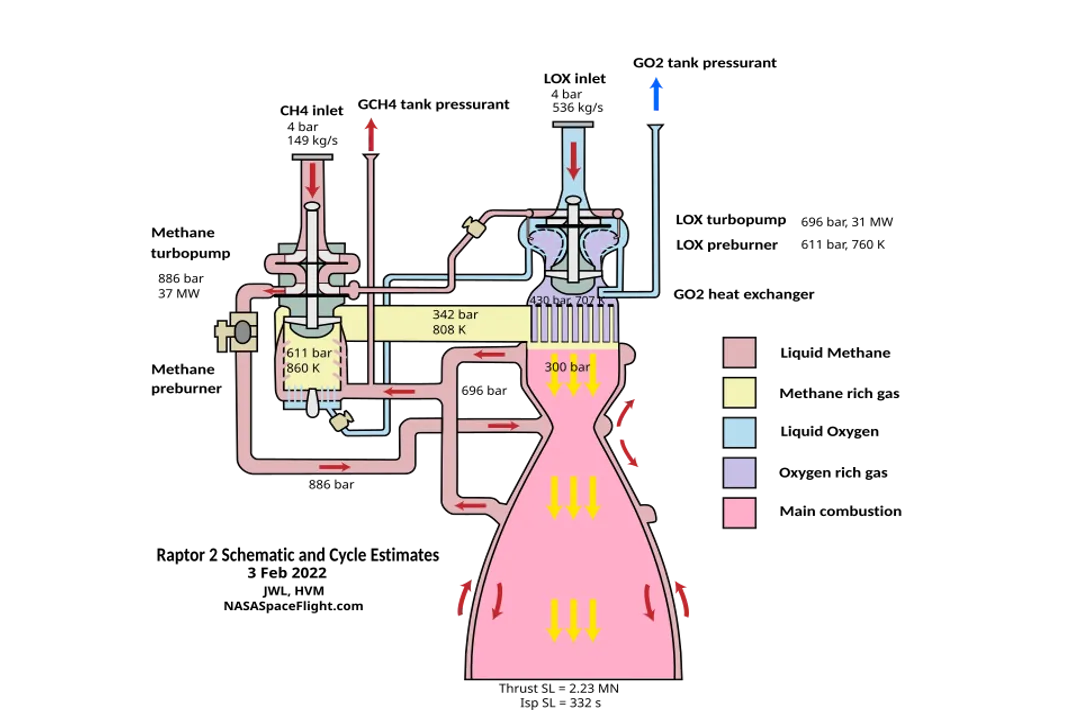
The most powerful engine propelling SpaceX's ambitions to Mars and beyond is undoubtedly the Raptor engine, a marvel of modern rocketry engineering designed specifically for the colossal Starship launch system. [1][3] It represents a generational leap over the Merlin engines that have reliably served the Falcon 9 and Falcon Heavy rockets, marking a fundamental shift in how the company approaches propulsion for deep space travel. [6]
# Engine Identification
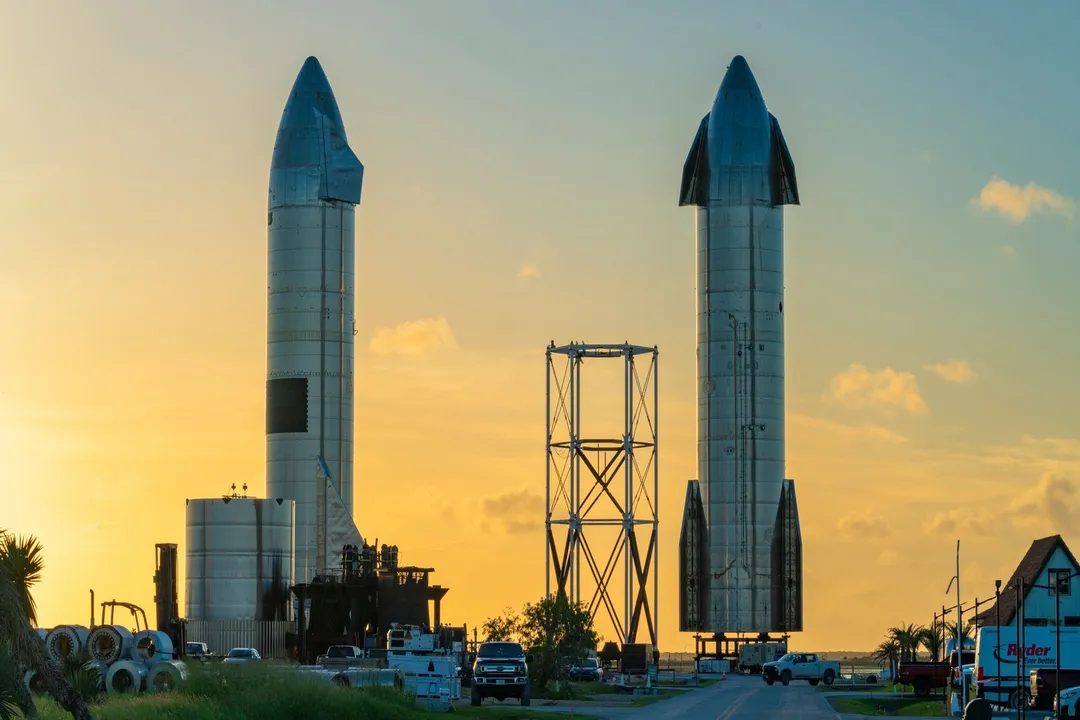
The Raptor is the powerhouse driving both stages of the Starship architecture: it fires off the Super Heavy booster, and it also operates within the Starship upper stage itself, though configured slightly differently for vacuum versus sea-level operation. [3] This standardization—using one engine family across two very different stages—simplifies logistics and manufacturing, a core tenet of SpaceX’s philosophy for rapid reusability. [1] Unlike the venerable, relatively simple Merlin engines that use the gas-generator cycle, the Raptor employs a significantly more complex and efficient design: the full-flow staged combustion cycle. [1][8]
# Power Metrics
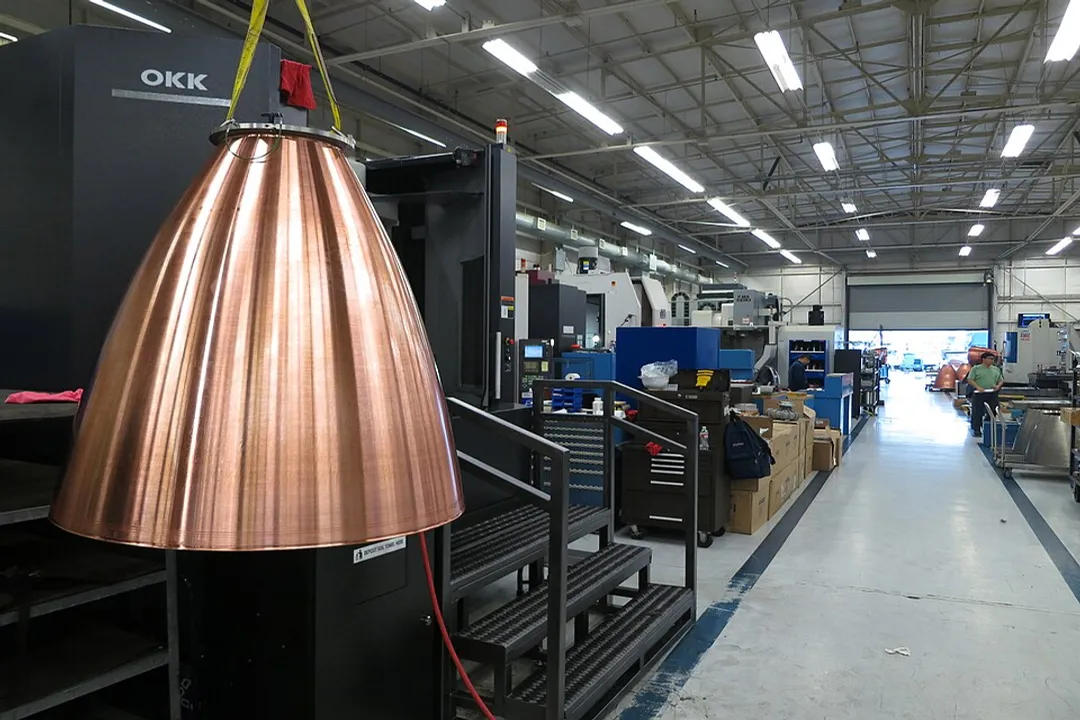
This advanced cycle is what grants the Raptor its immense power output, making it the most powerful operational chemical rocket engine today. [1] While early iterations existed, the focus quickly shifted to the significantly improved Raptor 2 and, subsequently, the Raptor 3 variants. [7]
A key specification that highlights its capability is the thrust produced at sea level. The Raptor 2, for instance, is rated to produce over 230 metric tons of force (approximately 510,000 pounds-force), depending on the specific model and testing configuration. [1] This level of power is critical, especially when considering the sheer number required for the Super Heavy first stage. To lift the fully stacked Starship vehicle off the pad, the Super Heavy booster is designed to utilize 33 Raptor engines firing concurrently. [4][3] To put the scale into perspective, the thrust of a single modern Raptor engine approaches that of an entire early-stage Falcon 9 first stage, which used nine Merlins. [6]
The chamber pressure achieved by the Raptor is also staggering, pushing the limits of material science. It operates at pressures nearing 300 bar (about 4,350 psi), far exceeding most current operational engines. [1][8] This high pressure directly translates to higher efficiency, meaning the engine squeezes more energy out of its propellant mix—liquid methane and liquid oxygen ( and ). [1]
| Engine Variant | Cycle Type | Propellant | Estimated Sea-Level Thrust (lbf) |
|---|---|---|---|
| Merlin 1D | Gas-Generator | RP-1/LOX | ~188,000 |
| Raptor 2 | Full-Flow Staged Combustion | Methane/LOX | ~510,000 |
| Raptor 3 | Full-Flow Staged Combustion | Methane/LOX | Higher than R2 (Est.) |
The shift to methane as fuel, shared with competitors like Blue Origin's BE-4 engine, provides advantages over the highly refined kerosene () used by the Merlin. Methane is cleaner burning, which reduces carbon deposits inside the engine, thereby simplifying the reusability requirements—a major consideration when an engine is expected to fly dozens or hundreds of times. [9][1]

# Technical Advancement

The defining feature of the Raptor is its adoption of the full-flow staged combustion cycle. [1] This design is notoriously difficult to master, which is why so few engines have ever employed it successfully. [8] In this cycle, both the fuel-rich and oxidizer-rich gas streams that power the preburners are sent into the main combustion chamber, rather than just one stream (as in the traditional staged combustion cycle used by the Russian RD-180). [1][8]
This architecture offers two primary benefits that justify the developmental headache: higher thrust and greater efficiency. [1] By routing all preburner exhaust through the main chamber, the engine maximizes propellant utilization. This complexity means that initial development was lengthy and fraught with challenges, necessitating numerous iterative tests, including many witnessed publicly by space enthusiasts. [2][5] Engineers needed to perfect the balance of extreme temperatures and pressures within the turbopumps and injectors before the engine could be considered flight-ready for orbital missions. [8]
# Iterative Design
SpaceX’s methodology for developing the Raptor showcases an intense focus on rapid iteration, often testing hardware until failure to quickly map out the performance envelope. [8] The initial versions, Raptor 1, served primarily as technology demonstrators to validate the full-flow cycle concept. [7] Once that proof-of-concept was established, the focus shifted to creating a production-ready unit with the Raptor 2.
The jump from Raptor 1 to Raptor 2 involved substantial refinement aimed at manufacturing simplicity, reliability, and increased performance. [7] Sources indicate that the Raptor 2 achieved its target sea-level thrust while significantly reducing part count and streamlining manufacturing processes compared to its predecessor. [1][7] The even newer Raptor 3 variant, whose initial statistics have been shared, aims to push the performance envelope even further, likely increasing thrust and specific impulse () while maintaining or improving durability for rapid turnaround. [7] This constant tuning is essential when you consider the sheer inventory SpaceX must field; the Super Heavy alone needs 33 engines, and the Starship upper stage requires six more for its initial configuration. [3][4]
When considering the operational tempo SpaceX aims for, the ability to quickly service and refurbish these complex machines is paramount. A simpler design, even if it starts with a slightly lower initial performance ceiling, often proves superior when measured over hundreds of flights due to lower maintenance downtime. [8]
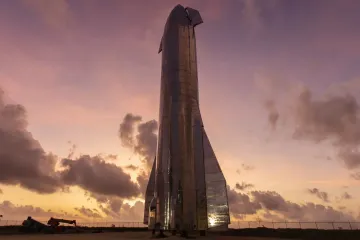
# Comparative Power
To truly grasp the magnitude of the Raptor, it helps to contrast it against the engines that defined the previous era of American rocketry. The Merlin 1D, powering the highly successful Falcon 9, produces about 188,000 pounds of thrust at sea level. [6] The Raptor 2 delivers roughly 2.7 times the thrust of a single Merlin 1D. [1]
Another useful comparison is against the BE-4 engine from Blue Origin, which also utilizes the staged combustion cycle but employs a slightly different, oxygen-rich staged combustion architecture and runs on methane/LOX. [9] While the BE-4 is a very powerful engine, designed for ULA's Vulcan and Blue Origin's New Glenn, the Raptor's full-flow design generally allows it to achieve a higher thrust-to-weight ratio and higher overall performance metrics when comparing their respective production variants designed for heavy lift and deep space use. [9] The sheer quantity required for Starship is also unique; no other operational rocket demands 33 main engines on its first stage. [4] This necessitates an assembly line capable of producing these complex machines at an unprecedented pace.
This industrial scaling challenge is perhaps one of the most underappreciated aspects of the Raptor program. It is not just about designing a powerful engine; it is about perfecting a process to build dozens of them monthly, ensuring they all meet extremely tight tolerances for flight, and then rapidly turning them around after landing. One can reasonably infer that the internal testing facilities at Starbase must run non-stop, cycling through engine versions at a pace that would be unimaginable for historical aerospace programs simply to meet the flight cadence required for Starship testing and eventual operations. The pressure to achieve high reliability quickly multiplies when a single booster demands 33 engines to perform identically during a high-stress ascent phase. [4]
# Architecture Requirement
The necessity for an engine as powerful as the Raptor stems directly from the goals of the Starship program: full and rapid reusability of both stages, and the ability to send significant payloads, or people, to the Moon and Mars. [3] Reusability places extreme demands on the propulsion system. The engines must not only lift the massive vehicle but also survive the forces of reentry and boost-back burns multiple times.
The Super Heavy booster requires all 33 engines firing to achieve the necessary thrust-to-weight ratio to escape Earth's gravity while carrying the full propellant load required for the ascent and the complex maneuvers needed for a controlled return and landing. [3] If the engines were less powerful—say, similar to the Merlins—the Super Heavy booster would need to be dramatically larger and heavier to accommodate the extra engines required to meet the necessary thrust requirement, leading to diminishing returns on the overall system architecture. [6]
The Starship upper stage uses a slightly modified version of the Raptor—the vacuum-optimized Raptor Vacuum ()—which features a much larger nozzle bell to maximize efficiency in the near-vacuum of space, though it produces less thrust at sea level than its booster counterpart. [1] However, even the six Raptors on the upper stage need to be powerful enough to push the vehicle into orbit and then execute precise maneuvers, including the crucial in-space refueling operations that will be necessary for lunar or Martian missions. [3]
It is interesting to note that by basing the upper stage on the same core engine technology, SpaceX effectively creates a dual-purpose propulsion system where engineering lessons learned from optimizing the 33-engine cluster on the Super Heavy can immediately benefit the in-space maneuvering and landing burns of the Starship itself, creating a tight feedback loop between the booster and upper-stage development teams. This consolidation of engine type across the entire stack provides an efficiency in development that bespoke engine designs for each stage simply cannot match. [1] The Raptor is, therefore, not just the most powerful engine; it is the linchpin that makes the entire Starship architecture—reusability, scale, and deep space capability—physically viable. [3]
#Videos
Pushed to the Limit - SpaceX's Starship Raptor Engines - YouTube
SpaceX revealed New Raptor 4 Upgrade, BETTER & ADVANCED ...
Related Questions
#Citations
SpaceX Raptor - Wikipedia
Pushed to the Limit - SpaceX's Starship Raptor Engines - YouTube
Starship - SpaceX
SpaceX's Raptor engine is at the heart of the company's Starship ...
SpaceX Raptor 1, 2, & 3 together. [New Raptor 3 stats in comment]
Is SpaceX's Raptor engine the king of rocket engines?
SpaceX's Raptor Engine Vs. Blue Origin's BE-4 - BGR