Why was the Indian satellite launched by SpaceX?
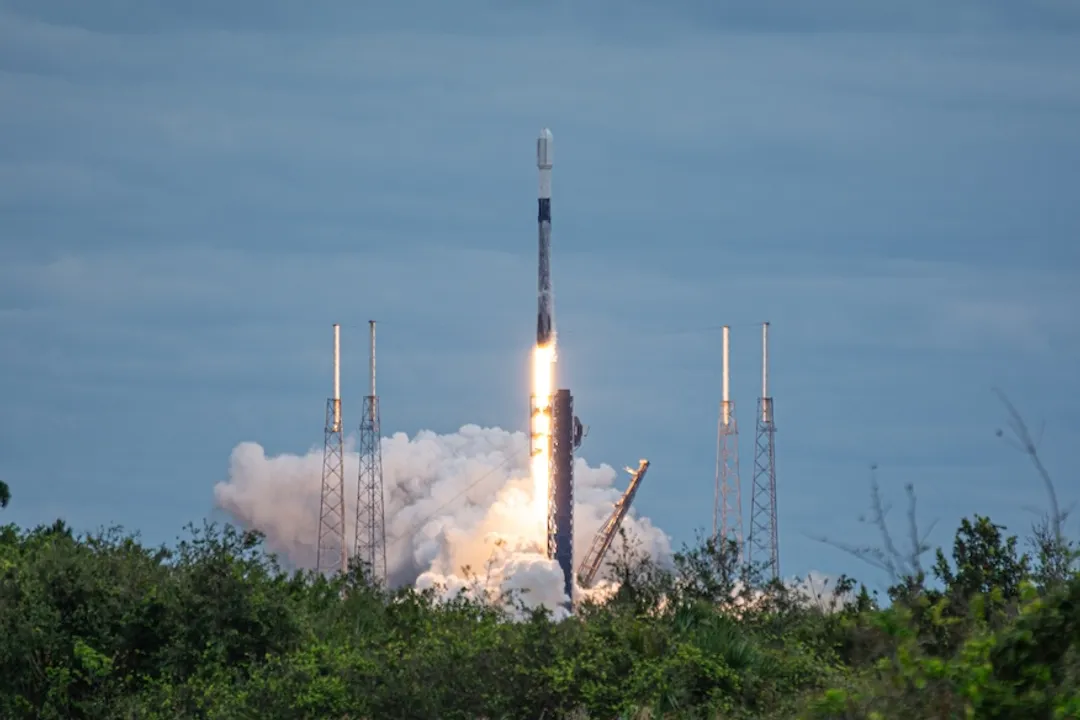
The sight of a SpaceX Falcon 9 rocket ascending from Cape Canaveral carrying a satellite destined for Indian interests marks a noteworthy moment in the global space industry. This launch, involving a significant Indian communication satellite, is not merely another entry in Elon Musk's manifest; it represents a calculated choice by an Indian entity to look beyond domestic launch capabilities for immediate mission requirements. Understanding why a prime Indian satellite would fly on a commercial rocket from a foreign company requires looking closely at scheduling pressures, evolving commercial realities, and the sheer operational tempo of modern rocketry providers. [1][5][7]
# Satellite Context

The specific spacecraft discussed in these recent launch announcements is often identified as GSAT-N2. [1] While the Indian Space Research Organisation (ISRO) is renowned globally for its cost-effective and sophisticated satellite construction, this particular mission highlights a separation between satellite manufacturing and launch procurement. [5][7] GSAT-N2 is understood to be a high-throughput communication satellite, likely intended to augment broadband and connectivity services within India. [1] It is important to recognize that while ISRO builds the technology, the launch service itself is often procured commercially, even when the satellite is for an entity closely tied to the Indian ecosystem, such as Bharti Airtel, which contracted this launch. [1][5] This distinction—between the nation building the hardware and a commercial operator purchasing the ride—is central to the decision-making process.
# Commercial Preference Drivers
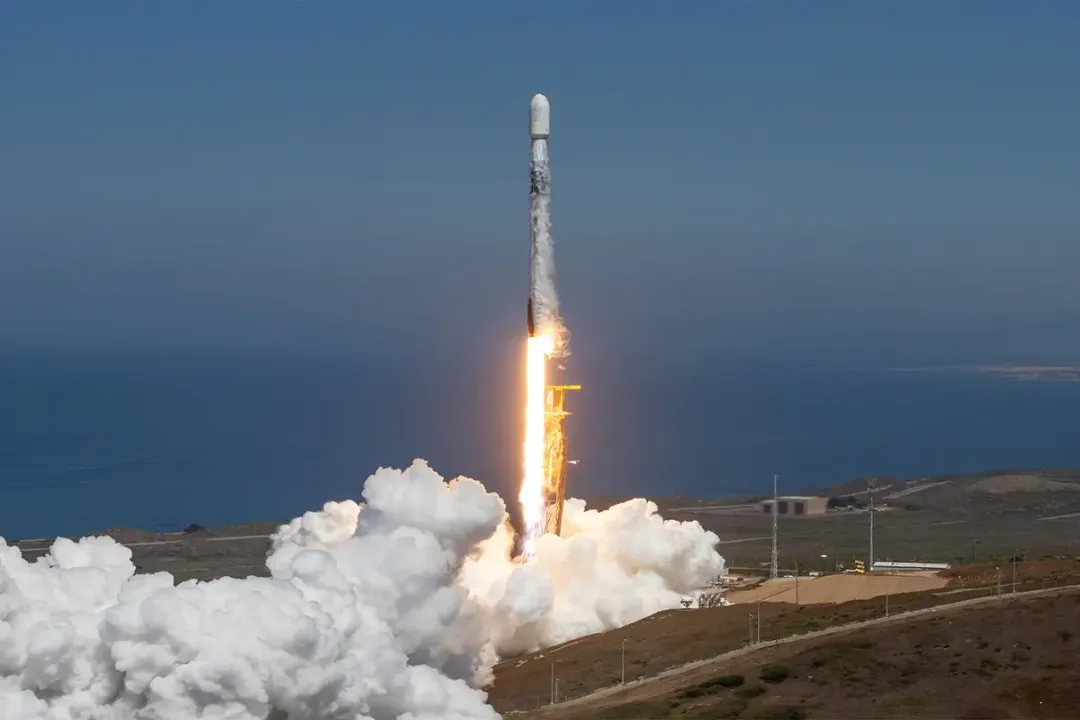
The primary reasons for an Indian entity to contract with SpaceX over ISRO for a launch generally boil down to two critical factors: time-to-orbit and schedule certainty. [7] ISRO's launch vehicles, such as the Geosynchronous Satellite Launch Vehicle (GSLV) or the Polar Satellite Launch Vehicle (PSLV), are phenomenal feats of engineering, but their flight cadence is heavily dictated by national priorities, scientific missions, and a backlog that can stretch for years. [5] For a commercial operator like Bharti Airtel, whose business model depends on timely deployment of capacity to capture market share or meet service agreements, a multi-year wait for a launch slot is financially unacceptable. [5][7]
SpaceX, operating the highly capable Falcon 9 rocket, offers a drastically different proposition. They maintain one of the highest launch rates in the world, providing customers with far greater flexibility in mission scheduling. [4] When a commercial entity pays a premium—which is what happens when paying a Western provider instead of utilizing a subsidized domestic option—they are essentially purchasing expediency. They are trading lower unit cost for faster mission execution, something the current operational load of ISRO may not always guarantee for commercial payloads. [7]
One way to visualize this market dynamic is to consider the concept of opportunity cost in space access. If an ISRO launch window for a commercial satellite opens in late 2027, but a direct competitor can get their own capacity online six months earlier by paying for a Falcon 9 launch in mid-2026, the extra launch cost is quickly offset by the revenue generated during those intervening six months of service availability.
| Factor | ISRO Launch Service (Typical Commercial Slot) | SpaceX Launch Service (Falcon 9) | Commercial Driver |
|---|---|---|---|
| Lead Time | Often multiple years (backlogged) [5] | Months, depending on manifest availability [4] | Speed to Market |
| Cost Structure | Generally lower, potentially subsidized or structured differently for domestic customers [7] | Premium commercial rates [7] | Urgency vs. Budget |
| Launch Cadence | Limited by national mission schedule [5] | Extremely high, flexible scheduling [4] | Certainty and Flexibility |
This environment shows that when Indian firms look outward, they are not necessarily stating ISRO's technology is inferior; rather, they are seeking the commercial velocity that the US commercial launch sector currently provides. [7]
# Reliability Factor
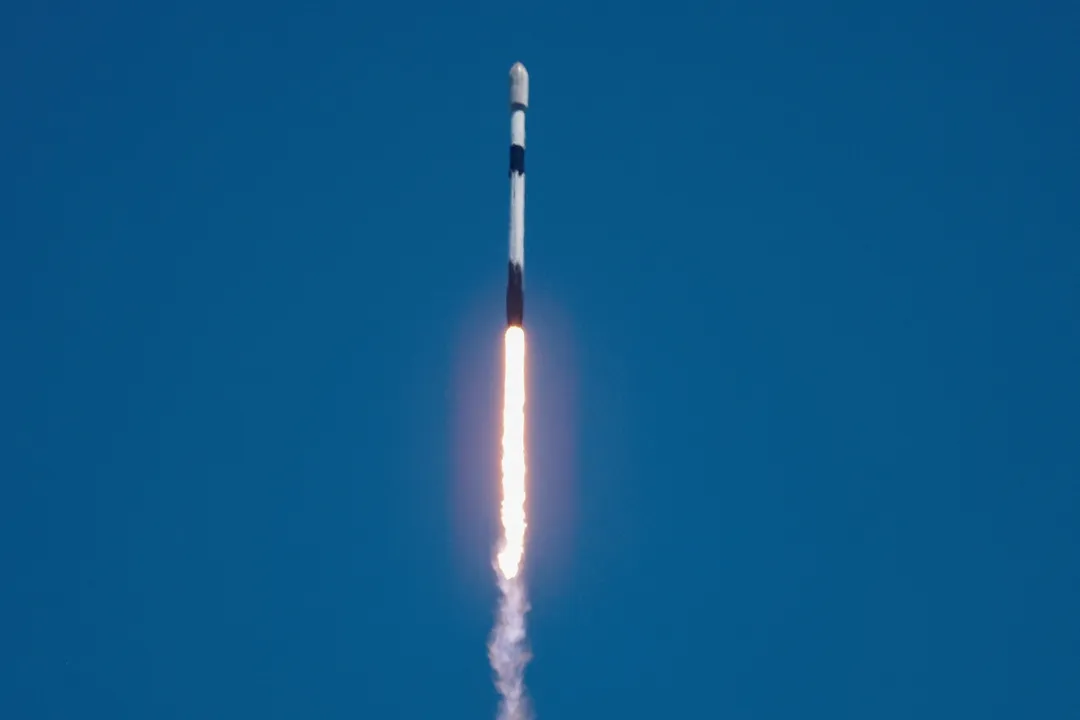
Beyond just speed, the reputation of the launch vehicle itself plays a crucial role. The Falcon 9 is a mature vehicle with a well-documented, highly successful flight history, including its capability for propulsive landing and reuse, which keeps operational costs competitive despite its high reliability. [4] For a high-value asset like a GSAT-class satellite, which represents a massive financial and technological investment, mission assurance is paramount. Choosing a provider with a predictable and proven operational record minimizes the risk associated with the most expensive phase of the mission—launch. [4] While ISRO's launch success rate is also excellent, the established, high-tempo operational rhythm of SpaceX provides a different, perhaps more immediately comforting, level of assurance for customers operating in a hyper-competitive commercial sector.
This reliance on external providers, even for nationally significant satellites, suggests a maturing of the Indian space economy. It indicates that the final client—be it a government agency, a defense entity, or a telecom giant—is willing to pay a global market rate for the best available service provider for a specific mission profile, rather than defaulting to the domestic option based on national allegiance alone. [7]
# Broader Ecosystem Implications

The decision to launch the GSAT-N2 via SpaceX sets an interesting precedent that extends beyond this single mission. For years, ISRO was the only viable option for launching Indian satellites, but this is rapidly changing with the rise of private Indian launch providers like Skyroot and Agnikul, and now, with commercial operators opting for international rideshare services or dedicated launches.
Here is an original observation on the resulting market bifurcation: This event effectively validates a two-tiered procurement strategy for Indian space assets. For missions where national security, strategic technology demonstration, or pure cost optimization is the highest priority, ISRO's domestic launch services remain the default and preferred choice. However, for purely commercial telecom satellites, Earth observation missions with strict commercial timelines, or scientific missions where specific orbital parameters are easier to meet via a commercial manifest, utilizing providers like SpaceX becomes the rational economic choice. This doesn't signal a failure of ISRO; it signals a healthy, competitive market where the end-user can shop for the right tool for the job, much like any other global industry.
Furthermore, consider the implied technical transfer or alignment. When an Indian operator contracts with SpaceX, their ground teams, mission planning personnel, and satellite integration experts gain direct, hands-on experience working within the procedures and standards of a leading Western launch provider. This exposure to different operational philosophies and engineering standards can inadvertently raise the bar for domestic integration and testing protocols across the board, acting as an indirect driver for overall sector improvement. This cross-pollination of process, while perhaps unintended, adds value to the Indian space community far greater than the launch cost alone.

# The Role of NSIL
It is also worth clarifying the role of the NewSpace India Limited (NSIL), ISRO's commercial arm. NSIL is tasked with commercializing ISRO's assets and production capabilities. While NSIL itself books external launch slots for satellites it manages, in the case of Bharti Airtel’s GSAT-N2, the commercial entity directly managed the launch procurement, selecting SpaceX. This demonstrates that the commercial liberalization in the Indian space sector allows private players significant autonomy in their procurement decisions, provided they meet any regulatory clearances necessary for launching an Indian-built satellite on a foreign vehicle.
The very fact that an Indian firm is paying SpaceX highlights a major shift away from historical reliance on subsidized domestic capacity towards a genuine, transaction-based global procurement model. This transaction is purely commercial: SpaceX provides a reliable, quick launch service; the Indian firm provides the necessary fee.
# Mission Timeline and Launch Details
The launch itself, carried out by the Falcon 9, generally adheres to a highly publicized schedule, which is made public well in advance to accommodate global tracking and mission control coordination. The missions are frequently broadcast live, offering an unprecedented level of visibility into the launch process compared to older, more secretive national programs. For the GSAT-N2 mission, the launch site was Cape Canaveral Space Force Station in Florida, underscoring the international nature of this specific space endeavor. The use of a Falcon 9 means the satellite is placed into a very precise transfer orbit, optimized for its journey toward Geostationary Transfer Orbit (GTO), ready for its final orbit raising maneuvers by the satellite's own propulsion system.
The recurring success of the Falcon 9, particularly its ability to conduct complex missions with high reliability, makes it a default choice for many global operators, which in turn creates the very scheduling pressure that might prompt an Indian entity to look elsewhere for domestic launches—a cyclical, self-reinforcing phenomenon in the global launch market.

# A Future Outlook
The choice to send GSAT-N2 skyward atop a Falcon 9 is less about the why not ISRO and more about the why SpaceX, right now. It is a clear indicator that Indian telecom and communication sectors are operating on global timelines where speed and execution certainty outweigh the strategic advantage of exclusively using domestic launchers for every mission. As India continues to expand its satellite fleet, particularly in the commercial broadband sector, the need for flexible, high-cadence launch services will only intensify. This initial mission serves as an important market signal: the Indian space ecosystem is fully integrated into the global commercial launch marketplace, ready to procure services wherever they offer the best value proposition for their specific, time-sensitive business goals. The success of this partnership will likely pave the way for more Indian commercial payloads to choose international launch providers when domestic slots are not immediately available or competitively priced for their deployment schedule.
#Videos
Why Elon Musk's SpaceX Launched ISRO's GSAT-N2 Satellite Into ...
Related Questions
#Citations
Here's Why Elon Musk's SpaceX Steps In To Launch India's ... - NDTV
Why Elon Musk's SpaceX Launched ISRO's GSAT-N2 Satellite Into ...
GSAT-20 - Wikipedia
SpaceX launches India's GSAT-N2 satellite on Falcon 9 rocket from ...
Why will Elon Musk's SpaceX launch India's GSAT-N2 satellite ...
Why ISRO chose Elon Musk-owned SpaceX for GSAT satellite launch
Why are Indian firms picking, paying SpaceX over ISRO to launch ...
SpaceX launches heavy satellite in 1st mission for India's space ...